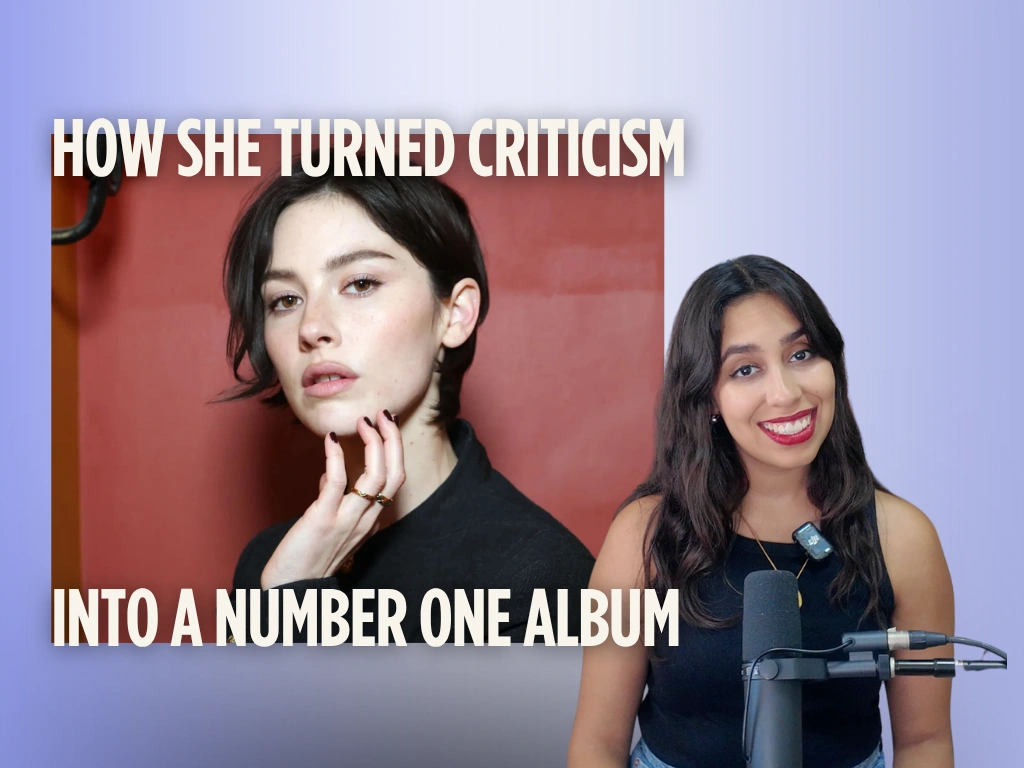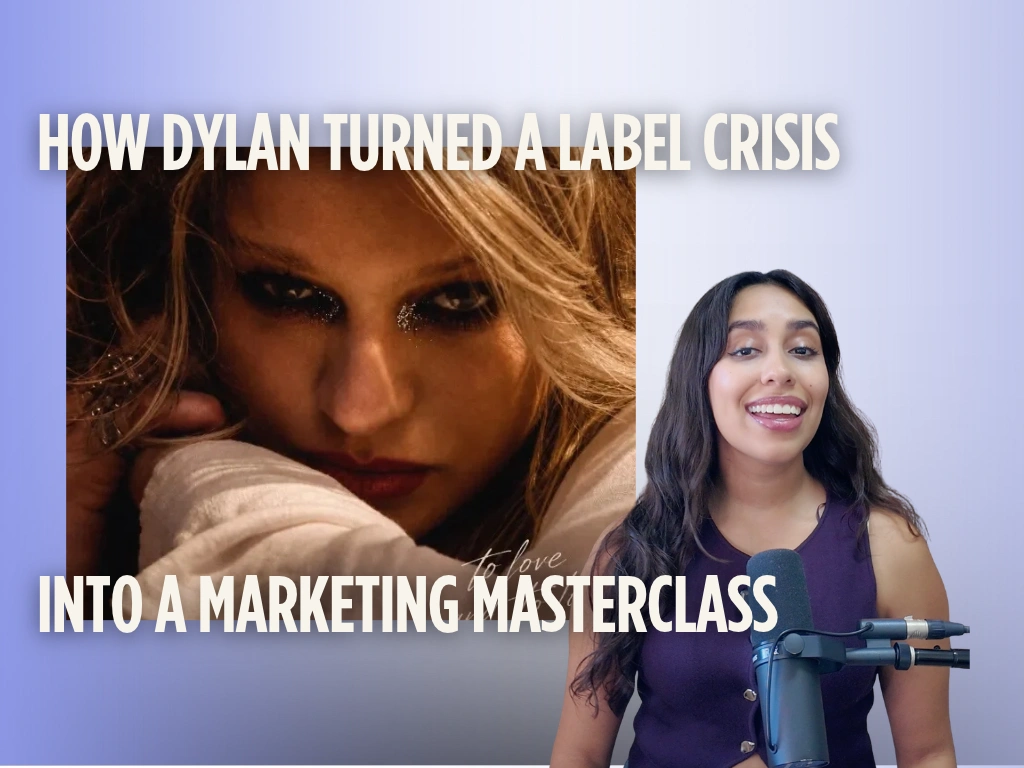
Imagine spending months working on one of the most important songs of your career, building a loyal fanbase, touring with Ed Sheeran, and finally preparing to release the single your audience has been waiting for. Then, just one week before release, your record label tells you there is no budget to support it properly. The song is not being pitched as expected, the release is suddenly at risk, and your debut album has no clear timeline.
For many artists, this would be a moment to wait for a solution from their label or management team. DYLAN took a different approach. She posted an emotional video on Instagram, explained what was happening, and turned a release crisis into one of the most compelling marketing assets of her campaign.
The story behind “To Love and to Lose” is more than a case of an artist pushing back against her record label. It reveals how community, direct-to-fan marketing, and radical transparency can create leverage in an industry where artists often depend on institutional support to reach their audiences.
Welcome back to Labelgrid, where we break down the strategy behind major music campaigns and explore what artists, managers, and labels can learn from them. In this article, we’ll examine how DYLAN transformed a potential release setback into a conversation about her music, her audience, and the future of her career.
1. Who Is DYLAN and How Did She Get Here?
DYLAN Had Already Built the Audience Before the Label Crisis
DYLAN, whose real name is Natasha Woods, was not an unknown artist trying to break through when the “To Love and to Lose” campaign began. She had already spent years building her career through touring, songwriting, and consistent engagement with her audience. Her experience touring with Ed Sheeran, more than 100 million global streams, and her 2022 mixtape The Greatest Thing I’ll Never Learn, which reached the UK Top 20, had established a foundation for her next chapter.
She had also been open about her ambitions, including her desire to headline Wembley Stadium. By 2026, DYLAN had a recognizable identity, a substantial audience, and years of momentum behind her. This context matters because the campaign’s breakthrough was not simply the result of one viral Instagram post. It worked because the artist had already spent years building a community that cared about her career.
By late 2025, DYLAN had been teasing “To Love and to Lose,” giving her core audience time to become familiar with the song and anticipate its release. On August 30, 2026, she shared the pre-save link, suggesting that the campaign was moving forward as planned. Behind the scenes, however, the situation was becoming more complicated.
According to reporting around the release, DYLAN was told that there was not enough budget to properly support the single, alongside concerns about pitching the song to digital service providers. After months of building anticipation, the release was suddenly at risk of moving forward without the institutional support she had expected.
Traditionally, artists in this position might wait for another meeting, a revised budget, or a new release timeline. DYLAN chose to communicate directly with her audience instead.
The Lesson: Build Your Community Before You Need It
An engaged audience cannot be created overnight when a release encounters a problem. DYLAN’s existing relationship with her fans gave her the ability to communicate an unexpected situation and have people care enough to respond. For independent artists, this is a reminder that community-building should happen between releases, not only when a new song needs streams, pre-saves, or ticket sales.
Consistent communication, live performances, meaningful interactions, and a recognizable artistic identity can all contribute to that relationship. The goal is not simply to accumulate followers. It is to build an audience that has a reason to care about what happens next.
2. DYLAN Turned a Label Crisis Into Marketing
How Radical Vulnerability Turned a Release Problem Into a Fan Movement
On September 3, just days before the scheduled release, DYLAN posted an emotional video to Instagram explaining that her label had said there was not enough budget to support the single properly. It was not a polished promotional video or a carefully staged announcement. It was the artist speaking directly to her audience about a problem affecting her music.
From a traditional marketing perspective, publicly discussing an internal label issue carries risks. It can expose disagreements, complicate professional relationships, and shift attention away from the music itself. But DYLAN’s post changed the narrative around the release.
Before the video, the story was straightforward: DYLAN had a new single coming. After the video, the story became that an artist was fighting to release a song she believed in, and her audience had an opportunity to support her. Fans were no longer simply waiting for the track. They had a reason to become involved in what happened to it.
This is an example of what we can call radical vulnerability marketing: allowing audiences to see a genuine challenge rather than presenting only a polished version of an artist’s career. The vulnerability was not the entire strategy on its own. Its impact came from the existing relationship between DYLAN and her fans, combined with a clear situation they could understand and respond to.
The conversation also extended beyond her immediate fanbase. Artists including RAYE and Chlöe Bailey, alongside BBC presenter Lauren Laverne, publicly supported her. Their involvement helped bring additional attention to the situation and made the release part of a wider industry conversation.
As a result, the pre-save link took on a different meaning. It was no longer just a standard step in a release campaign; it became a way for fans to demonstrate their support. According to DYLAN’s own follow-up message, the collective pressure helped break down barriers she had struggled to overcome alone.
The Lesson: Your Audience Can Become Your Biggest Marketing Asset
The important distinction is that DYLAN did not suddenly create an audience by sharing a vulnerable moment. She activated a community that already existed. For artists, transparency can strengthen a campaign when it gives people a meaningful way to participate, but it should not be treated as a formula for manufacturing controversy.
Not every internal disagreement needs to become public content, and not every difficult situation will generate positive attention. Artists should consider the potential professional consequences before sharing sensitive information. When a genuine challenge is appropriate to discuss, however, communicating honestly can give fans a clearer understanding of the artist’s journey and a stronger reason to engage.
3. The Song Had to Live Up to the Story
How Emotional Specificity Strengthened the Campaign
A compelling story can make people curious enough to click on a song, but it cannot guarantee that they will keep listening. For the “To Love and to Lose” campaign to have lasting value, the music needed to connect with listeners beyond the controversy surrounding its release.
The single combines DYLAN’s guitar-driven alternative roots with larger, synth-heavy pop production. Its production team includes Duck Blackwell, known for work with Halsey; Jamie Scott, who has worked with Justin Bieber; and Mathias Wang, who has produced for AURORA. These credits provide context for the track’s sound, but the song’s emotional positioning is equally important from a marketing perspective.
DYLAN has described “To Love and to Lose” as a song about emotional numbness: the unsettling experience of feeling so much grief or loss that eventually it becomes difficult to feel anything at all. She has also shared that the first version was written in the back of a taxi on the way home from a party because she could not find a song that expressed that particular feeling.
That detail gives the song a specific emotional identity. Breakup music is an established category, with countless songs exploring anger, betrayal, sadness, revenge, and longing. Emotional numbness offers a more defined perspective within that landscape. Rather than presenting the single as another song about heartbreak, DYLAN can communicate a precise experience that listeners may recognize in their own lives.
The visual strategy supports this positioning. Working with director Charlie Sarsfield and Untold Studios, DYLAN created a stark visualizer centered on a continuous, single-take performance. Instead of relying on an elaborate narrative or a large production to compete for attention, the visual keeps the focus on the artist and the emotion behind the song.
Together, the music, visuals, and campaign narrative reinforce one another. The marketing exposes a difficult situation, the song explores an emotionally vulnerable subject, and the visual presentation leaves space for the performance to communicate that feeling. Each element contributes to the same artistic identity rather than competing for attention.
The Lesson: Make Your Music and Marketing Tell the Same Story
A release campaign becomes more coherent when its messaging, visuals, and music share a clear emotional direction. Artists do not need to explain every detail of a song through promotional content. Instead, they can identify what makes the track distinct and use that insight to guide the visual concept, social content, interviews, and audience messaging.
For independent artists working with limited budgets, this can be particularly useful. A strong creative direction can provide consistency across multiple formats without requiring a different concept for every post. The objective is to help people understand what makes the music meaningful and give them several ways to connect with it.
4. DYLAN’s Real Marketing Asset Wasn’t the Label
Why Community and Direct-to-Fan Marketing Create Leverage
For decades, the traditional record-label model relied heavily on resources and access that individual artists could struggle to obtain independently. Labels could coordinate distribution, radio promotion, physical retail, marketing budgets, and relationships with industry gatekeepers. When a release was not prioritized, an artist often had limited ways to change the situation.
The digital music landscape has changed many of those conditions. Independent distribution has made it possible for artists to deliver music to global platforms without relying on the traditional physical distribution infrastructure. But while access to distribution has become easier, earning attention remains difficult. Building a community that consistently cares about an artist’s work is an even longer-term process.
DYLAN’s situation illustrates why that distinction matters. When the expected institutional support for “To Love and to Lose” was in question, she could communicate directly with an existing audience. Fans could respond, share the story, and help extend the conversation beyond the artist’s own channels.
The release consequently gained a narrative that went beyond the song itself: the track had been at risk, the artist spoke publicly about the situation, fans rallied around her, and other established figures expressed their support. That sequence became part of the context in which people encountered the music.
This is something a marketing budget cannot automatically reproduce. Advertising can purchase impressions, while promotional campaigns can help secure visibility and industry attention. Neither guarantees the years of emotional investment that can develop between an artist and their audience.
The lesson is not that artists should avoid record labels or that community can replace every function a label provides. Rather, a strong direct-to-fan relationship gives artists a valuable asset within any professional partnership. When an audience is engaged, artists may have more opportunities to generate attention, demonstrate demand, and participate in decisions about their careers.
The Lesson: Attention Is Valuable, but Community Goes Further
Independent artists should view community as part of their long-term business strategy, not simply as a social media metric. That means understanding who their listeners are, what they respond to, which channels they use, and how they prefer to engage with the artist’s work.
It also means developing ways to maintain those relationships beyond individual releases. Mailing lists, fan communities, live events, exclusive content, and direct communication can all contribute to a more durable connection, depending on the artist’s audience and resources.
For labels and managers, the takeaway is equally important: an artist’s existing community should inform the release strategy. Marketing works best when it amplifies a relationship that already exists rather than assuming that paid promotion alone can create meaningful engagement.
5. The Debut Album Already Has a Story
How a Single Release Crisis Can Shape a Bigger Album Campaign
“To Love and to Lose” is reportedly the beginning of the rollout toward DYLAN’s long-awaited debut studio album. If the single introduces the next chapter of her career, the circumstances surrounding its release give the larger project an established narrative before the album arrives.
There is already a story that journalists can explore, fans can discuss, and interviewers can ask about. DYLAN spent months building anticipation for a song, encountered a problem with the planned label support, communicated directly with her audience, and received public backing from fans and other industry figures. That context can follow the campaign into future releases and help audiences understand the significance of the album.
This is where the difference between promoting a song and building a larger campaign becomes clear. A single can generate attention for a few days, but a well-developed narrative can connect multiple moments across a release cycle. The story behind one track can provide context for future singles, interviews, live performances, and conversations about an artist’s direction.
The important point is that DYLAN’s situation appears to have originated in a genuine release challenge rather than a manufactured marketing concept. That distinction matters because audiences are more likely to trust communication that reflects what is actually happening. Trying to recreate the controversy without the underlying circumstances could undermine that trust.
The Lesson: Your Rollout Can Become the Story
Artists often spend considerable time trying to develop a narrative around a release, but the most meaningful stories may already exist in the creative process or the realities of building a career. The opportunity is to recognize which moments help explain the music and communicate them in a way that feels honest.
That does not mean every personal or professional challenge belongs in a campaign. Artists should maintain boundaries and consider what they are comfortable sharing publicly. But when a real event helps audiences understand a song or a new artistic chapter, it can become a natural part of the rollout instead of another promotional message disconnected from the music.
For labels, this requires listening to the artist and understanding the context around a release. The most useful campaign narrative may not come from a brainstorming session alone; it may emerge from the artist’s actual experience and the reasons the music matters to them.
6. Lessons for Artists and Labels
Build Your Community Before You Need It
DYLAN’s response was possible because she had already spent years building a career and an audience. Artists should not wait until they need streams, pre-saves, or ticket sales to start communicating with fans. Consistent engagement between releases helps establish a relationship that can support the next campaign and create opportunities for direct-to-fan activity.
Don’t Hide Every Part of the Journey
Audiences can connect with the process behind the music, not only with the finished product. Sharing a challenge or explaining a decision can create a more personal connection when the information is appropriate to share. The goal is not to turn every disagreement into content, but to recognize that honest communication can be part of an artist’s relationship with their audience.
Align Your Music, Visuals, and Marketing Narrative
The “To Love and to Lose” campaign connects the circumstances of the release with the song’s emotional themes and its stripped-back visual presentation. Artists can apply the same principle by identifying what makes a track distinct and ensuring that the creative direction and promotional messaging reinforce that identity.
Treat Community as Part of the Marketing Strategy
A fanbase is more than a follower count or a potential source of streams. An engaged audience can help spread a release, contribute to conversations, attend shows, and sustain interest across a longer campaign. Labels should recognize that community-building is an ongoing investment and create strategies that complement the artist’s existing relationship with fans.
Use Transparency Strategically, Not as a Formula
DYLAN’s story demonstrates how a genuine challenge can become a meaningful part of a campaign, but it should not be interpreted as a recommendation to manufacture conflict or disclose every internal business issue. Artists and labels need to weigh the context, potential consequences, and authenticity of what they communicate. The objective is to build trust, not simply to generate a viral moment.
The Bigger Lesson: Community Creates Leverage in the Music Industry
DYLAN’s “To Love and to Lose” campaign highlights a shift in the relationship between artists, labels, and audiences. An artist’s career still benefits from distribution, promotion, funding, and industry relationships, but those resources are only part of the picture. The connection between an artist and their community can also influence how a release is received and how much attention it generates.
DYLAN did not demonstrate that artists can eliminate the need for labels. She demonstrated that an artist with an established community has an asset that can matter when navigating the music business. Her audience gave her a direct way to communicate, respond to a difficult situation, and extend the conversation beyond the channels that the traditional release plan would have relied on.
For artists, the takeaway is to invest in relationships before a crisis or major release makes them urgently necessary. For managers, it is to understand how those relationships contribute to an artist’s long-term position. And for labels, it is to recognize that the strongest marketing strategies can combine institutional resources with the community an artist has already built.
Budgets can change, distribution partners can change, and promotional priorities can shift. A genuine relationship with an audience takes longer to develop, but it can continue to create value across multiple releases and stages of a career.
That is the real lesson behind DYLAN’s story: community is not just an audience to market to. It can be a source of leverage, participation, and long-term value in the modern music industry.
Thanks for reading this Labelgrid breakdown. For more music marketing case studies, artist strategies, and practical insights for independent artists and labels, explore more from Labelgrid.