

Record labels have access to a wealth of fan data but often struggle to use it effectively. This data, gathered from streaming platforms, social media, ticket sales, and merchandise purchases, provides insights into fan behavior, preferences, and engagement. However, scattered data across multiple platforms and poor segmentation often lead to missed opportunities for growth.
To solve this, labels can centralize fan data, identify key audience segments, and use insights to optimize marketing, release strategies, tours, and merchandise sales. Universal Music Group and Warner Music Group have already demonstrated success by focusing on direct-to-fan strategies and fan engagement tools. Here’s how labels can make the most of fan data:
- Targeted Marketing: Use data to retarget engaged fans, create lookalike audiences, and boost ad performance.
- Better Tour Planning: Analyze streaming trends and ticket demand to choose the best locations and venues.
- Boost Merchandise Sales: Identify superfans and offer personalized products or bundles.
- Improved Release Timing: Use historical data to plan releases during high engagement periods.
- Centralized Tools: Platforms like LabelGrid help integrate data, track royalties, and manage fan engagement.
What Fan Data Is and Why Labels Struggle to Use It
What Is Fan Data?
Fan data refers to the information gathered from fans’ interactions across various platforms. This includes details like demographics, preferences, how fans discover music, and their broader interests. Labels collect this data from multiple sources: streaming platforms like Spotify, Apple Music, and YouTube; social media channels such as Instagram, TikTok, and Facebook; as well as email campaigns, ticket sales, and direct purchases through platforms like Bandcamp or merchandise webstores. While collecting fan data is a crucial first step, the real challenge lies in effectively using it.
Common Problems With Fan Data
Labels face three major hurdles when it comes to fan data:
- Scattered information: Data lives across different platforms – streaming dashboards, social media analytics, email tools, ticketing systems, and online stores. These systems don’t integrate, making it hard to connect a fan’s activities across platforms.
- Lack of segmentation: Raw metrics don’t reveal much. Without segmenting fans by factors like engagement frequency, recent activity, or spending habits, labels can’t differentiate between superfans and casual listeners.
- Missed revenue opportunities: Disorganized data leads to missed chances. Labels struggle to identify high-value fans for exclusive merchandise, send tour alerts to the right cities, or retarget fans effectively with ads.
Addressing these issues is critical for tapping into fan data’s full potential.
Why Fan Data Drives Growth
When labels organize and utilize fan data effectively, it can significantly boost both marketing precision and revenue. Here’s how:
- Targeted advertising: By retargeting engaged fans and creating lookalike audiences, labels can achieve better returns on their ad spend.
- Smarter tour planning: Labels can use data like streaming trends and ticket interest to map out tour routes and choose the right venues.
- Increased merchandise sales: Identifying superfans allows labels to craft personalized offers that resonate with those most likely to buy.
For example, Universal Music Group reported that their direct-to-fan revenue grew fastest in 2024, thanks to investments in fan data. Fan data isn’t just a tool – it’s a key driver of growth, helping labels move beyond broad, untargeted campaigns. Up next, we’ll dive into how raw fan data can be transformed into actionable insights.
Music Industry Data Analytics | Spotify for Artists For Fanbase Growth
Turning Raw Fan Data Into Useful Information
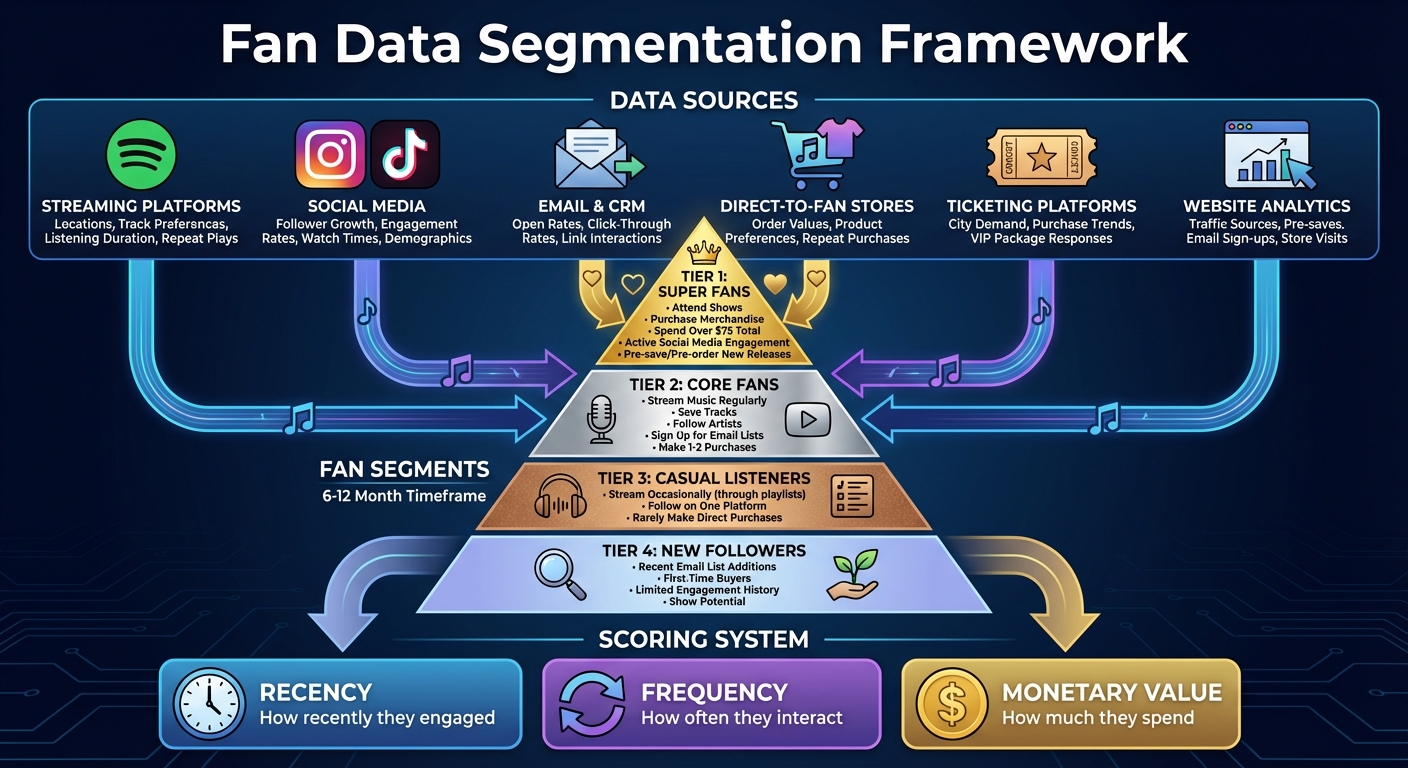 [Fan Data Segmentation Framework for Record Labels]
To gain meaningful insights, music labels need to turn raw fan data into a clear and actionable overview.
Where Fan Data Comes From
Fan data flows in from six main sources. Streaming platforms provide details like fan locations, track preferences, listening durations, and repeat plays. Social media channels – such as Instagram, TikTok, Facebook, and YouTube – offer metrics on follower growth, engagement rates, video watch times, and audience demographics. Email and CRM tools track open rates, click-through rates, and the specific links fans interact with. Direct-to-fan stores on platforms like Bandcamp and Shopify reveal order values, product preferences, and repeat purchases. Ticketing platforms like Ticketmaster and Eventbrite show city-specific demand, ticket purchase trends, and responses to VIP packages. Lastly, website analytics tools like Google Analytics shed light on which traffic sources drive pre-saves, email sign-ups, or store visits. Understanding these data streams is the first step in identifying your most engaged and valuable fans.
Identifying Your Most Valuable Fans
To pinpoint your top fans, segment them based on their engagement, spending habits, and activity across platforms over a 6–12 month period. Here’s how fans typically break down:
- Super fans: These are the highly dedicated supporters who attend shows, purchase merchandise, spend over $75 in total, actively engage on social media, and pre-save or pre-order new releases.
- Core fans: They stream music regularly, save tracks, follow artists, and sign up for email lists, but only make one or two purchases.
- Casual listeners: These fans stream occasionally (often through playlists), follow the artist on just one platform, and rarely make direct purchases.
- New followers: This group includes recent additions to email lists or first-time buyers. They show potential but have limited engagement history so far.
To organize these groups, you can use a scoring system based on recency, frequency, and monetary value. Even starting with a simple spreadsheet can help before transitioning to automated tools. Once segmented, this data lays the foundation for a unified view of fan engagement, which tools like LabelGrid can help refine.
How LabelGrid Centralizes Your Data
LabelGrid simplifies the process by combining catalog performance, royalty tracking, and marketing results into one platform. Its Royalties Dashboard tracks sales data for each track and artist, while its marketing tools – like landing pages for gated downloads, Spotify pre-save campaigns, and smart links – help gather lead data and measure fan engagement. The platform also offers a WordPress plugin that syncs your catalog and hosts fan-facing pages on your own domain, capturing email addresses and tracking conversion events.
Using Fan Data to Improve Marketing and Release Plans
Once your fan data is organized, the next step is to use it to fine-tune your marketing efforts and release strategies. Labels that treat fan data as a constant feedback loop often see stronger campaign results and higher fan engagement.
Targeting Specific Audience Groups
Fan data lets you break your audience into segments based on factors like age, location, and engagement levels. This allows for campaigns tailored to each group’s preferences. For instance, younger fans on TikTok might respond well to vertical video teasers, while older fans may prefer more in-depth behind-the-scenes content or high-quality artwork. Location data can also guide geo-targeted promotions. For example, a U.S. indie label could offer exclusive vinyl bundles and early ticket access to fans in the Los Angeles area, while using lighter strategies – like social ads or curated playlists – for casual listeners in other regions.
Engagement levels are another way to segment your audience. Superfans – those who have spent over $50 or streamed a new single more than 20 times – might respond best to offers for limited-edition vinyl or exclusive bundles. Meanwhile, casual listeners could be encouraged with simpler actions like “add to playlist” or “follow.” These tailored approaches can also help you determine the best timing for your releases.
Choosing the Right Release Dates
Historical streaming data can be a goldmine when selecting release dates. For example, if you notice that streams consistently spike over the weekend, releasing music at midnight Eastern on a Friday could help capture that momentum. Seasonal trends are also worth considering – upbeat tracks tend to do well in the summer, while acoustic or holiday-themed songs often gain traction during the year’s final months. Additionally, keeping an eye on engagement surges around events like tour announcements, TV placements, or viral moments on social media can help you cluster releases during high-attention periods, maximizing exposure.
LabelGrid’s Marketing Features
LabelGrid offers tools like lead capture, pre-save campaigns, and conversion tracking, all within a single platform. Its landing pages for gated downloads, Spotify pre-saves, and unified links help you collect email addresses and track fan actions, such as following on Spotify or reposting on SoundCloud, in exchange for exclusive content. With support for release metadata in multiple languages, you can easily create localized content to connect with international audiences. By analyzing which campaigns drive the most streams, email sign-ups, or website visits, you can adjust your strategy and focus resources on what works best. LabelGrid integrates these features seamlessly, making it easier to refine your marketing and release plans over time.
Using Fan Data to Increase Revenue
Fan data can directly impact your revenue when used to guide decisions around tours, merchandise, and catalog performance.
Planning Tours and Events
Streaming data from platforms like Spotify and Bandcamp provides insights at the city level, helping you choose tour stops based on where your fans are most concentrated. Pairing this data with venue sizes ensures you can match attendance potential without oversaturating specific markets.
Fan spending habits also play a key role in designing VIP packages. For example, fans who have spent over $25 on merchandise might be interested in premium options like meet-and-greet experiences, while casual listeners may gravitate toward standard ticketing options. Localized data can further refine your ticket sales strategy, allowing you to send targeted communications that resonate with specific fan groups.
These strategies not only increase ticket sales but also create opportunities to boost merchandise revenue during tours.
Improving Merchandise Sales
Purchase history is a goldmine for understanding what fans want. For instance, sales data can highlight popular items like vinyl records for collectors or trending products based on wishlists and repeat purchases. By segmenting fans based on how often and how recently they’ve made purchases, you can fine-tune pricing strategies – offering premium bundles for loyal fans and more budget-friendly options for newer ones.
Targeted email campaigns can make a big difference here. For example, offering exclusive merchandise bundles to fans who regularly attend shows and buy from your store ensures your promotions feel personal and relevant rather than generic.
But the benefits of fan data don’t stop at tours and merchandise – it’s also invaluable for managing royalties and catalog performance.
Managing Royalties and Catalog Performance
Tools like LabelGrid’s Royalties Dashboard consolidate streaming and sales data, making it easier to identify which tracks and artists are driving revenue. This allows you to focus promotional efforts on high-performing content while considering reactivation strategies for underperforming tracks. Incorporating fan engagement data into these reports ensures your marketing targets catalog hits that already have traction.
Reactivation campaigns, such as personalized playlists or regional pushes for older tracks, have been known to increase royalties by 20–30%. Additionally, LabelGrid’s flexible pricing tiers – offering retention of 85%, 90%, or even 100% of DSP royalties – maximize the revenue from every stream. These tools ensure you’re making the most of your catalog’s potential while keeping more of the earnings in your pocket.
Making Fan Data Part of Your Label’s Operations
Once you’ve fine-tuned your marketing and revenue strategies using fan data, the next step is to weave these insights into your label’s daily operations. By establishing clear workflows and conducting regular reviews, you can transform raw data into meaningful actions that fuel your growth.
Setting Up Data Workflows
Start by designating a dedicated data lead or team to handle the collection, cleaning, and distribution of fan data. Pull information from various sources like DSP dashboards, social media analytics, email reports, direct-to-consumer (D2C) sales, and ticketing platforms. Ensure you document how often data is collected, where it’s stored, and who will receive the reports.
Centralize your fan data in a CRM or email platform to create a single, organized database. Use tools like sign-up forms from pre-save campaigns, gated downloads, contests, and merchandise sales to collect fan emails – always with proper consent. Segment your audience based on factors like artist preference, genre, location, engagement level (e.g., casual listener vs. superfan), and spending habits. Many platforms offer integrations to help you target fans by their location or purchasing behavior.
To identify your most loyal fans, implement a scoring system. For example, a “superfan” could be someone who has purchased merchandise, attended a concert, and subscribed to your email list. This scoring system allows you to focus on creating VIP experiences and premium offers for those most likely to engage and convert.
Creating Regular Reports and Team Reviews
Establish a routine for generating reports. During active releases, aim for weekly or biweekly updates, and conduct monthly reviews to assess catalog performance, ticket sales, and fan segment growth. Schedule short cross-team meetings to align strategies and make adjustments to release dates, marketing campaigns, social media content, ad targeting, tour schedules, merchandise designs, or pricing.
This data can guide critical decisions. For instance, analyzing purchase histories and wishlists can help determine which merchandise items to produce, while social media analytics can reveal which types of content – like live performance videos – resonate most with your audience. Use fan engagement data to refine tour routing, focusing on cities where fans show high levels of interest.
Using LabelGrid as Your Data Center
Streamline these workflows further by consolidating them into a single platform like LabelGrid. This tool integrates catalog management, distribution, marketing, and royalty tracking, making it easier to manage your operations. With its API and WordPress plugin, LabelGrid automates data updates and tracks fan engagement seamlessly.
LabelGrid’s Royalties Dashboard combines streaming and sales data, helping you quickly identify which tracks and artists generate the most revenue. It also automates lead capture through landing pages for gated downloads, Spotify pre-saves, and unified links that gather fan emails and social follows. Additionally, its Link Fetcher tool tracks releases and retrieves DSP links as soon as they’re live, simplifying your promotional efforts.
Conclusion
Fan data has become the backbone for record labels aiming to expand their reach and revenue. Major labels are leading the charge, pouring resources into direct-to-fan strategies. By consolidating data from various sources – like DSP analytics, social media activity, CRM systems, webstore sales, and ticket purchases – labels can categorize their audience, from casual listeners to dedicated superfans, and tailor their approach to each group with precision.
Turning raw fan data into actionable insights opens up fresh revenue opportunities. For instance, knowing which fans have spent over $25 on merchandise or identifying cities with the most engaged audiences allows labels to make smarter decisions. These insights can guide tour planning, optimize release schedules, and shape personalized campaigns that boost profits.
To make these insights truly impactful, labels need to establish workflows that consistently aggregate and analyze data. Regularly reviewing dashboards – whether weekly or monthly – and directly linking insights to key decisions is crucial. This could mean refining ad targeting, selecting tour locations, or creating VIP fan experiences. Platforms like LabelGrid simplify this process by offering unified data management, connecting catalog performance with marketing outcomes and royalty tracking.
The most successful labels today aren’t just gathering data – they’re leveraging it to build lasting fan relationships. They’re shifting from one-off album promotions to ongoing engagement strategies. Whether through Discord communities, exclusive merchandise drops, or personalized emails, these efforts keep fans connected between releases. By embedding unified data management into their daily operations, labels can drive sustained growth while fostering loyal, lifelong fans.
FAQs
How can record labels organize and use fan data more effectively?
Record labels can simplify and organize fan data by using specialized tools that gather and analyze information in a single platform. For instance, platforms like LabelGrid offer features such as catalog management, audience segmentation, and per-DSP streaming analytics. These capabilities allow labels to gain a clearer picture of their audience, craft more targeted marketing strategies, and fuel their growth.
When fan data is used wisely, labels can boost engagement, monitor trends, and make smarter, data-driven choices to increase both revenue and audience reach.
How can record labels find and connect with their most dedicated fans?
Record labels have a unique opportunity to connect with their most passionate supporters, often referred to as superfans, by offering them exclusive perks and tailored experiences. This could mean giving them early access to new tracks, releasing limited-edition merchandise, or sharing behind-the-scenes moments that make them feel closer to the artists they love. Another effective approach is using gated downloads to gather fan data, which can then fuel highly targeted campaigns.
Social media is another powerful tool for engaging superfans. Interactive posts, shoutouts, and live Q&A sessions can create a sense of community and deepen the bond between fans and the label. On top of that, personalized marketing – like custom emails or content tailored to specific regions – can make fans feel truly appreciated, inspiring even greater loyalty and support for both the label and its artists.
How do record labels use fan data to plan tours and boost merchandise sales?
Fan data is a game-changer for planning tours and boosting merchandise sales. By diving into fan locations and preferences, record labels and artists can pinpoint the cities where their music has the strongest following. This ensures tour stops are chosen wisely, drawing the biggest crowds. Plus, it helps streamline tour routes, cutting down on travel time and costs while packing venues.
When it comes to merchandise, understanding fan preferences is equally valuable. Insights into what fans love allow labels to design products that truly connect with their audience. Whether it’s a specific style of T-shirt or a limited-edition collectible, tailoring items to fan interests can lead to higher sales and stronger connections. Using fan data smartly transforms audience insights into real opportunities for growth.