COMMON QUESTIONS
Frequently Asked Questions
What is DDEX and why does it matter?
DDEX (Digital Data Exchange) is the music industry’s standard format for exchanging release information between distributors and DSPs. ERN (Electronic Release Notification) messages describe releases, tracks, deal terms, and rights holders in structured XML that every major platform can ingest.
Which DDEX versions does LabelGrid support?
LabelGrid supports DDEX ERN 3.8.2, 4.3.0, 4.3.1, and 4.3.2. Each DSP receives feeds in the version it requires, configured per platform — you never manage versions yourself.
Can I import my existing catalog via DDEX?
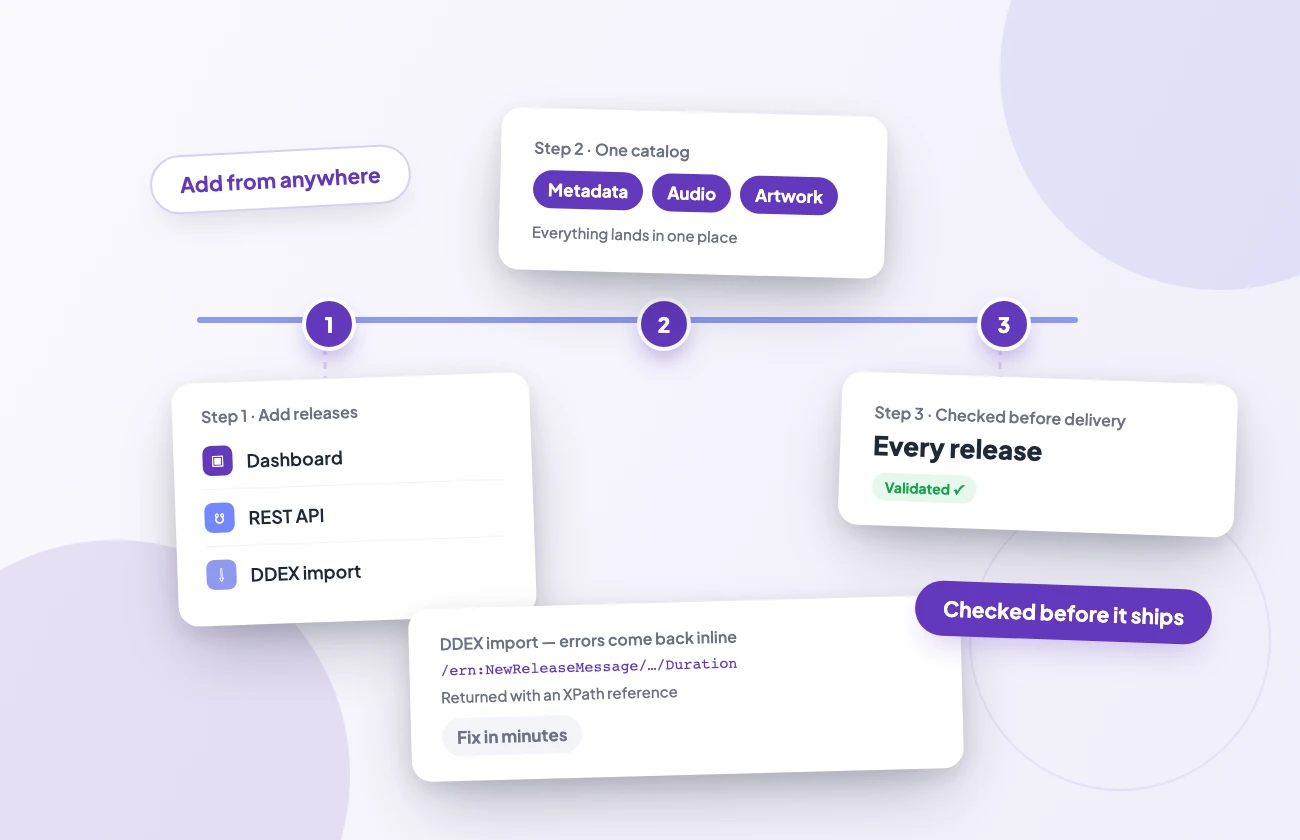
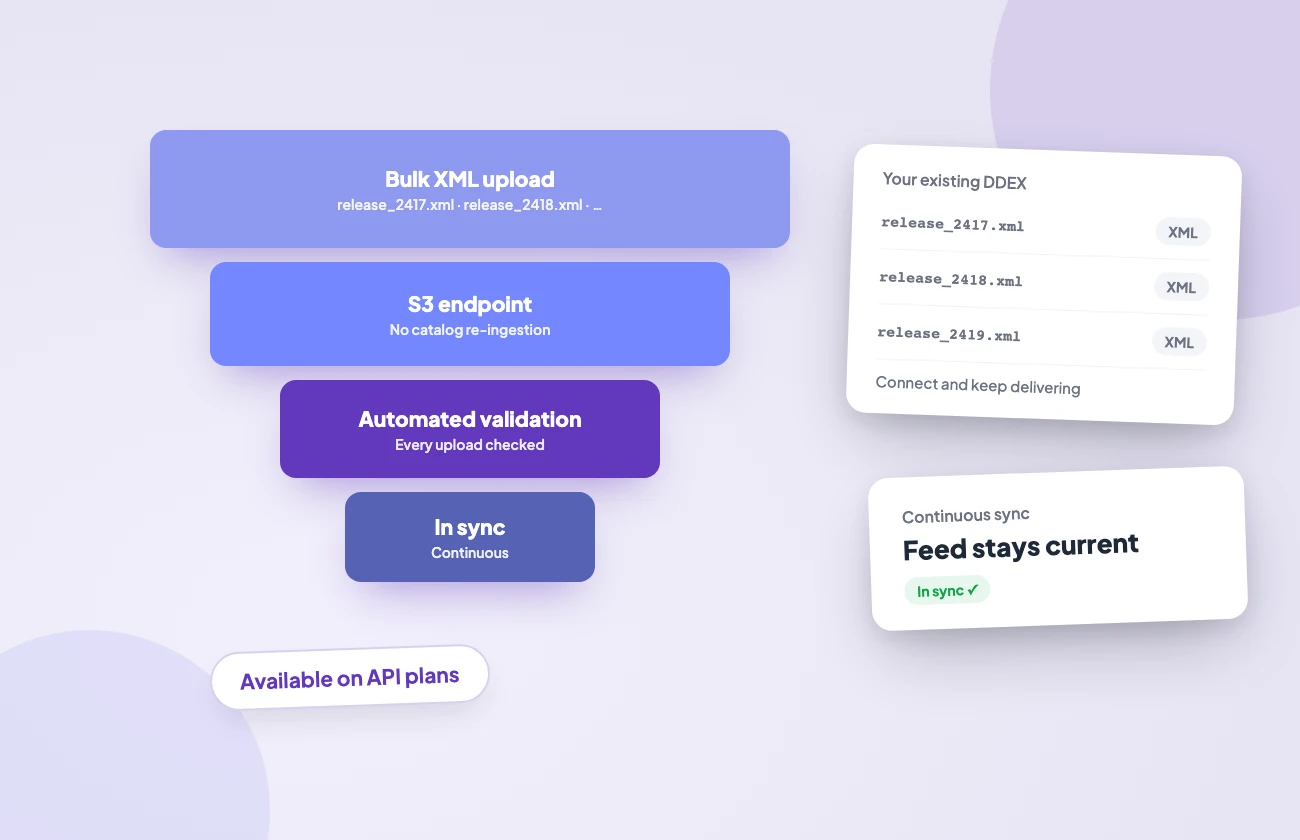
Yes. DDEX import is available on API plans. Connect your existing feeds to LabelGrid’s S3 endpoint for bulk XML uploads with automated validation and continuous sync — no re-ingestion of your catalog required. Step-by-step setup is covered in the DDEX import guide.
Do I need to know DDEX to distribute with LabelGrid?
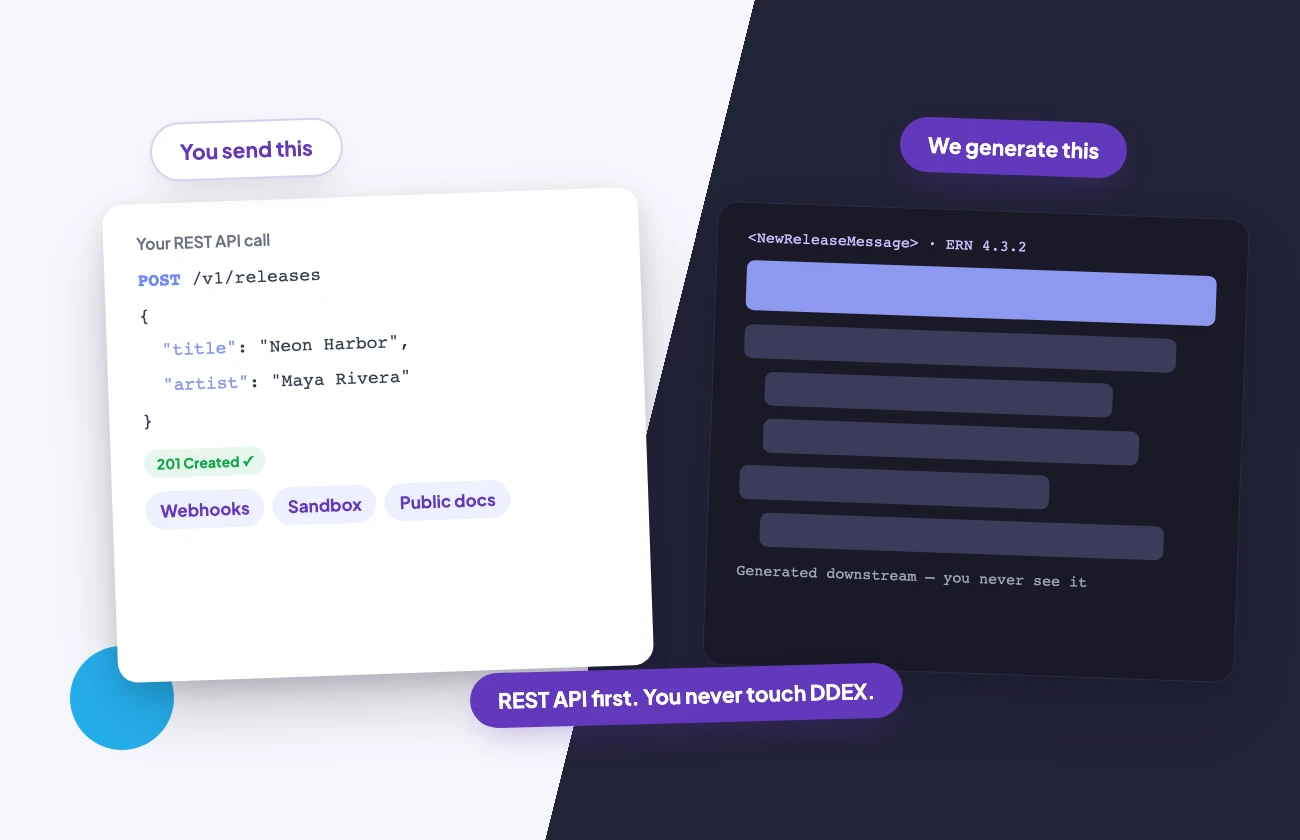
No. The platform and REST API handle DDEX formatting automatically. You submit releases through the dashboard or API, and LabelGrid generates compliant feeds for every DSP.
What DDEX message types does LabelGrid support?
NewReleaseMessage for release delivery and PurgeReleaseMessage for takedowns. Territory-specific release dates, deal terms, and rights holders are preserved exactly as submitted.
How are DDEX validation errors reported?
Validation errors are returned inline with XPath references pointing to the exact element that failed, so your team can fix issues without guessing.
Is DDEX import included in every plan?
DDEX import is an optional capability on API plans (Starter API and above) with its own onboarding process. Contact our team to scope the setup.
Is the REST API an alternative to DDEX?
Yes. The REST/JSON API is the primary integration path — LabelGrid converts your submissions into DDEX-compliant feeds for DSP delivery. DDEX import exists for partners whose pipelines already produce DDEX.