
CATALOG MANAGEMENT
Complete Music Catalog Management
A music catalog management system is the central place where a label stores and controls every release, track, and piece of metadata before and after distribution. LabelGrid keeps releases, artist profiles, publishing data, artwork, and rights in one dashboard, validates everything against DSP rules, and delivers to all major platforms via DDEX. One catalog, ready to ship.
RELEASE MANAGEMENT
What metadata can you manage for a release?
Everything a DSP asks for, in one place. Create releases with full metadata: titles, artists, genres and subgenres, artwork, ISRCs, and UPCs. Assign each release to a label, set the content type (Album, Single, or EP), configure explicit flags, and record AI usage disclosures. At track level you control mix versions, featured artists, and remixers. LabelGrid can generate ISRCs and UPCs for you, or you can enter codes you already hold. Royalty splits and statements read directly from this same catalog, so what you distribute and what you get paid for always match. Adding a large catalog at once? The bulk upload guide walks through importing many releases in a single pass.
PUBLISHING DATA
How does LabelGrid handle credits and publishing?
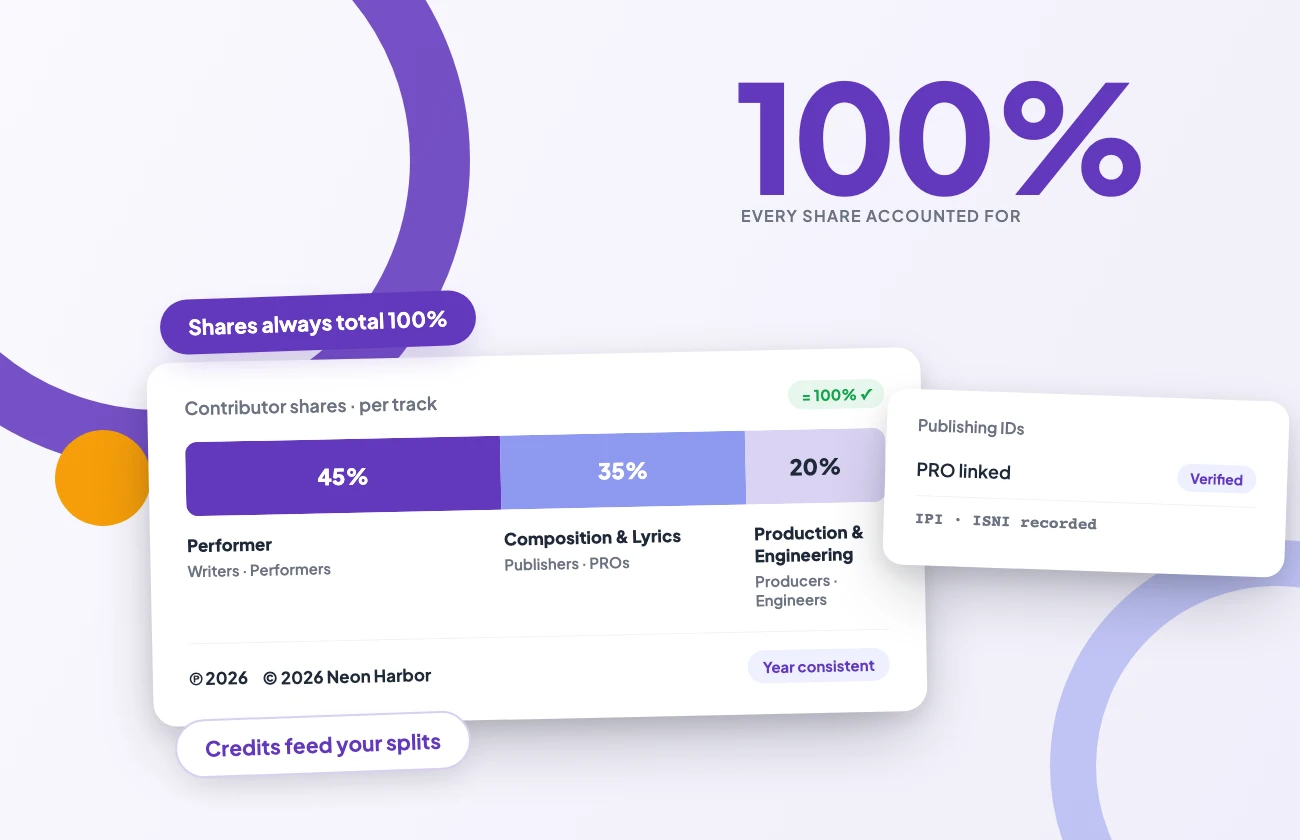
Every track carries three contributor categories: Performer, Composition & Lyrics, and Production & Engineering. Within those you add writers, performers, publishers, PROs, IPIs, and ISNIs per track, and LabelGrid validates that percentage shares total 100% so nothing is left unaccounted. P-Line and C-Line copyright are tracked with year-consistency checks, and copyright-owner percentages are recorded per track. Because the platform enforces each DSP’s requirements as you go, a release is complete before it ever reaches delivery, not bounced back afterward. The same contributor data feeds your automated royalty splits, so credits and payouts stay in sync.
HOW IT WORKS
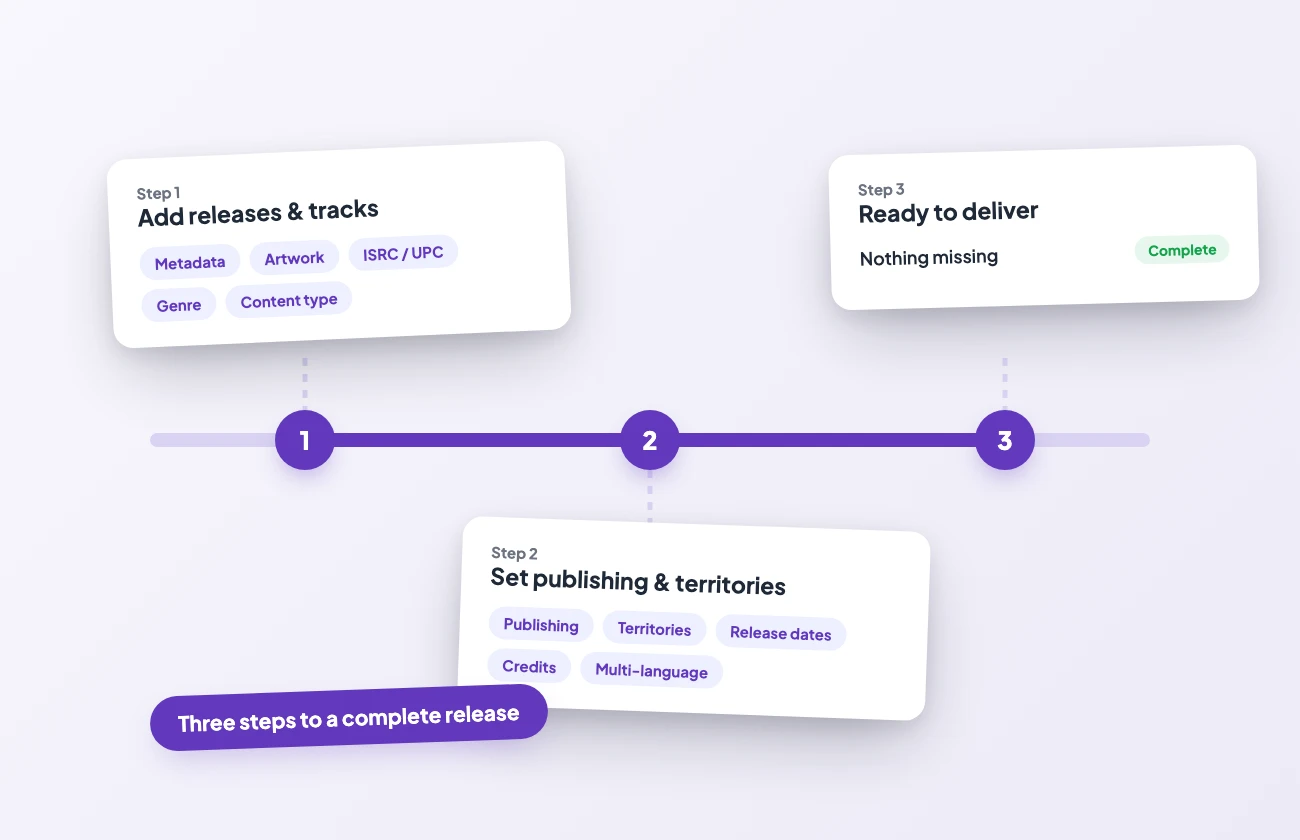
How catalog management works in three steps
1. Create
Add releases and tracks with full metadata. Upload artwork, assign ISRCs and UPCs, and set genres and content type.
2. Configure
Set publishing data, territory availability, release dates, and contributor credits. Add multi-language metadata for international releases.
3. Distribute
One click sends validated metadata to all major platforms via DDEX. Field locks then protect distributed content from accidental changes.
Your Catalog Is Your Business. Manage It Like One.
Published pricing. No per-release fees. Free 7-day trial.
MULTI-LABEL MANAGEMENT
How does multi-label catalog management work?
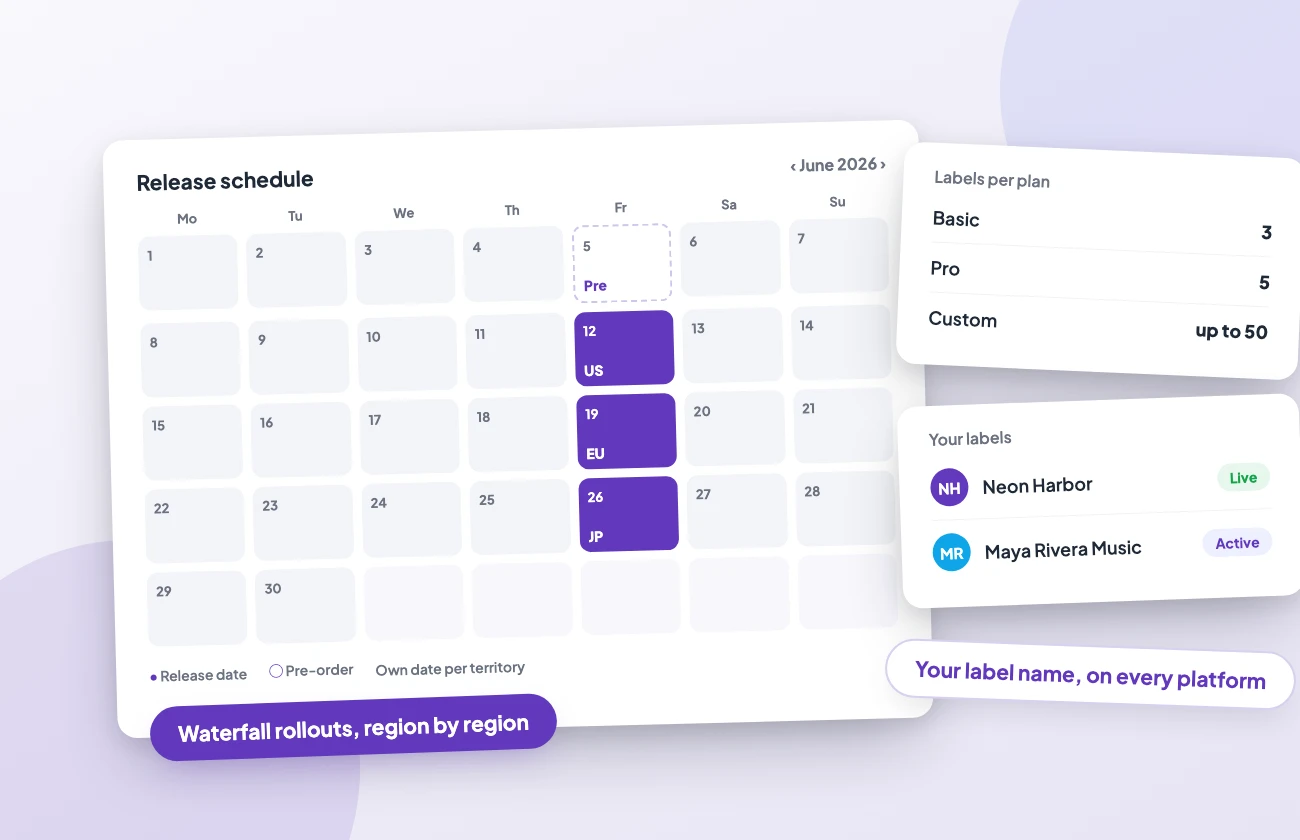
You run several labels from one account, and each release is assigned to a specific label whose custom name appears on every platform, not LabelGrid’s. Plans scale with how many imprints you run: 3 labels on Basic, 5 on Pro, and up to 50 on Custom. Territory controls let you set availability across 200+ territories and give each its own release date, which is what makes regional rollouts and waterfall strategies possible. Schedule releases in advance with track-level date overrides, and support pre-orders and instant-gratification tracks. Every price is published, and plans start at $99 per year.
METADATA QUALITY
How is metadata validated before delivery?
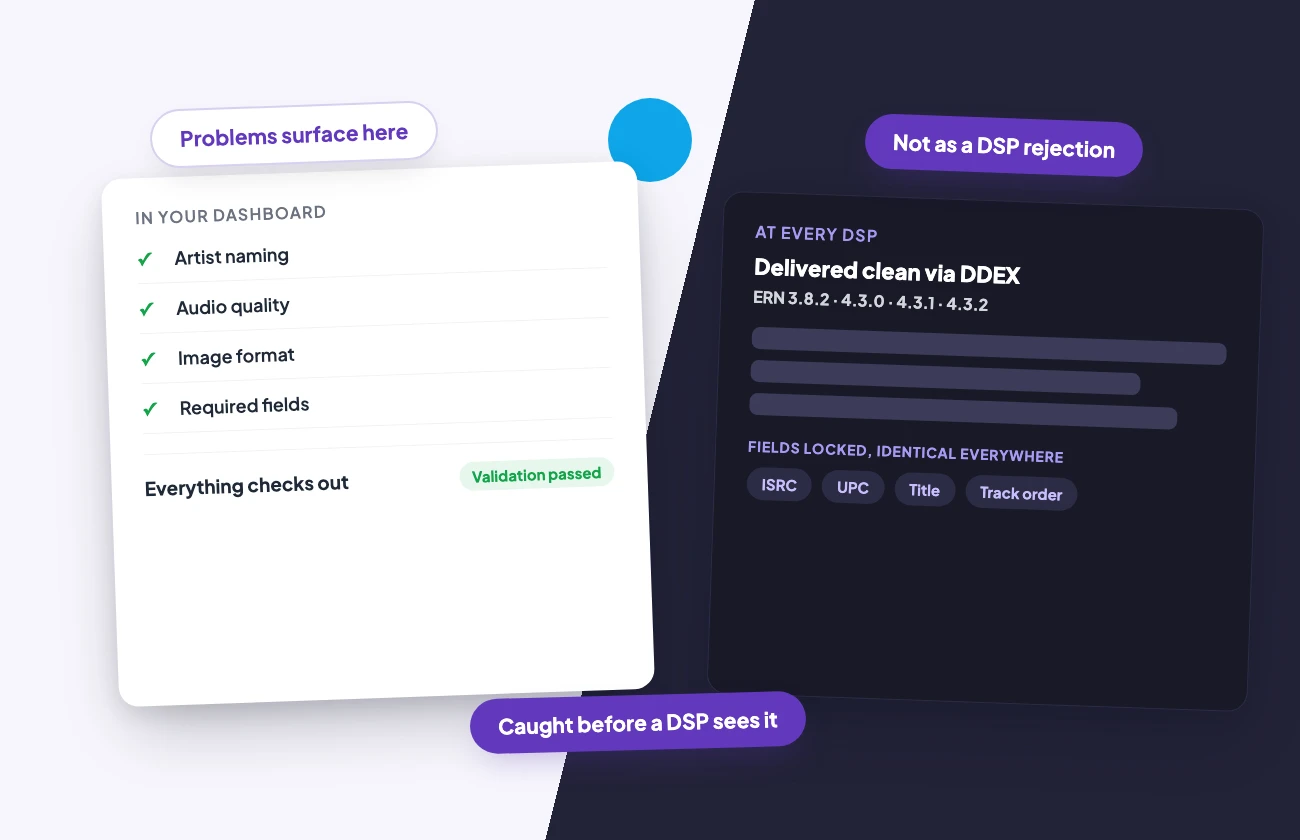
Before anything is delivered, LabelGrid checks it. Artist-naming rules, audio quality, image formats, and required fields are all validated automatically, so problems surface in the dashboard instead of as a DSP rejection later. Delivery itself uses DDEX, with support for ERN 3.8.2, 4.3.0, 4.3.1, and 4.3.2. For international releases you can add localized titles, translated artist names, and regional metadata variants. Once a release goes out, field locks protect the critical data: ISRCs, UPCs, titles, and track order stay consistent across every platform. Distributors building on the white-label API get the same validation through every call.
MORE FEATURES
Discover All LabelGrid Services
Distribution
Distribute music to all major platforms with advanced metadata and batch operations.
Royalty Accounting
Automated royalty splits, artist statements, expense tracking, and reporting per release.
Promotion
Promo tools, private sharing links, teaser generation, and playlist pitching built into the platform.
White Label & API
Run your own branded distribution platform with LabelGrid’s white-label infrastructure and REST API.
COMMON QUESTIONS
Frequently Asked Questions
Start Your Free Trial
Complete catalog management with publishing data, territory controls, and multi-language metadata — one dashboard, published pricing, no per-release fees.