 Starter API
 Growth API
 Scale API
 Custom API
COMMON QUESTIONS
Frequently Asked Questions
What is a white-label music distribution platform?
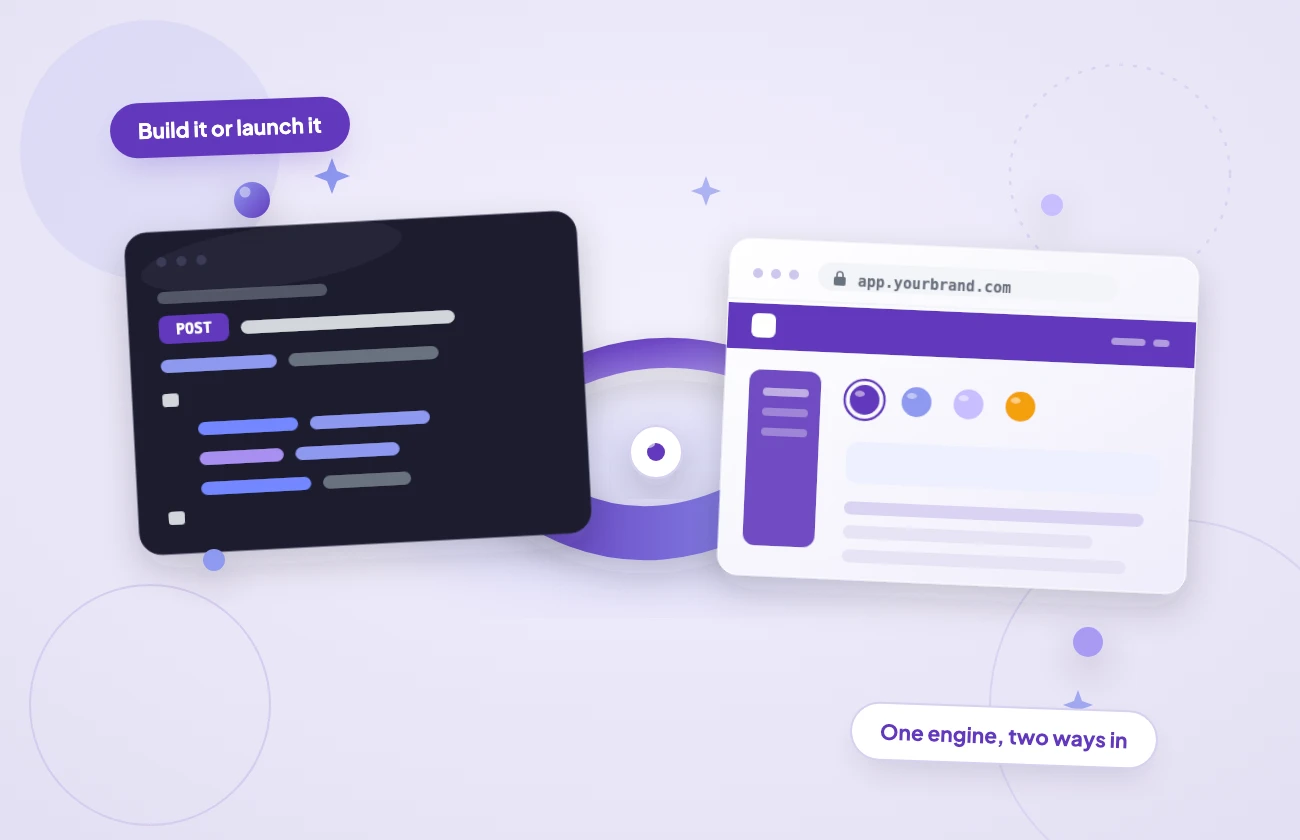
A white-label music distribution platform lets a company run music distribution under its own brand on top of someone else's delivery infrastructure. LabelGrid provides the REST API, DSP delivery network, royalty processing, and catalog system. You provide the brand and the customers. Bring your own interface through the API, or run the ready-made Imprint on your domain. Your artists and labels see your name, not ours.
What is the LabelGrid API?
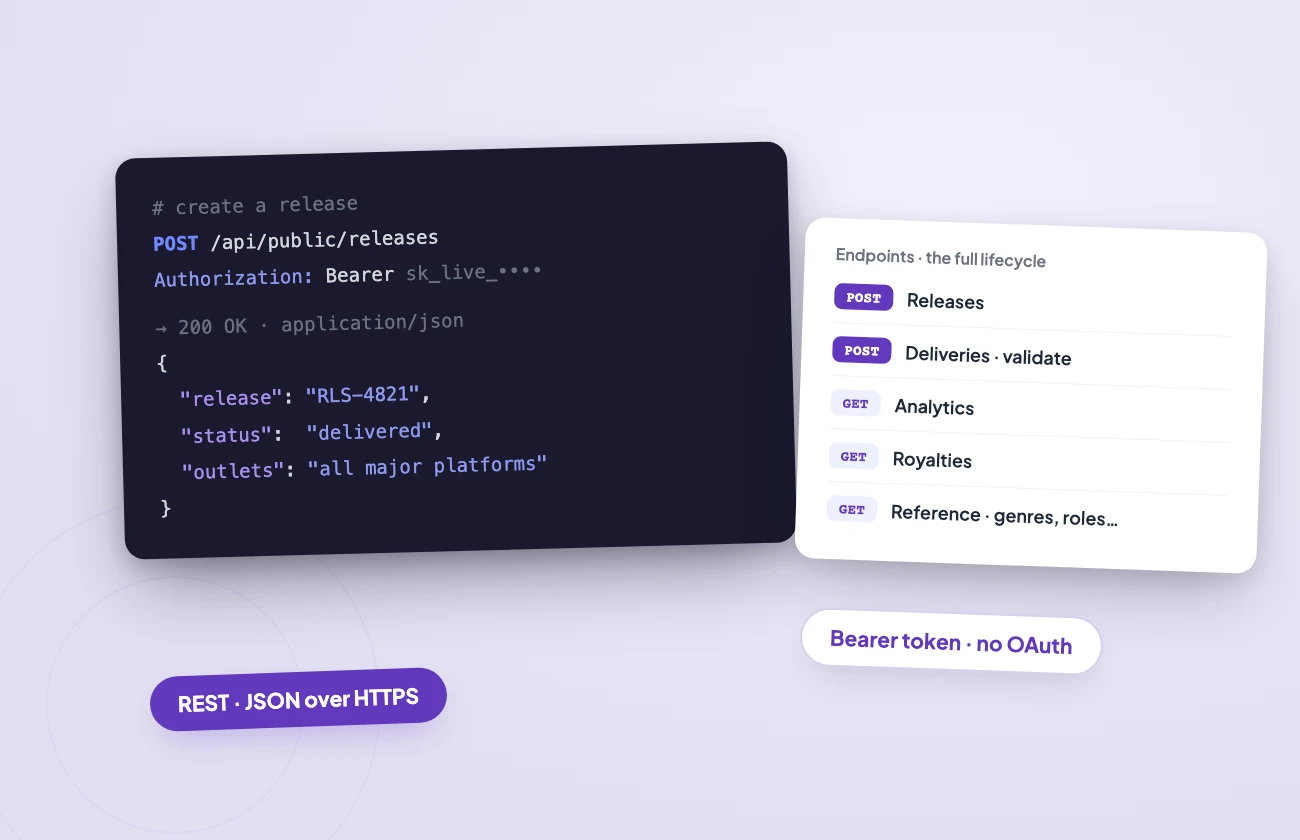
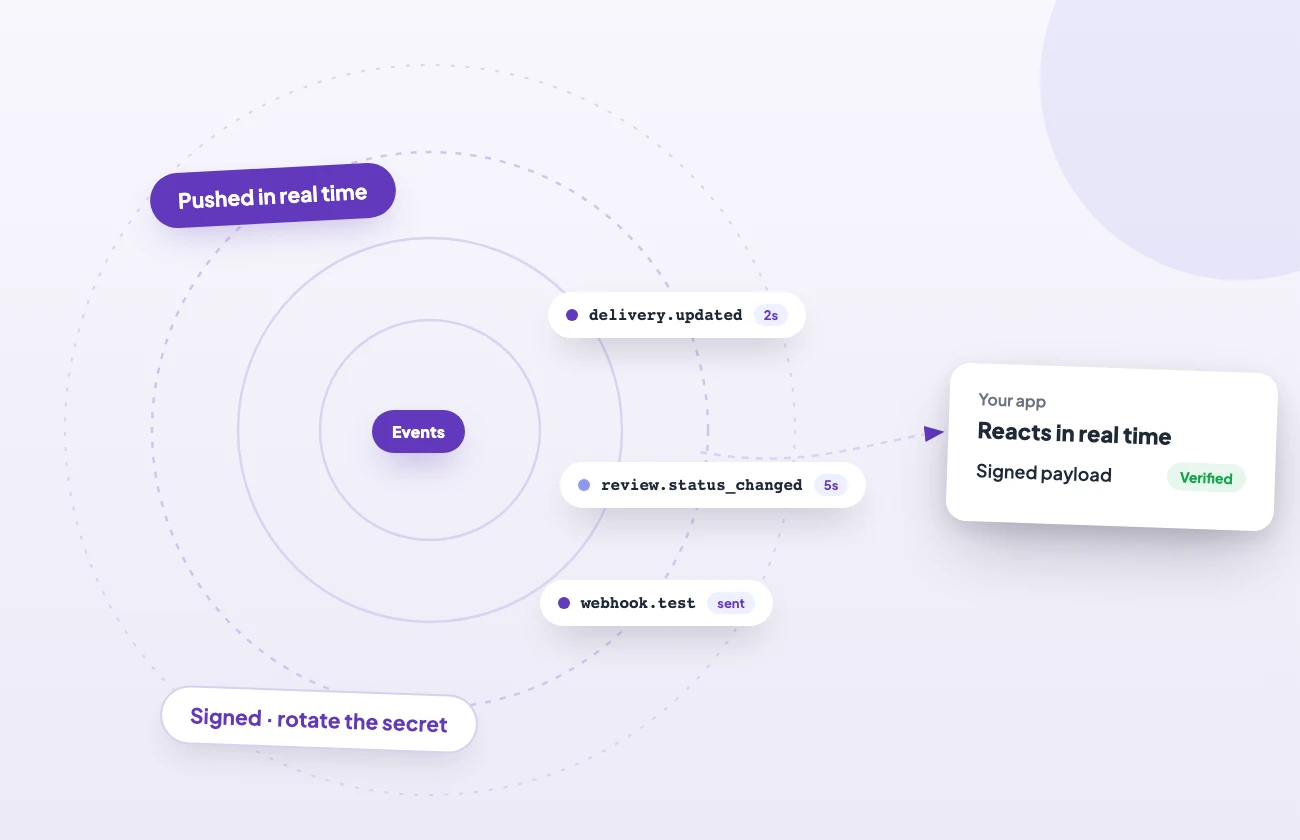
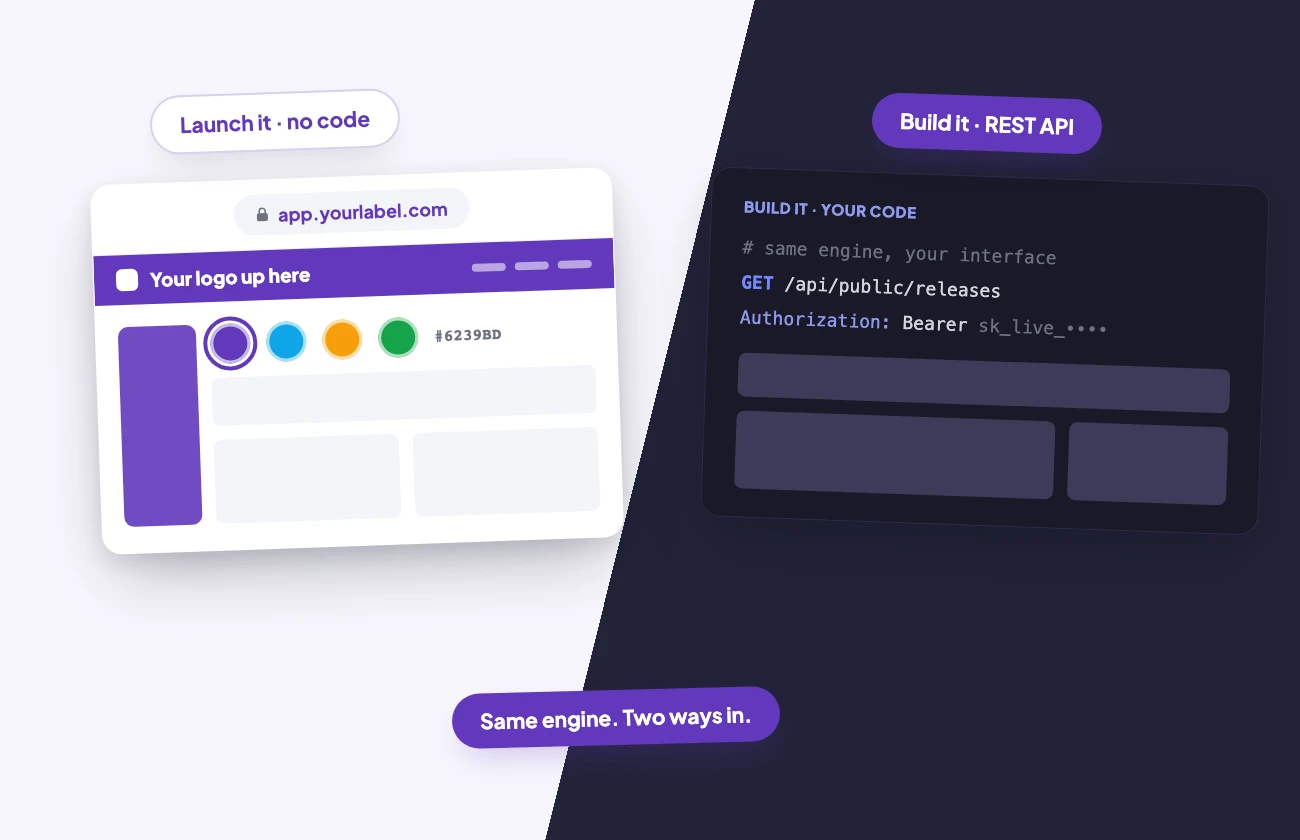
LabelGrid offers a REST API that speaks JSON over HTTPS under https://api.labelgrid.com/api/public. It lets you build your own portals and apps, or whole distribution workflows, on top of LabelGrid infrastructure. Create releases, upload audio and artwork, validate a release and distribute it, register webhooks, and read analytics and royalty data. Documentation is public at api.labelgrid.com/docs/api, and every API plan includes a sandbox account to develop against.
How does authentication work?
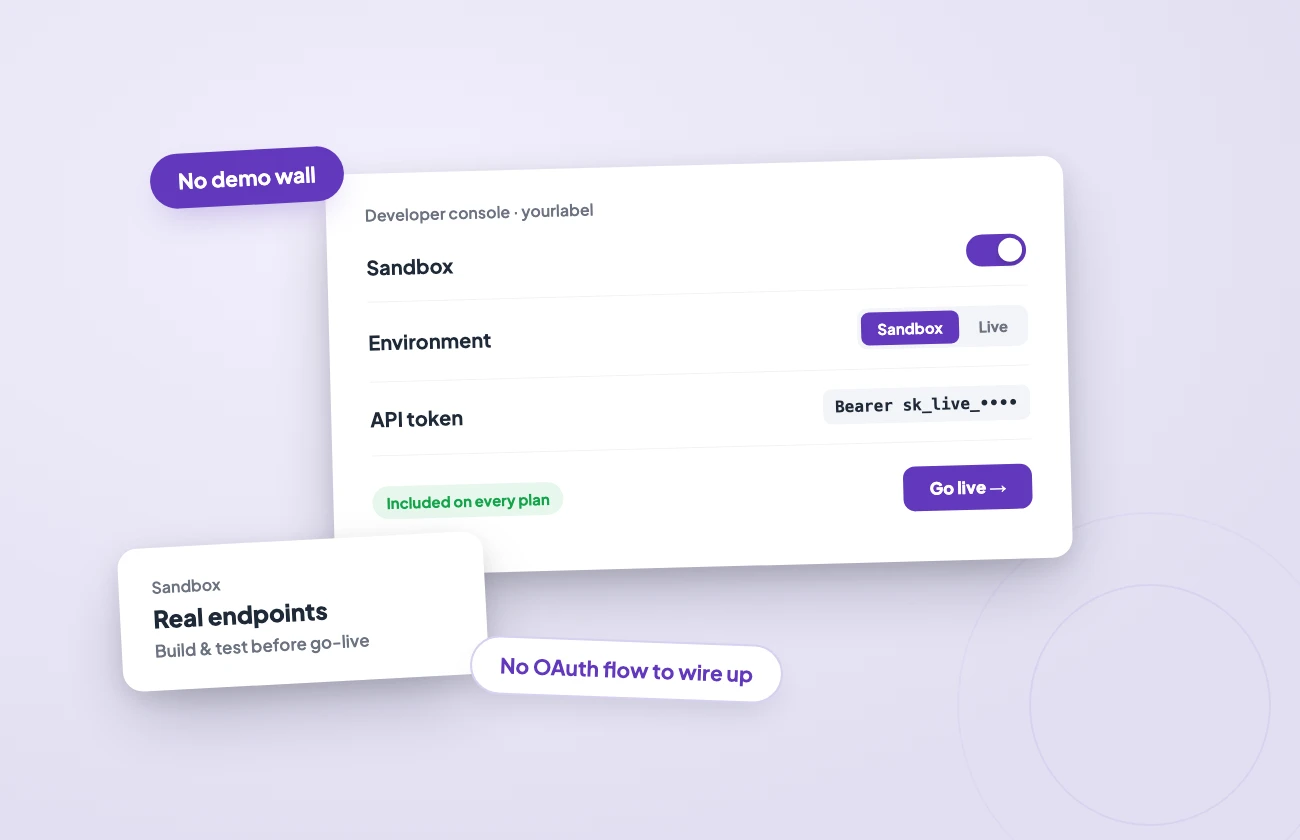
You generate an API token from your dashboard and send it as a bearer token in the Authorization header on every request. There is no OAuth flow to implement and no SDK requirement, so any HTTP client works. A call to /api/public/me confirms your token is connected.
Is there a sandbox I can test in?
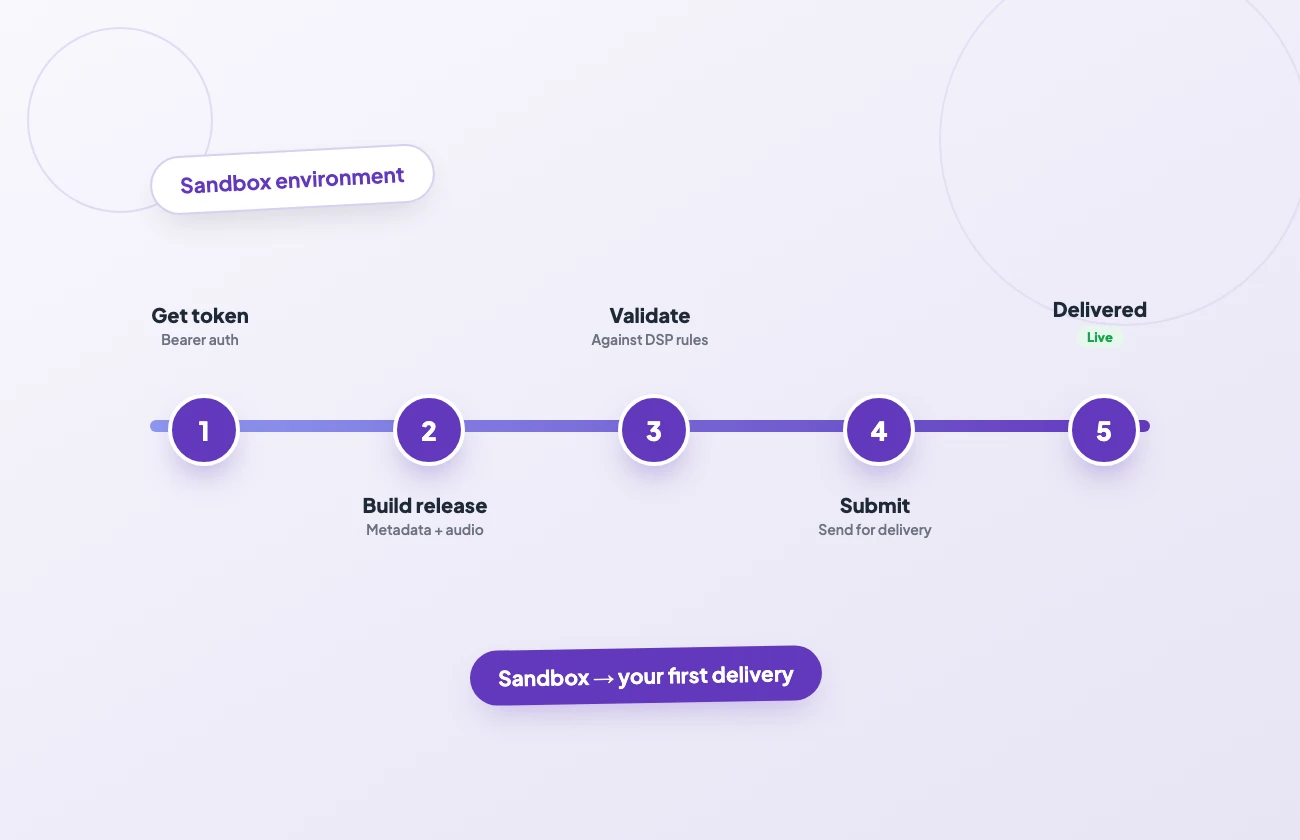
Yes. Every API plan includes a sandbox environment so you can build and test against real endpoints without touching live deliveries or real money. Before you subscribe, you can also read the full public API documentation to evaluate every endpoint.
Does LabelGrid support DDEX?
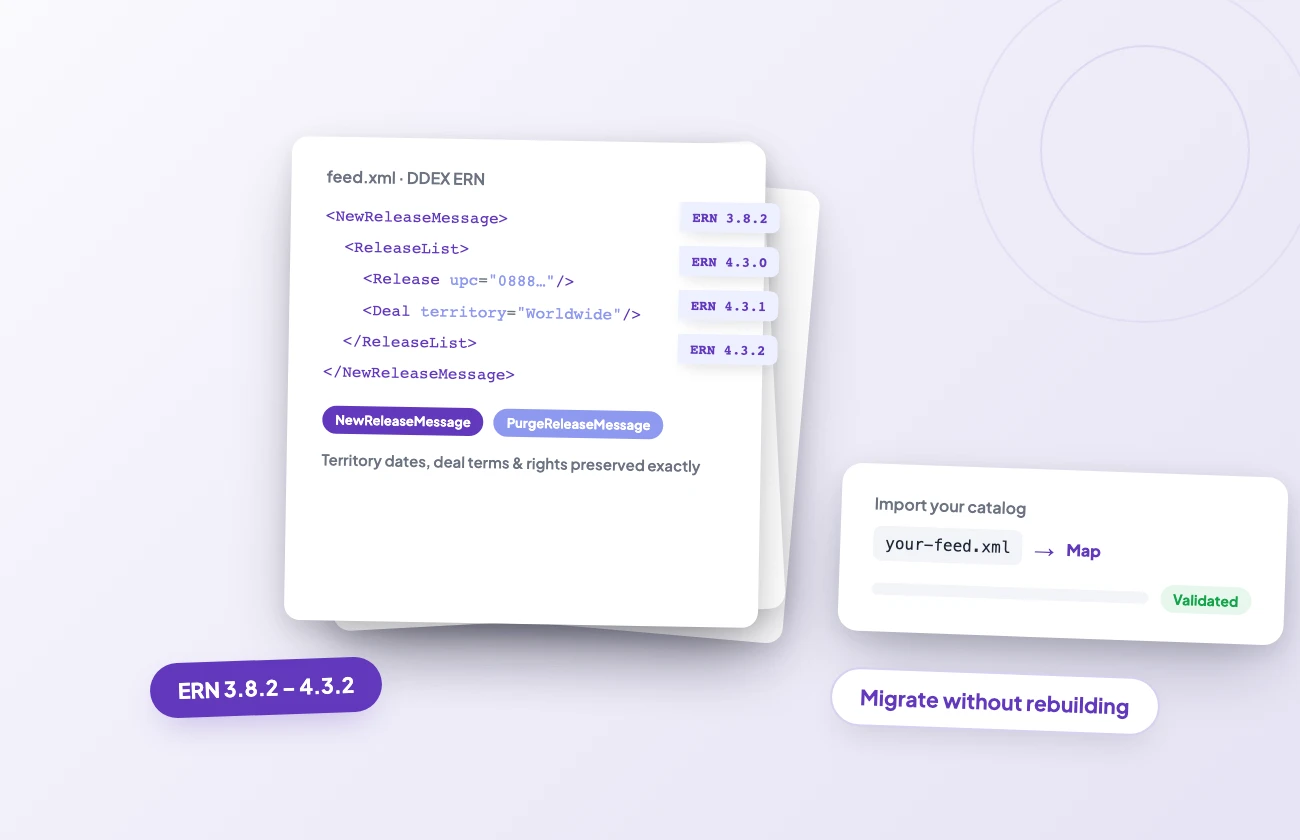
Yes. LabelGrid supports DDEX ERN 3.8.2, 4.3.0, 4.3.1, and 4.3.2 for DSP delivery, with full NewReleaseMessage and PurgeReleaseMessage support. If you are migrating from another distributor, DDEX import lets you bring an existing catalog into LabelGrid. See the DDEX import guide for details.
What does the API cost?
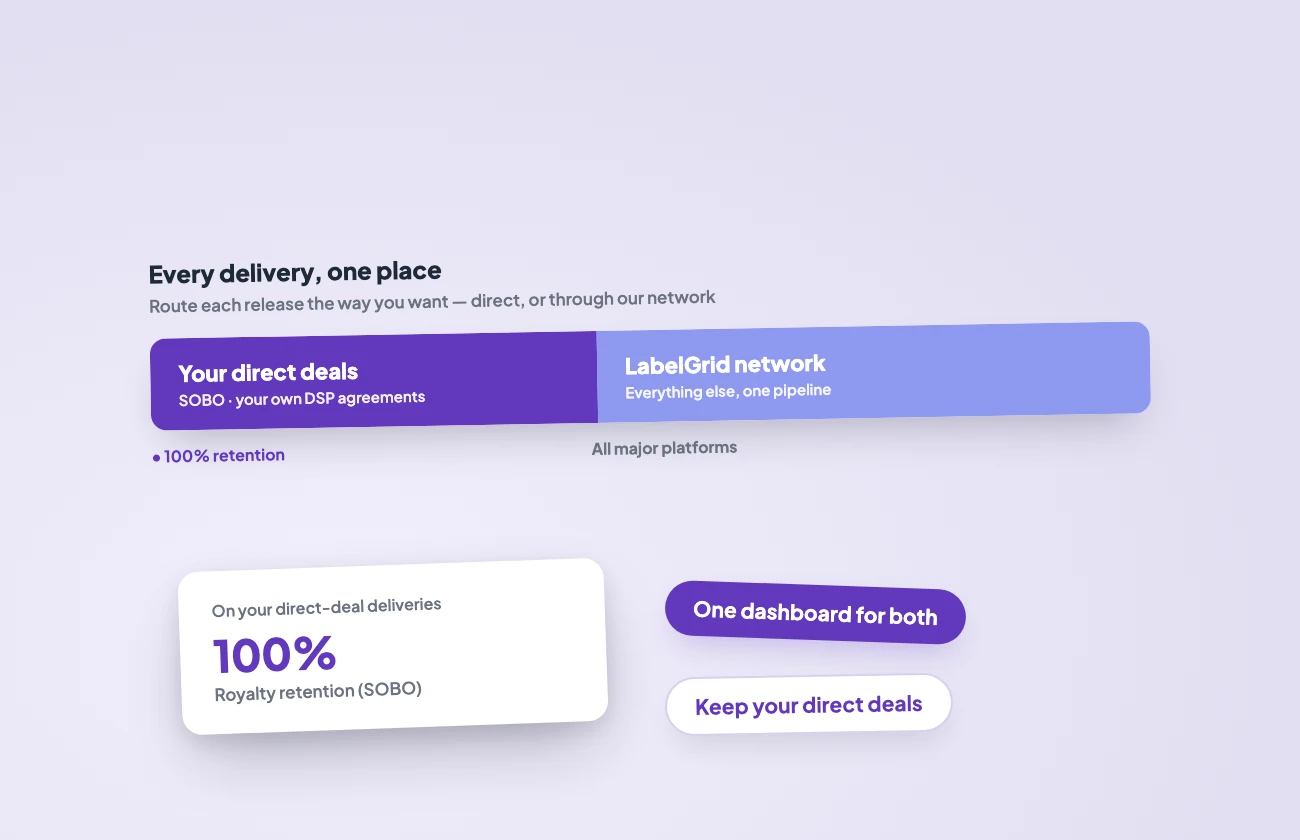
API access requires an API plan. LabelGrid offers four tiers: Starter API ($1,668/year), Growth API ($4,668/year), Scale API ($10,548/year) and Custom API (from $25,788/year), billed yearly in advance on a 2-year commitment. Each has different track limits and label portals, and first response is within 2 business days on every tier. On every API plan you keep 95% of royalties through LabelGrid's DSP deals and 100% on your own direct deals. See the pricing page for full details.
What support comes with an API plan?
Support is human on every tier, with no chatbots in the queue. First response is within 2 business days. Our average response time is under 2 hours during business hours, and that is an average rather than a per-ticket guarantee. We answer on business days during working hours, so we do not run a 24/7 desk. Scale API and Custom API also include a dedicated account manager.
What DSPs can I deliver to via the API?
LabelGrid delivers to all major digital service providers including Spotify, Apple Music, Amazon Music, Deezer, Tidal, YouTube Music, TikTok, and Instagram, and to regional platforms on every continent: Anghami, JioSaavn, Boomplay, KKBOX, AWA, FLO, JOOX, NetEase and more. Every store and service we reach is published on our Supported Platforms page. As a Spotify Preferred distributor and a Merlin member, LabelGrid offers priority delivery and editorial pitching tools. The same DSP network is available to all API plan customers.
How does multi-label management work?
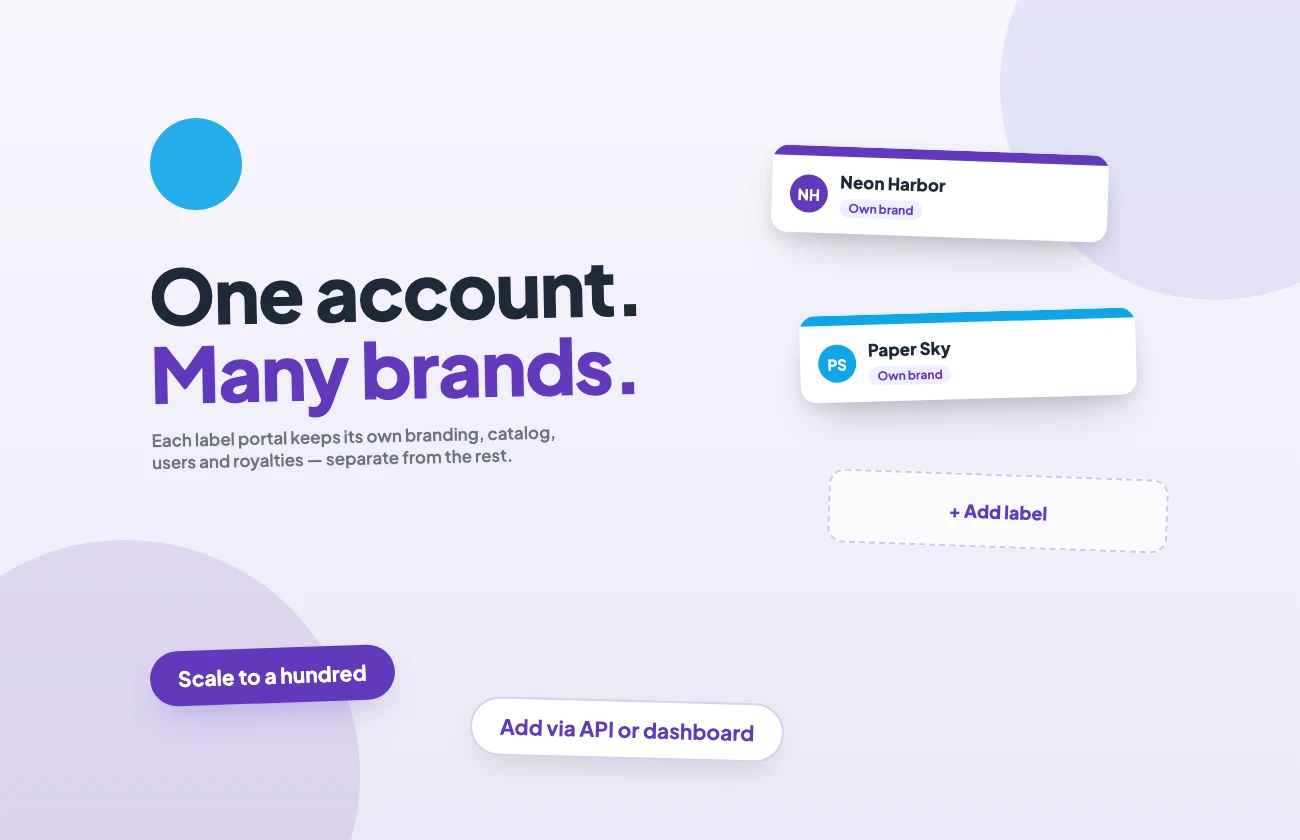
Each API plan includes multiple label portals, 5 on Starter, 25 on Growth, 100 on Scale, and more on Custom. Each label gets its own branding, catalog, user access, and royalty reporting, completely separate from your other labels. Additional label packs can be added to any plan.
Can I white-label the platform?
Yes, two ways. The Imprint is a hosted branded platform you configure rather than build; join the waiting list and we onboard resellers in order, with hands-on setup help for every new portal. What Imprint gives you: your domain, your logo, your colors and fonts, your plans and prices, billed through your own Stripe account, all configured from an admin dashboard, and nobody has to build the interface. Or build your own interface on Engine, our distribution API, with public docs and a sandbox on every API plan. Contact sales to talk through either path.
How do I get the Imprint white-label portal?
Through the waiting list. Imprint is waiting-list only: we onboard resellers in order, with hands-on setup help for every new portal. You point your own web domain at it, pick your colors with a color picker, choose any Google Font or upload your own, name the product whatever you want, and build your own subscription plans and prices. Customer billing runs on your own Stripe account, so the money goes straight to you. Everything is configured from an admin dashboard; nobody builds an interface, and your customers never see LabelGrid.
What do the analytics and royalty endpoints actually return?
The analytics endpoints return per-track, per-platform and per-territory series for streaming and engagement, covering plays, listeners, saves, playlist placements, geography and demographics, filterable by ISRC, UPC, release or artist, with a machine-readable availability matrix and per-section freshness dates so you know exactly what each store reported and when. The statement endpoints return itemized royalty statements broken down by platform, release and track, plus transactions and splits. It all comes back as JSON you can pull on any schedule, and the same data is available through the open-source LabelGrid MCP server for AI assistants.
How do I get started on an API plan?
Read first: the full API documentation is public at api.labelgrid.com/docs/api, with no login and no demo wall, and every price is published on the pricing page. When you know which tier you want, tell us and we set the account up. Every API plan includes a sandbox environment, so you build and test against real endpoints before anything touches live deliveries or real money.
How is Preflight QC priced?
Preflight QC is an addon for API and white-label plans, priced by your monthly release volume. It runs automatically on every release, so there is no per-release fee. Tell us roughly how many releases you push a month and we scope it. It checks audio quality, flags duplicates and known recordings, runs metadata and formatting against store style guides, verifies credits, rights work and licences, and reads AI and content declarations, artist profiles and artwork, all before review and before delivery.