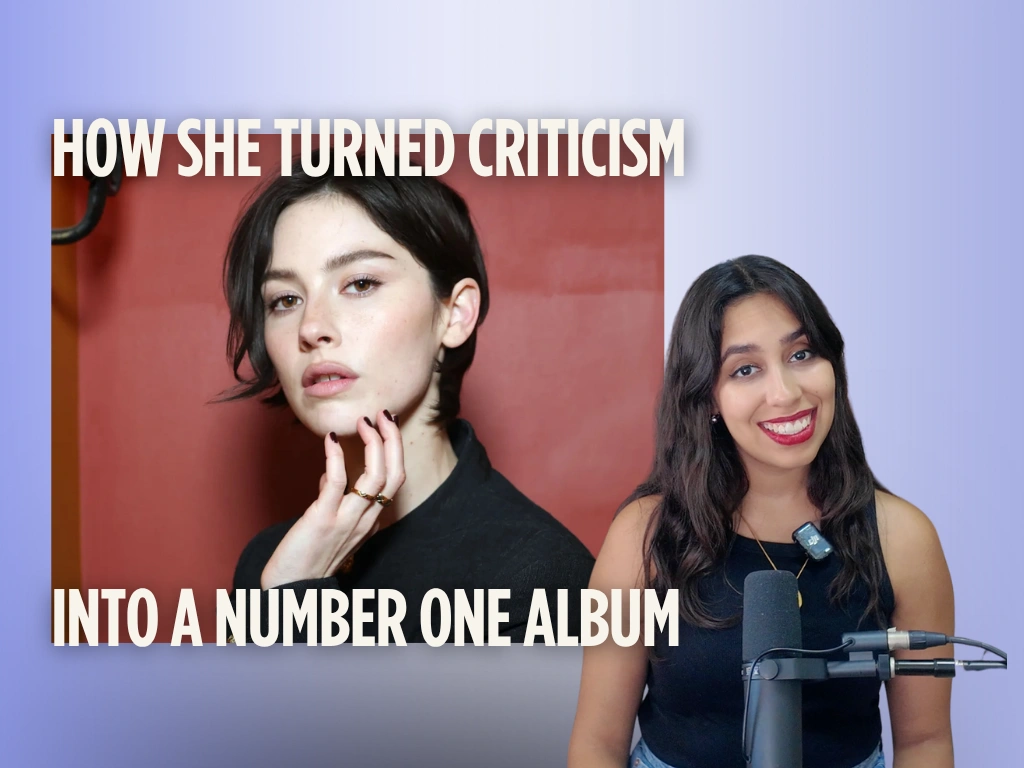
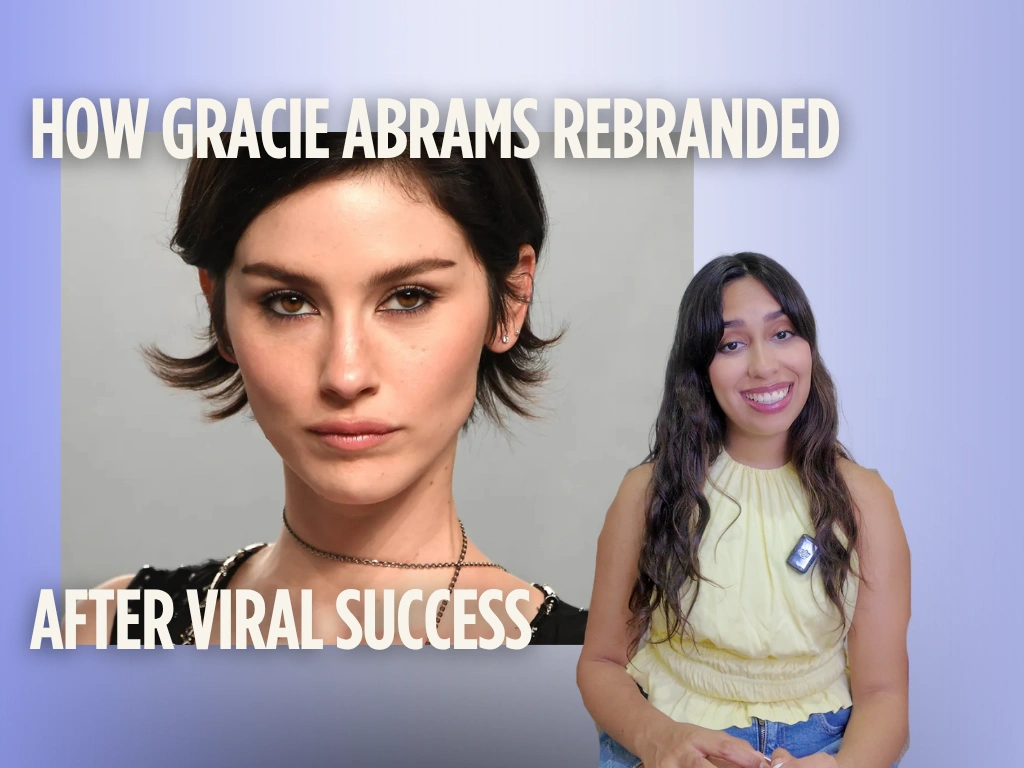
Gracie Abrams just did what most pop artists are terrified to attempt: she walked away from the exact visual and emotional formula that made her famous and came back even stronger.
At the peak of her success — fresh off opening for Taylor Swift, dominating TikTok, and building one of Gen Z’s most loyal fanbases — she detonated her own aesthetic and rebuilt it from the ground up. The result is Daughter From Hell, a campaign that feels less like a traditional album rollout and more like a carefully engineered psychological marketing strategy.
If you’re an independent artist, manager, or running a small label, this rollout offers a blueprint for how to evolve your identity, fight algorithm fatigue, and grow a cult-like audience without giant budgets or noisy hype.
From Warm Nostalgia to Clinical Intimacy
Gracie Abrams’ earlier era, The Secret of Us, revolved around warmth and nostalgia:
- Yellow tones and sun-soaked visuals
- Ferris wheels, friendship, and summer imagery
- A communal, soft, emotionally open feeling
It was a perfect emotional follow-up to the Eras Tour moment. But success comes with a risk: once your aesthetic becomes too recognizable, it stops feeling emotional and starts feeling like packaging. Fans begin predicting your every move. That is when a brand starts to freeze in place.
Instead of stretching that identity for another two years, Gracie’s team pivoted fast. There was no giant billboard reveal, no theatrical teaser trailer. Just a quiet Instagram note announcing Daughter From Hell.
That silence was calculated. In an internet culture where everyone is screaming, teasing, and over-explaining, a sudden calm moment forces people to lean in. Then the title landed: Daughter From Hell.
The title alone shifts expectations. It is darker, confrontational, and already loaded with conflict before anyone hears a single note. The visuals completed the shift:
- Sterile doctor offices
- Clinical lighting and inkblot imagery
- Emotional paralysis and burnout as central themes
This is what we can call Clinical Intimacy Marketing. Instead of selling aspiration, Gracie sells emotional recognition. She does not speak from above her audience. She stands beside them, documenting burnout and anxiety in real time. For independent artists, this is a powerful reminder: vulnerability can be the core of your brand, not just an add-on to it.
Treating TikTok Like a Psychological Weapon
Most artists still treat TikTok as a place to dump a teaser, hope a trend catches, and then move on. Gracie Abrams’ team treated TikTok as a psychological game board.
Weeks before the single “Hit the Wall” officially arrived, the bridge started circulating in tiny, raw fragments:
- Voice-note style clips
- Unpolished audio
- Emotionally messy, unedited snippets
Rawness works. Perfect content feels corporate; imperfect content feels personal. Instead of a glossy ad, fans felt like they were overhearing something private. That alone makes people more likely to share, comment, and obsess.
Beneath that, her team layered in a deeper strategy: lore.
With producers like Aaron Dessner, Bryce Dessner, and Justin Vernon involved, fans were not just hearing a song — they were decoding a universe:
- “Is that Bon Iver in the background?”
- “Is this connected to ‘I Told You Things’?”
- “Why does this feel emotionally darker than her old music?”
Those questions became free marketing. Fans turned into detectives, analysts, and theorists. Once audiences start building theories, they are doing your promotion for you.
This is decentralized promotion: instead of forcing a rigid story onto listeners, you build an environment where they construct the narrative themselves. That is far more powerful than a single ad campaign or one big “viral” moment.
If you want to explore more examples of artists turning storytelling into full ecosystems, study how other campaigns did it, like Olivia Dean’s intentional artist growth strategy or the campaigns highlighted in our favorite artist marketing campaigns.
Turning Emotional Burnout into a Luxury-Ready Brand
On paper, “luxury celebrity” and “emotionally fragile indie songwriter” should not fit together. One pushes you toward glossy distance, the other demands raw honesty. Most artists lose credibility the moment they lean too far into polished partnerships.
Gracie Abrams managed to blend both.
Look at the sequence in her public presence:
- Stripped-back interviews and SiriusXM sessions discussing emotional burnout
- High-fashion campaigns with Hourglass
- Appearances at the Met Gala with Vogue
That contrast is not accidental. It creates a feeling of aspirational relatability. Fans see someone emotionally accessible who is still moving into higher cultural spaces. She is not abandoning vulnerability for luxury; she is threading them together.
This balance shows up clearly in the “Hit the Wall” video. Clinical imagery and cool tones feel elevated enough for fashion audiences while remaining intimate enough for bedroom-pop fans. The message to brands: she is safe and serious. The message to fans: she is still one of you.
For independent artists, this is a useful model:
- Leverage vulnerable storytelling and stripped-back content to maintain emotional trust.
- Carefully select higher-profile visuals or collaborations that extend your reach without erasing your core identity.
- Design visuals that can live comfortably in both fan spaces and brand spaces.
If you are exploring how artists navigate similar shifts into bigger-brand territory without losing their roots, it is worth studying campaigns like Rosalía’s modern album rollout, which also walks that line between artistry and scale.
From Viral Moments to Cult-Level Loyalty
The modern industry is facing a churn problem. Songs dominate feeds for a few days and then vanish. Gracie Abrams’ Daughter From Hell rollout offers a counter-strategy: prioritize emotional infrastructure over momentary attention.
A key move was how her team handled the album announcement:
- Instagram quietly reveals the project.
- Spotify countdown pages activate almost immediately.
- Fans have a direct path to pre-save, explore the tracklist, and start forming theories.
This is about reducing friction. Once a fan feels emotionally triggered by a title, a visual, or a snippet, they need an instant way to convert that feeling into action — a pre-save, a follow, a playlist add, a share.
That is why elements like:
- Pre-save links
- Tracklist reveals
- Easter eggs and callbacks between songs
matter so much. They turn listeners into insiders. And once somebody feels like an insider, their loyalty increases. They are not just consuming a product; they are participating in an era.
For independent creators, this means designing campaigns that:
- Give fans something to decode or speculate about.
- Offer immediate conversion paths after every big emotional beat.
- Encourage discussion, not just passive streaming.
Virality gives you reach. Community gives you a career.
What Independent Artists Can Learn from “Daughter From Hell”
Daughter From Hell exposes why so many album rollouts fail: they chase noise instead of building emotional architecture. Here are the key lessons artists and small labels can apply, even without huge budgets.
1. Evolve Your Aesthetic Before Audiences Get Bored
Do not stay locked into the exact look and sound that first worked for you. The internet rewards novelty, but your fans reward evolution. If your visual identity feels like a copy of your last era, people will treat it like reruns.
Ask yourself:
- What emotional space did my last release occupy?
- What new emotional territory can this next era claim?
- How can I visually signal that shift instantly?
2. Choose Emotional Specificity Over Perfection
The more clinically honest and specific Gracie’s rollout became — burnout, emotional paralysis, anxiety in sterile environments — the more fans trusted her. Broad, generic emotions feel like slogans. Sharp, detailed emotions feel human.
Your content does not need to be flawless; it needs to be precise about what you are feeling and why.
3. Stop Treating Songs Like Isolated Products
Every snippet, visual, lyric, and interview is now part of a broader marketing ecosystem. Gracie’s team understood that a voice note on TikTok, a rumored feature, and a subtle visual callback can all feed the same narrative.
Design your rollout like an interconnected world:
- Plan how snippets, visuals, and captions echo each other.
- Leave intentional gaps for fans to fill with theories.
- Reward those theories with small confirmations or callbacks.
4. Build Intimacy, Not Just Virality
Anyone can catch a trend once. What actually compounds over time is emotional familiarity. Fans return to artists who feel legible: they recognize your tone, your emotional palette, and the way you process life.
Gracie’s rollout proves that intimacy scales. The stronger your emotional fingerprint, the easier it is for fans to identify with your growth from project to project.
Modern Music Marketing’s New Center: Emotional Recognition
Gracie Abrams’ Daughter From Hell rollout suggests a shift in how campaigns are built. Modern marketing is no longer about being the loudest presence in the feed. It is about being the most emotionally recognizable.
For independent artists and labels, that means:
- Building eras around specific emotional states, not just sonic shifts.
- Using platforms like TikTok as interactive story worlds, not billboards.
- Reducing friction between emotional excitement and concrete actions like pre-saves and follows.
- Designing your visuals so they can live comfortably in both intimate fan spaces and larger media or brand spaces.
Vulnerability is no longer a branding weakness. It is becoming the central product. Artists who understand this — and structure their rollouts around genuine emotional recognition — will be better positioned to survive algorithm fatigue and build careers that last far beyond a single viral spike.
The question now is how you will adapt these ideas for your own projects: what era are you inviting your audience into, and how will you let them participate in building it with you?