Short answer: streaming pays little per play because services share out a monthly revenue pool instead of paying a fixed rate per stream, so a stream is worth more or less depending on the listener’s country and plan. Six fixes help: diversify your income, sell directly to fans, collect every royalty you are owed, plan your releases, use your listener data, and agree splits before you collaborate.
If you’re an artist relying on streaming income, you’re likely frustrated by low payouts. Spotify itself says no service pays a fixed amount per stream, because listeners pay for access rather than per play. For many artists, streaming alone isn’t enough to sustain a career. But there are ways to improve your income.
Here’s how you can move beyond streaming revenue:
- Diversify Income: Sell merchandise, perform live, and license your music for TV or games.
- Connect Directly with Fans: Build email lists, sell exclusive content, and host private events.
- Optimize Royalties: Use tools like LabelGrid to track and collect revenue efficiently.
- Plan Better Releases: Schedule consistent drops, use pre-save campaigns, and refine metadata.
- Leverage Data: Analyze listener habits to focus on high-value opportunities.
- Structure Collaborations: Define revenue splits upfront and register your music properly.
Streaming income is unreliable, but combining these strategies can help you build a more stable and rewarding music career.
Why Streaming Revenue Alone Isn’t Enough
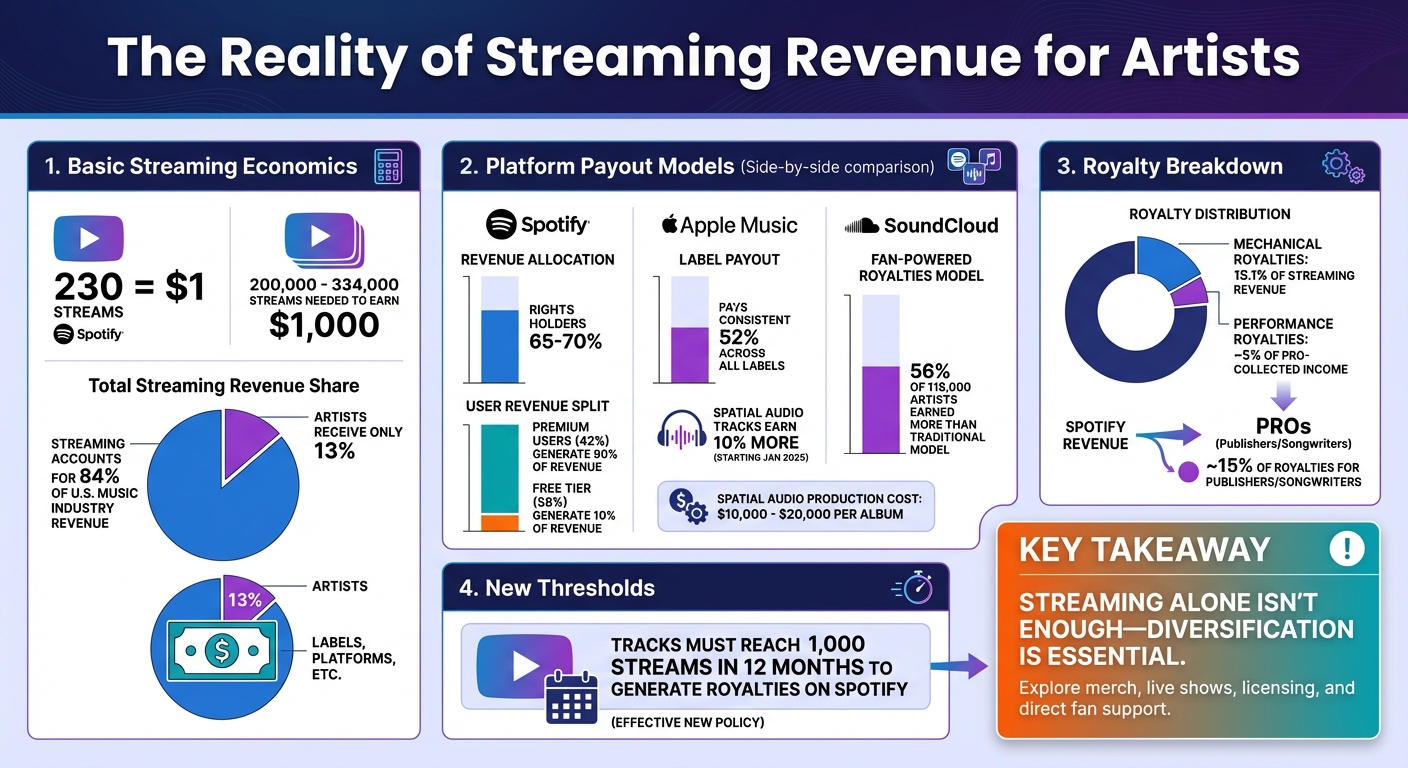
Streaming platforms are just one piece of the puzzle when it comes to building a reliable music career. Depending only on streaming income leaves you exposed to things you can’t control – like changes to algorithms, being removed from playlists, or shifts in listener behavior. All of these can drastically affect your earnings. Even though streaming accounted for 69.6% of global recorded-music revenue in 2025 (IFPI Global Music Report 2026), the way payouts are structured often means artists struggle to make a living from streams alone. Understanding how this works is key to grasping the challenges musicians face.
How Streaming Payout Models Work
Services such as Spotify pay from a pool, not a fixed rate per stream. Each month, Spotify puts about two-thirds of the music revenue it earns in a market, after taxes and payment fees, into that market’s royalty pool. Each rights holder, usually a label or distributor, receives the share of the pool that matches its share of the market’s eligible streams: 0.1% of the eligible streams in Mexico earns 0.1% of Mexico’s pool. The rights holder then pays the artist under their agreement.
What Affects Your Streaming Income
Your streaming earnings depend on more than just the payout model. Per-stream value varies: streams from premium subscribers generate more revenue, and streams from markets with higher subscription prices are worth more than streams from lower-priced markets.
Spotify has also introduced a threshold: a track must reach 1,000 streams in the previous 12 months before it earns recording royalties on Spotify. Below that mark it earns no recording royalties there; publishing royalties are not affected.
Tools to Estimate Your Earnings
To make the most of your streaming income, you first need to understand what you’re earning. Tools like royalty calculators and analytics dashboards can help you estimate your per-stream income in USD and set realistic financial goals. These tools take into account differences between platforms, listener types, and your unique distribution setup.
Get a clear picture of your streaming income before exploring other revenue options. Once you know exactly how much you’re making – or not making – you can make smarter decisions about where to focus your time and resources.
Solution 1: Diversify Your Income Streams
Putting all your eggs in the streaming basket can leave you financially vulnerable. By branching out into multiple income streams, you create a safety net that not only stabilizes your career but also allows you to focus more on your artistry. When one source falters, others can step in to fill the gap. Below, we’ll explore how merchandise, live events, and licensing can become reliable sources of income.
Merchandise and Physical Sales
One way to cash in is through print-on-demand services, which let you sell custom apparel without the hassle of managing inventory. Limited-time merch drops can create urgency, driving sales. You can also bundle these physical items with digital perks like unreleased demos, lyric sheets, or exclusive discount codes to sweeten the deal. For example, a print-on-demand store generating $5,000 in monthly sales at a 20% profit margin would bring in around $1,000 in profit.
Live Performances and Events
Whether it’s ticketed concerts, private gigs, or virtual performances, live events provide multiple income streams through ticket sales, performance fees, and tips.
Virtual concerts have also stepped up their game, thanks to tools like OBS Studio and Streamlabs. Platforms like Restream.io allow you to broadcast to multiple streaming services at once. You can also add virtual tip jars through StreamElements or Streamlabs, and sell merch through Shopify, Printful, or Fourthwall.
Sync Licensing and Direct-to-Fan Sales
Sync licensing – getting your music placed in TV shows, films, commercials, or video games – can be a goldmine. To maximize your chances, make sure your tracks are sync-ready by providing instrumental versions, complete metadata (title, composer, BPM, etc.), and high-quality WAV files.
You can submit your music to sync libraries and licensing marketplaces. Alternatively, working with a sync agent may secure higher-paying placements. Beyond licensing, you can offer custom commissions for fans – think personalized songs, birthday shout-outs, or remixes – on platforms like SoundBetter, AirGigs, or Fiverr. Selling digital products like sample packs or multitrack stems through Bandcamp, or submitting sample packs to Splice, is another option. For instance, if you sell a digital product for $10 and net $7 per sale, you’d only need to sell 143 units per month to earn $1,000. This principle applies just as well to digital music products as it does to eBooks or other creative assets.
Solution 2: Build Direct Relationships with Fans
Streaming platforms may give you access to a global audience, but they don’t let you truly own that connection with your fans. By building direct relationships, you gain more control over your career and income. Here’s how you can take advantage of this approach.
Sell Digital and Exclusive Content
Streaming pays little per play, but when you sell directly to fans you keep a far larger share of each sale than a stream pays, even after the platform’s fees. Fans are often willing to pay a premium for exclusive or personalized content they can’t find elsewhere. Think digital albums, B-sides, demos, behind-the-scenes videos, private livestreams, digital songbooks, or even remixable stems. You could also offer limited-edition bundles, early access releases, or custom packages. When you set the prices and run the promotions, you decide what your work is worth.
Own and Manage Your Fan Data
An email list might not sound glamorous, but it’s one of your most powerful tools. Collecting fan contact details – like emails, purchase history, and locations – gives you a direct, unfiltered line to your audience. Unlike social media algorithms, which can change overnight, this connection is yours to control. Use email newsletters to share updates, exclusive previews, or behind-the-scenes content to keep fans engaged between releases.
Host Private Events
Private events, whether online or in-person, create a sense of exclusivity that fans love. Hosting watch parties, listening sessions, or live Q&As can build a stronger connection while generating additional revenue. Virtual performances, behind-the-scenes studio streams, or intimate acoustic sets are great options. You can even offer tiered access – basic tickets for general admission and premium packages that include meet-and-greets or exclusive merchandise. Making fans feel appreciated is a surefire way to keep their support coming.
Solution 3: Optimize Royalty Collection with LabelGrid
Independent artists often face the challenge of lost royalties. Without a well-organized catalog or complete metadata, you risk missing out on revenue that’s rightfully yours. LabelGrid simplifies the process by combining music distribution, royalty tracking, and catalog management into one platform. This means you can spend less time chasing payments and more time focusing on your music. Let’s dive into how LabelGrid’s tools can help maximize your earnings.
Catalog Management and Accuracy
Getting paid correctly starts with accurate metadata. Every track needs to include the right credits, version details, and formatting – especially for premium formats like Dolby Atmos. LabelGrid’s catalog management tools ensure all this information is stored in one place, keeping your track versions and contributor details easily accessible. With complete and accurate metadata, streaming platforms and rights organizations can efficiently match your music to the correct royalty streams, reducing the chances of revenue slipping through the cracks.
Royalty Tracking and Splitting
Once your metadata is in order, LabelGrid’s royalty accounting brings your revenue data together by release, platform and territory, so you can see at a glance where your income comes from. On the Basic plan and above, LabelGrid also handles royalty splits: set the percentage for each producer, co-writer or featured artist on a release or track, and LabelGrid calculates every share and generates each collaborator’s statement.
Monetization Tools for Additional Platforms
Your revenue isn’t limited to just Spotify and Apple Music. Platforms like SoundCloud and YouTube also offer ways to monetize your music. LabelGrid handles the details for these channels, helping you capture income from a broader range of sources. By tapping into multiple platforms, you create more stability and diversity in your revenue streams.
Solution 4: Improve Your Release Strategy
A well-thought-out release strategy can make all the difference between a song that fades into the background and one that gets noticed. Think of each release as a mini-campaign, planned with care and intention. Here’s how to craft a strategy that works.
Keep a Consistent Release Schedule
Each release gives your followers something new: on Spotify, for example, a new release shows up in followers’ Release Radar. Releasing regularly keeps your fans engaged and gives you more chances to attract new listeners. Some independent artists use a “waterfall” approach, releasing singles one at a time to build momentum.
Build Buzz Before the Release
Build excitement before your song drops. A pre-save adds the release to a fan’s library on release day, which helps drive first-day streams. If you want Spotify’s editors to consider the song, pitch it through Spotify for Artists at least 7 days before release. Use the weeks before release to share teasers, behind-the-scenes clips or targeted messages with your audience.
Fine-Tune Metadata and Artist Profiles
Metadata might not sound exciting, but it’s critical for making your music discoverable and playlist-worthy. Ensure every track includes accurate titles, genre tags, mood descriptors, and contributor credits. Additionally, your artist profile should look polished and professional. Use high-quality cover art, write a clear bio, and maintain consistent branding across platforms. These small details can make a big difference in how curators and listeners perceive your work.
Solution 5: Use Data to Find High-Value Opportunities
Data is the key to making smarter decisions about your income. Every stream offers a glimpse into your listeners’ habits – where they’re tuning in, the platforms they prefer, and which tracks they keep coming back to. By understanding these patterns, you can focus your efforts where they’ll have the biggest impact. A data-focused approach helps you craft strategies tailored to specific markets.
Analyze Listener Locations and Platforms
Start by digging into where your listeners are based. Tools like Spotify for Artists, Apple Music for Artists, and YouTube Analytics provide detailed insights into listener demographics, including countries and even specific cities. This information matters because royalty rates and licensing agreements vary by region, meaning a thousand streams in one country could earn you a lot more than the same number in another. By pinpointing where you have the most listeners, you can concentrate your promotional efforts in regions that offer higher payouts. Apple Music for Artists also gives access to Shazam data, which can highlight locations where your track is frequently identified – this could reveal untapped markets worth exploring.
Focus on High-Retention Tracks
Pay close attention to which tracks keep listeners engaged from start to finish. High retention rates indicate a deeper connection with your audience, as opposed to casual curiosity. These tracks are prime candidates for remixes, sync licensing opportunities, or targeted marketing campaigns. Observing how listeners transition from casual streams to loyal followers can help you identify the songs with real potential to generate steady income.
Use LabelGrid’s Detailed Dashboards
LabelGrid offers powerful analytics tools that break down your earnings by track and platform, showing revenues in USD. This detailed view allows you to see which releases are bringing in the most money and which platforms are performing best for your catalog. By tracking trends and identifying top-performing tracks early, you can adjust your strategy to focus on what works. Turning this data into actionable insights can help you maximize your revenue and refine your approach for future releases.
Solution 6: Structure Collaborations for Better Revenue Splits
Collaborations can expand your audience and creative reach, but they often bring financial challenges if agreements aren’t clearly defined. Along with leveraging diverse revenue streams and well-timed releases, setting up structured collaborations ensures everyone involved gets their fair share. Whether you’re working with producers, co-writers, or featured artists, clear agreements and documentation are essential to avoid disputes and guarantee proper compensation.
Define Rights and Splits Beforehand
Settle ownership and revenue splits before releasing a track. This includes defining key rights, such as master recordings, publishing rights, and neighboring rights. Owning your masters means the recording royalties are paid to you rather than to a label. Make sure to clear any samples or loops early on, as unresolved copyright issues can block sync placements. To keep things organized, use a split sheet to document the song title, collaborators, their contributions, and the agreed royalty percentages. This simple step can prevent misunderstandings down the road.
Simplify Payments with LabelGrid
Handling revenue splits by hand is slow and error-prone. On the Basic plan and above, LabelGrid calculates each collaborator’s share from the splits you set on a release or track, whether an even 50/50 split or custom percentages, and generates their statements. You see each collaborator’s balance, export their statement as a PDF to send them, and record each payment after you make it through your own bank or payment service. Everyone can see how their share was worked out, which cuts down on disputes.
Register Your Works with US Rights Organizations
To collect all the royalties you are owed as a songwriter, register your works with a performing rights organization (PRO) such as ASCAP or BMI (SESAC is invitation-only). PROs collect public performance royalties. Also register with the Mechanical Licensing Collective (MLC), which collects US streaming mechanical royalties for songwriters and publishers. Proper registration helps make sure every collaborator is correctly identified and paid, which lowers the risk of disputes.
When rights are clearly documented and works are registered, collaborations become opportunities for growth and profit instead of administrative burdens.
Conclusion
Relying solely on streaming revenue rarely provides enough to sustain an artist’s livelihood. The strategies discussed – diversifying income streams, building direct fan connections, maximizing royalty collection, refining release tactics, leveraging data insights, and forming strategic collaborations – are most effective when used together as part of a unified plan. This combined approach not only helps stabilize income but also lays the groundwork for lasting career growth.
With tools like LabelGrid, managing your catalog, tracking royalties and working out splits becomes simpler, giving you more time to focus on what truly matters: creating music and connecting with your audience.
Reinvesting your earnings into key areas like promotion, production quality, and fan engagement can yield long-term benefits. Over time, these efforts build a stable foundation capable of withstanding changes in algorithms, platform trends, and market dynamics.
FAQs
What are some effective ways for artists to earn income outside of streaming?
Artists have plenty of ways to grow their income beyond relying on streaming platforms. One option is licensing your music for use in TV shows, movies, or commercials, which can lead to lucrative payouts. Selling merchandise – like T-shirts, posters, or even unique accessories – offers not only a chance to make extra cash but also a way to deepen your connection with fans. And let’s not forget live shows and tours, which bring in revenue while helping you build a stronger, more loyal fan base.
Another idea is offering fan subscriptions through platforms where supporters can pay a monthly fee for access to exclusive content, like behind-the-scenes footage or unreleased tracks. On top of that, creating digital products – such as music courses, sample packs, or even offering personalized experiences – can open up fresh income opportunities. Diversifying your revenue streams isn’t just smart; it’s a way to build a more stable and long-lasting career as an artist.
How can artists connect directly with fans to boost their income?
Connecting with fans on a personal level can be an incredible way to grow your income while building loyalty and creating genuine relationships. Social media is a great starting point – reply to comments, share behind-the-scenes moments, or host live Q&A sessions to make your audience feel involved. After performances, take a moment to meet fans, snap photos, or sign merchandise. These small gestures can leave a big impression.
You can take it a step further by offering experiences or products that feel exclusive. Think about personalized merchandise, intimate house concerts, or subscription platforms where fans can enjoy perks like unreleased tracks or early ticket access. These thoughtful touches not only deepen the connection but also inspire fans to support your work in meaningful ways.
How does LabelGrid help artists collect royalties more effectively?
LabelGrid offers artists a hassle-free way to manage their royalty collection with intuitive digital tools. It ensures metadata accuracy and provides efficient royalty tracking, making sure artists get the credit they deserve for their creations. On top of that, it simplifies digital distribution, enabling artists to boost their earnings while keeping complete control over their rights.
- Streaming Revenue Statistics: Why Artists Need Multiple Income Streams ↩︎