In today’s music landscape, songs don’t just accidentally go viral. Behind most breakout hits sits a carefully engineered strategy that blends emotion, storytelling, and platform-native content.
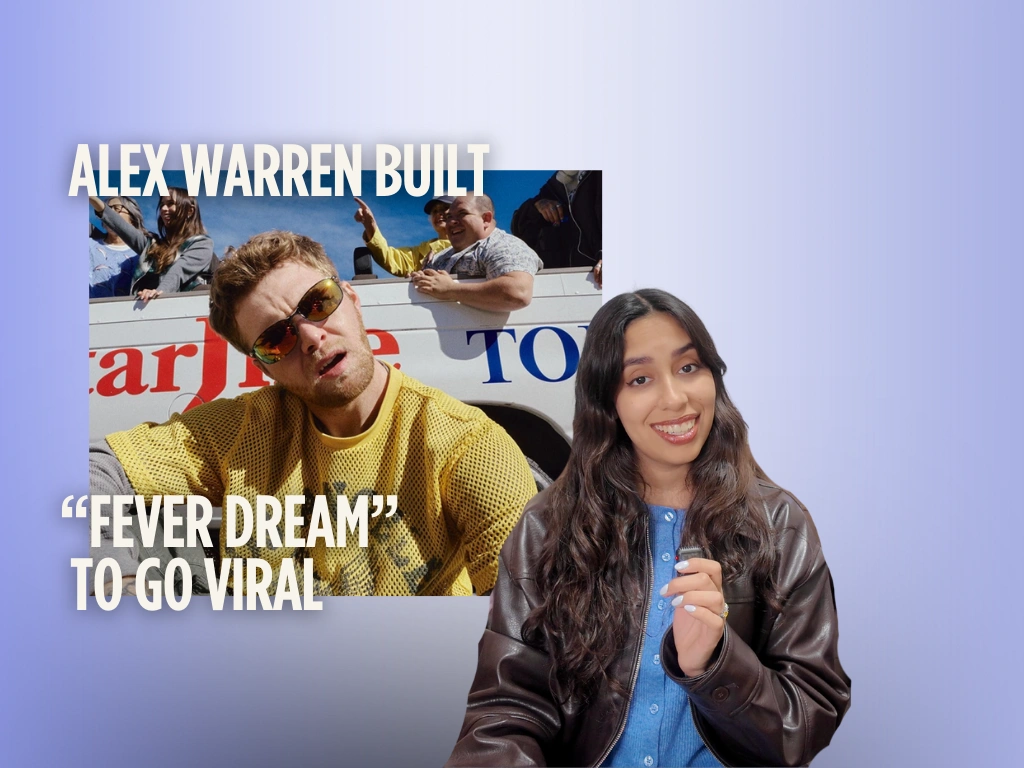
Alex Warren’s “Fever Dream,” released on February 27th, 2026, is a textbook example of this. It didn’t just “drop” — it arrived pre-loaded with belief, emotional buy-in, and a waiting army of supporters.
This post breaks down how Alex transformed “Fever Dream” from a song into a movement, and what artists, managers, and labels can learn from his approach.
Beyond the Hype: Alex Warren as a Strategist, Not Just a Creator
Many people first discovered Alex Warren through the Hype House era, lumping him into the broad category of “influencers who make music.” But the success of “Fever Dream” shows something much more sophisticated at work.
Alex didn’t lean on virality alone. He demonstrated an understanding of emotional leverage and narrative-building that rivaled the work of seasoned label marketing teams.
When “Fever Dream” went live, it:
– Popped on Spotify and Apple Music
– Gained traction on TikTok
– Felt less like a debut and more like a moment that was always meant to happen
Why? Because by the time the song was released, the story around it was already familiar. The emotional groundwork had been laid months in advance.
Step 1: Turning Followers Into Believers
Most influencers follow a predictable playbook:
Build a following → Announce a single → Hope followers convert into listeners.
Alex flipped that script.
Instead of trying to turn followers into casual music fans, he focused on first turning followers into believers, people emotionally invested in seeing him win.
That meant:
– Sharing the why behind the music, not just the final product
– Letting fans in on the struggles that shaped the songs
– Creating emotional alignment long before asking for a stream or a purchase
By release day, he wasn’t asking strangers to check out a random song. He was inviting believers to support the next chapter of a story they were already part of.
Step 2: Monetizing Vulnerability (Without Exploiting It)
In a culture obsessed with aesthetics and perfection, many artists project an image of being untouchable, aspirational, and always in control.
Alex chose the opposite.
He built his brand around radical transparency and vulnerability, sharing:
– Stories of homelessness
– Experiences of loss and grief
– Relationship struggles and insecurities
This wasn’t random oversharing. It was strategic positioning:
– Every vulnerable moment gave fans another reason to root for him.
– Every story of pain and resilience became part of a larger emotional narrative.
By documenting his battles and growth, Alex created emotional equity — the kind of investment where fans don’t just like the music; they want the person behind it to succeed.
When it came time to convert that emotional equity into streams and shares, the results spoke for themselves.
Step 3: Proximity Marketing — Making Fans Feel Close
A core pillar of the “Fever Dream” rollout was proximity marketing: deliberately shrinking the distance between artist and audience.
Alex didn’t just post finished products. He:
– Shared clips of himself reacting to demos
– Showed pieces of the songwriting and recording process
– Let fans see his real-time emotional response to hearing the music
This did two powerful things:
1. Created access: Fans felt like insiders rather than spectators.
2. Built momentum: By the time “Fever Dream” was announced, the audience was already emotionally attached to the song’s existence.
When people feel like they helped “discover” or “build” a track, they:
– Share it more often
– Defend it more fiercely
– Replay it more frequently
That sense of proximity quietly turned casual viewers into core supporters.
Step 4: Crafting a Hit Before Release
Alex didn’t wait for release day to start making “Fever Dream” a hit.
Instead of relying on a traditional promo cycle, he pre-seeded the song into culture through:
– Acoustic snippets of the chorus
– Emotional video clips soundtracked by the hook
– Contextual content that showed why the song mattered to him
By the time the full track dropped:
– Fans already knew the chorus
– The hook felt familiar and comforting
– There was a subtle sense of ownership, as if the audience helped grow the song
This pre-familiarity matters for today’s algorithms. Songs that people:
– Don’t skip
– Replay often
– Use in their own content
…are more likely to be amplified by platforms like TikTok, Spotify, and Instagram.
Alex didn’t just release a song, he primed it.
Step 5: Expanding Reach With Nostalgia ft. Paris Hilton
The “Fever Dream” music video featured a surprising guest: Paris Hilton.
At first glance, this might look like a simple celebrity cameo. In reality, it was a smart move in demographic expansion and cultural bridging.
Paris Hilton brought:
– Millennial nostalgia: connecting with an audience older than Alex’s core Gen Z base
– Cross-generational interest: making the video share-worthy beyond TikTok-native circles
– A layer of cultural familiarity that increased replay value
The result: a visual asset that appealed to both younger fans who love Alex and older viewers who grew up during Paris Hilton’s cultural peak.
It wasn’t just a flex. It was precise targeting.
Step 6: Escaping the TikTok Trap
Many creators who explode on TikTok fall into a known pattern:
– Viral sound → One big moment → Struggle to convert into a lasting music career.
Alex intentionally avoided that trap.
Key moves that helped him break out:
– Building a catalog identity: “Fever Dream” wasn’t a random genre experiment — it reinforced a growing sonic and emotional lane fans could recognize.
– Teasing live performances: He used the song to promote the idea of seeing him live, understanding that:
– Streams = short-term attention
– Tickets and touring = long-term sustainability
By focusing on career architecture rather than chasing trends, Alex positioned himself as an artist first, creator second.
Step 7: Mastering Narrative and Platform Mechanics
At the core of everything Alex did around “Fever Dream” was one simple insight:
The story around the song is often as important as the song itself.
Every piece of content, every teaser, clip, or emotional post, was threaded into a larger narrative:
– Alex battling his past
– Overcoming instability and pain
– Channeling those experiences into a song that felt like a release
On top of that, he understood platform mechanics:
– Short, emotional clips drive rewatchability
– Rewatchability boosts retention metrics
– Strong retention increases algorithmic distribution
He wasn’t just posting content. He was programming the platforms to favor his story.
Lessons for Artists, Managers, and Labels
Alex Warren’s “Fever Dream” playbook contains clear takeaways for anyone in music today.
1. Don’t Overproduce the Early Stages
Labels often rush to polish and package artists too soon, stripping away the authenticity that audiences connect with.
Instead:
– Let artists document their journey in real time
– Preserve the rough edges that make stories relatable
– Focus on building a narrative, not just a rollout calendar
2. Build Emotional Equity Before the Big Record
Your “moment” doesn’t start on release day.
– Share your backstory, not just your song links
– Let fans see the stakes: what this record means to you
– Turn passive followers into emotional investors
3. Study Platform Mechanics
Success on modern platforms isn’t random. Learn:
– What keeps people rewatching
– What drives saves, shares, and stitches
– How to create loops and moments that people want to revisit
If your content doesn’t work with the platform’s incentives, it won’t scale.
4. Design for Retention, Not Just Reach
Attention is cheap. Retention is not.
– Aim for content that people watch to the end
– Use stories and emotions to keep them coming back
– Think in terms of chapters, not isolated clips
5. Think in Careers, Not Singles
A viral song can launch a moment. A coherent identity launches a career.
Use each release to:
– Reinforce your sound and visual language
– Deepen your relationship with fans
– Point toward live shows, merch, and long-term experiences
The Real Win Behind “Fever Dream”
Alex Warren didn’t stumble his way into a viral hit. He engineered it.
By understanding how belief, vulnerability, proximity, narrative, and platform mechanics interact, he turned “Fever Dream” into more than a song — he turned it into a shared emotional event.
For anyone navigating the modern music industry, the takeaway is clear:
– Attention fades.
– Algorithms shift.
– Trends die.
But emotional connection and strategic positioning compound over time.
Build belief first. The hits will follow.