Every distributor you can name delivers to the same streaming platforms. Most of them didn’t build that plumbing themselves. White-label music distribution is a business model in which one company builds and operates the infrastructure for delivering music to streaming services, while other companies sell that distribution to artists and labels under their own brand. The infrastructure provider stays invisible. The reseller’s name goes on the product, the reseller sets the prices, and the reseller owns the customer relationship. If you’ve ever wondered how a small distribution company can promise delivery to every major platform without employing a single engineer, white-labeling is usually the answer.
How Does the Model Work?
Two parties split the job.
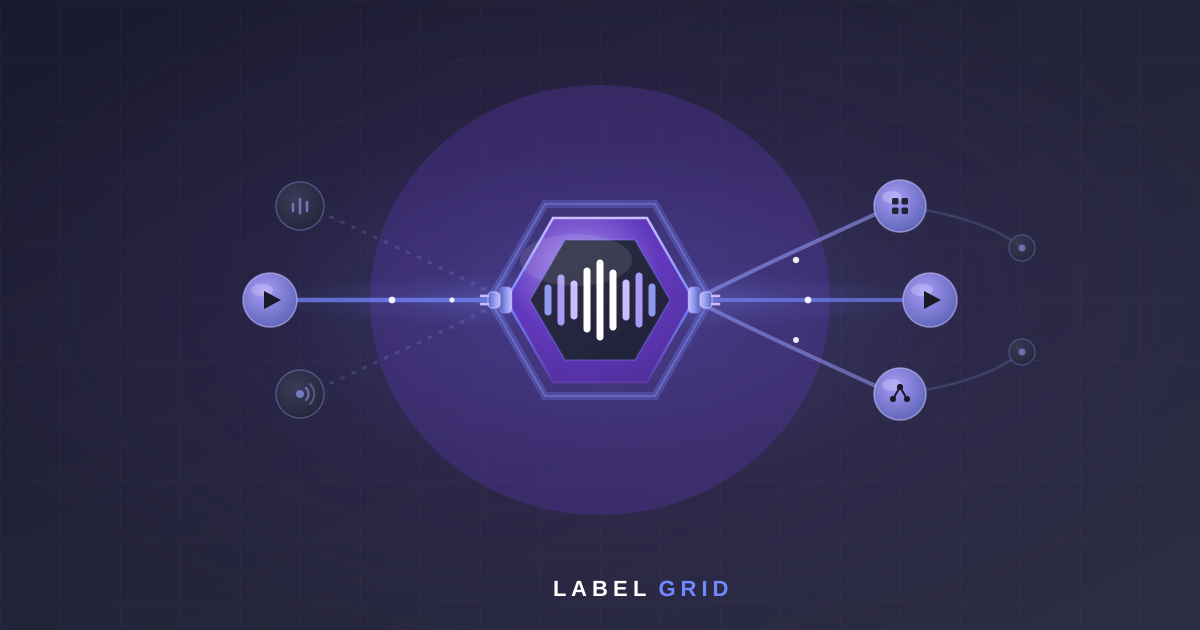
The infrastructure provider handles everything technical. That means the delivery pipelines that push audio files and metadata to each streaming service, the direct content agreements with the DSPs, and the royalty processing that begins when sales reports come back months later. None of it carries the provider’s branding anywhere a customer can see.
The reseller handles everything commercial. It decides what the service is called and what it costs. It recruits the artists, and it answers their questions when something goes wrong. When an artist uploads a release through the reseller’s branded product, the release flows through the provider’s pipeline to the streaming platforms, and the royalty data flows back along the same path. The artist never learns who actually moved the files.
The closest analogy comes from banking. Plenty of fintech apps offer accounts without holding a banking license, because a licensed partner bank sits underneath the product. Music distribution has developed the same layered structure. The reseller is the app people see, and the provider is the bank they don’t.
Who Uses White-Label Distribution?
Four groups account for most of the demand.
Distribution companies are the obvious case, both new and established. A startup with a strong artist network can go to market in weeks by reselling a provider’s pipeline instead of building one. An established distributor might move to white-label infrastructure when maintaining its own delivery stack stops being worth the engineering cost.
Label groups come next. A company operating several imprints usually wants one system for its whole catalog, with its own branding facing the artists it signs. White-labeling gives the group control of the artist experience while someone else maintains the rails.
Publishers use the model too. A publisher expanding into recorded music can offer distribution to its songwriters without becoming a technology company overnight.
Music-tech companies round out the list. An analytics platform or a fan-engagement app can add distribution as a product feature by plugging into a provider’s API, which keeps its engineers focused on what the company already does well.
What Are the Two Ways In?
Providers generally offer two entry points. Which one fits depends on how much you want to build yourself.
The first is an API. Your team builds the customer-facing product, from the upload flow to billing, and calls the provider’s endpoints for everything that touches the DSPs. This route gives you complete control over the experience, and it demands real engineering resources to use well. It suits music-tech companies and distributors that already employ development teams. LabelGrid’s developer platform works this way, with a REST API, public documentation, and a sandbox environment for testing integrations before anything touches a live catalog.
The second is a ready-made portal. The provider hosts the distribution platform, and you run it under your own brand on your own domain. Artists log in to what looks and feels like your product. The provider’s software does the work underneath. LabelGrid’s Imprint takes this approach, with your own pricing and Stripe billing handled inside the portal.
Most companies choose based on engineering capacity. If you have developers and a product vision of your own, the API leaves more room to differentiate. If you’d rather be selling next month, the portal gets you there much sooner.
What Does the Infrastructure Provider Actually Handle?
The invisible half of the model is larger than most resellers expect. Five responsibilities matter most.
DSP delivery sits at the center. Each streaming service has its own ingestion requirements and its own review timelines. The provider maintains working delivery to all major DSPs and fixes the feed when something breaks on a release weekend.
DDEX feeds are the technical language of that delivery. DDEX is the music industry’s XML standard for describing releases to digital services, and platforms expect conformant feeds in the versions they accept. A capable provider keeps pace as the standard evolves. LabelGrid, for example, delivers DDEX ERN 3.8.2 as well as versions 4.3.0 through 4.3.2.
Royalty processing may be the hardest part to build. Streaming services report earnings in different formats on different schedules. The provider parses each report and matches every line item to the right release and rights holder. Getting that math wrong destroys trust faster than any delivery failure. Providers that support automated royalty splits also divide earnings between collaborators without manual spreadsheet work.
Quality control keeps a catalog alive. Platforms reject bad metadata, and they penalize distributors that pass along infringing or fraudulent content. A serious provider checks releases before delivery, not after a rejection. LabelGrid packages this as Preflight QC, an addon that inspects releases for quality problems before they ship.
Compliance work never really ends. Style guides change, and content policies shift alongside them. The provider absorbs those changes so resellers don’t have to re-read every platform’s documentation four times a year.
How Does the Money Work?
The economics follow a wholesale and retail structure. The reseller pays the provider a wholesale rate for access to the infrastructure. Pricing models vary between providers; some charge flat platform fees, and others charge per release or take a share of revenue. The reseller then sets its own retail pricing, and the gap between the two numbers is its margin.
The margin matters, but the customer list matters more. In a white-label arrangement, artists sign up with the reseller and pay the reseller. The provider never appears on an invoice. That relationship is the durable asset. A reseller who owns its customers can raise prices, introduce new services, or even switch infrastructure providers without rebuilding the business from zero.
Compare that to affiliate or referral models, where the platform owns the user and pays out a commission. White-labeling inverts that power balance. The infrastructure becomes the commodity, and the brand relationship becomes the business.
How Should You Evaluate a Provider?
When you compare providers, six questions separate serious infrastructure from a thin wrapper around someone else’s system.
- Does the provider deliver directly to the platforms your customers care about? Ask for evidence. Recognition programs are a useful signal, since DSPs and industry bodies vet delivery partners before endorsing them.
- Which DDEX versions does it support? A provider stuck on old versions will eventually limit what you can deliver.
- How does royalty processing actually work? Ask to see a real statement and how splits get calculated before you commit.
- What happens when a release gets rejected or flagged? Prevention beats cleanup.
- Can you test first? A sandbox or a free trial tells you more than any sales deck will.
- Who owns the customer data if you leave? Get that answer in writing before signing anything.
Where Does LabelGrid Fit?
LabelGrid is a white-label music distribution platform built around both entry points. Developers get a REST API with public documentation and a sandbox for testing. Companies that want a finished product can run Imprint on their own domain, with their own pricing and Stripe billing. Delivery is DDEX-based, royalty accounting is built in, and automated splits run from the Basic plan up and on every API tier. LabelGrid is a Merlin Network recognized delivery platform and a Spotify Preferred Provider. Plans start at $99 per year with a 7-day free trial, and the white-label capability set lives on the white-label and API page.
Frequently Asked Questions
What is the difference between white-label distribution and a standard distribution deal?
In a standard deal, an artist or label signs up with the distributor’s own branded service. In a white-label arrangement, a company resells distribution infrastructure under its own brand, and its customers never interact with the underlying provider. The technology can be identical; the difference is who owns the brand and the customer relationship.
Do I need developers to launch a white-label distribution service?
Not necessarily. An API route needs a development team. Portal-based products let you launch a branded service without writing any code. LabelGrid offers both routes, so a company can start with the hosted portal and add API integrations later on.
Who handles royalties in a white-label setup?
The infrastructure provider processes the sales reports coming back from streaming platforms and calculates what each release earned. Tools like automated royalty splits then divide earnings between collaborators. The reseller remains the customer-facing party throughout, even though the provider does the accounting work underneath.
Can artists tell when a distributor runs on white-label infrastructure?
Usually not, and that’s the point of the model. The reseller’s brand appears on the portal, in the emails, and on the invoices. Day to day, the artist experiences only the reseller’s product.
How much does white-label music distribution cost?
Pricing varies by provider, since wholesale rates can be flat fees or per-release charges, and some providers take a share of revenue instead. LabelGrid uses flat annual pricing, with plans from $99 per year and a 7-day free trial. Retention terms vary by plan.