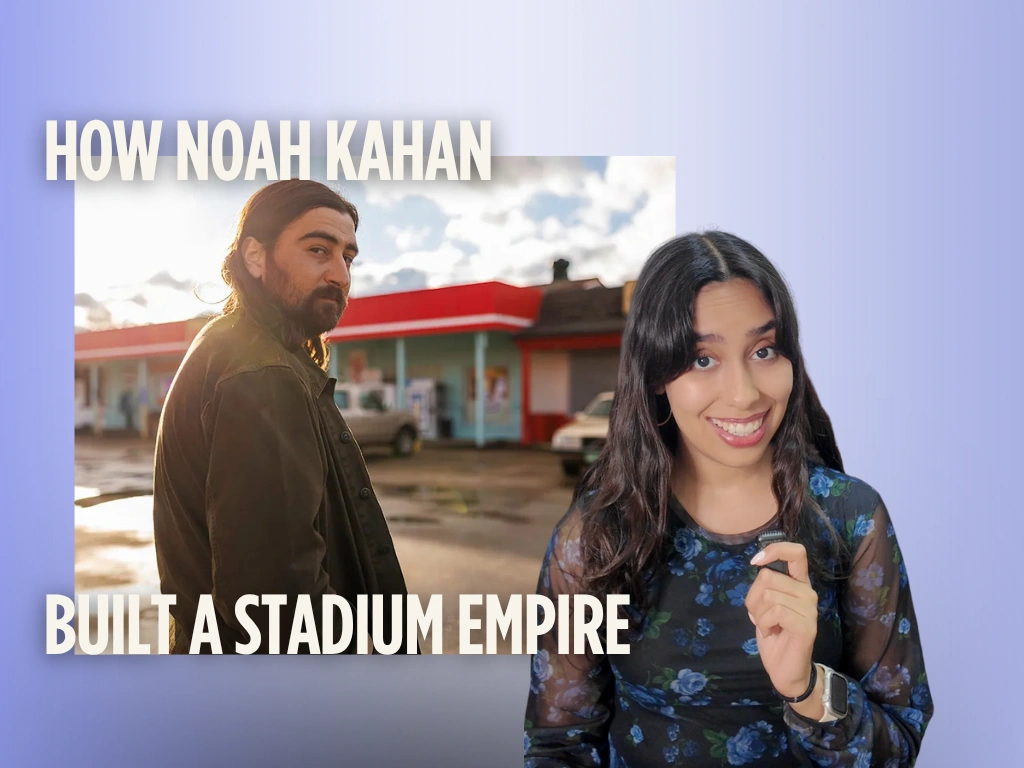
Noah Kahan did not chase viral trends, controversy, or gimmicks. While much of the industry obsessed over TikTok hacks, he quietly engineered one of the strongest fan ecosystems in modern music – and scaled from indie folk favorite to stadium artist without losing authenticity.
The Great Divide was not just an album drop. It was a carefully designed system that blended a Grammy takeover, a Netflix documentary, Spotify-powered intimacy, and one of the smartest ticketing strategies in recent years.
The Grammy Takeover: Turning a Commercial Slot Into a Cultural Moment
Most artists compete for attention inside platforms: TikTok, Instagram, YouTube. Noah Kahan stepped outside the platforms entirely and inserted himself into a major cultural broadcast – the Grammy Awards.
From Ad Break to Emotional Premiere
When The Great Divide launched, the real unlock was not just the single release. Through a partnership with Mastercard, Noah premiered the music video in what appeared to be a commercial slot during the Grammys.
Except it was not a standard commercial. It played like a full cinematic experience, broadcast to millions. Instead of vying for space in fans’ feeds, he used a major televised moment to introduce a narrative, not just a track.
This move provided:
- Mass reach outside typical music platforms
- Prestige through association with the Grammys and Mastercard
- A sense that the song was part of a cultural event, not just another release
“Hidden in The Great Divide”: Participation Over Promotion
The campaign did not stop at exposure. The video itself became an interactive experience through the “Hidden in The Great Divide” concept.
Fans were asked to search for hidden clues inside the video to unlock access to an exclusive listening event. That framing fundamentally shifted how fans engaged with the release.
This strategy:
- Drove repeat viewing and longer watch times
- Encouraged fan communities to share theories and discoveries
- Turned a passive music video into an active puzzle
On the surface, this was a fun fan challenge. Underneath, it was sophisticated algorithm strategy disguised as storytelling. Instead of telling fans to “go stream the song,” the team gave them a reason to obsess over every frame.
This mindset – participation instead of pure promotion – also shows up in some of today’s strongest rollouts. You can see similar thinking in campaigns like Olivia Dean’s intentional growth strategy, where engagement is built around story and fan involvement rather than volume alone.
Emotional Priming: Making Fans Care Before the Album Arrives
Noah Kahan did not just sell an album. He sold the story behind it, and he did it before the release date.
The Netflix Documentary as Narrative Equity
Eleven days before The Great Divide dropped, Noah released a Netflix documentary. This was not filler content – it was emotional infrastructure.
The documentary explored:
- The pressure of fast-rising success
- Mental health struggles and vulnerability
- The shift from indie recognition to global attention
When fans later pressed play on the album, they were not just hearing songs. They understood the context, the headspace, and the personal cost behind the writing. That creates what can be called narrative equity—emotional investment that exists before the product fully lands.
Two key effects came from this move:
- Deeper connection: Listeners related to Noah as a person, not just a voice.
- Audience expansion: Netflix introduced him to viewers who may never have encountered his music through streaming playlists alone.
By the time the album arrived, many people were already aligned emotionally with the story, making streams, ticket sales, and merch purchases far more natural. When people care first, every metric that follows becomes easier to move.
This focus on story before product is a recurring pattern in standout campaigns, from singer-songwriters to global pop acts. For another example of narrative-driven rollout, take a look at Rosalía’s immersive album strategy, which also centered narrative and world-building ahead of release.
Solving the Touring Problem: Scaling Without Losing Intimacy
One of the hardest challenges for modern artists is simple to describe and hard to solve: as venues get bigger, connection often disappears.
Noah Kahan managed to become a stadium artist while preserving the feeling of closeness that made early fans care in the first place. A core part of that came from his collaboration with Spotify.
The Pioneer Works Event: Small Room, Big Impact
Instead of only leaning into large-arena footage, Noah and his team worked with Spotify to host an intimate event at Pioneer Works.
Key design choices:
- A 360-degree stage with fans surrounding him
- A crowd of only a few hundred people
- Eye-level interaction and visible emotional moments
This was not about maximizing ticket revenue for that one night. It was about engineering powerful content.
Those few hundred fans effectively became a distributed content team. They filmed close-ups, reactions, singalongs, and vulnerable moments that felt personal and real. When this material hit social platforms, it did not look like distant, overproduced stadium footage. It looked like proximity.
The perception that “this could be me in that room” is incredibly powerful. It turns small, deeply felt experiences into large-scale digital reach. That is how you scale authenticity: not by trying to personally touch millions, but by giving a smaller group such a strong experience that they organically share it with everyone else.
For independent artists, this approach aligns with a broader shift in music marketing toward community-first content and fan-centric experiences. If you are plotting your own live strategy, it also helps to understand how platforms are evolving. For a broader view on this, explore Spotify’s new personalization era and what it means for artists.
Fixing Ticketing: Choosing Fairness Over Friction
One of the most striking parts of Noah Kahan’s growth story is not a song, a video, or a stage design. It is ticketing.
Instead of making tickets as easy and fast to buy as possible, Noah and his team deliberately added friction. That decision went against what many artists and promoters assume is “best practice,” and it paid off.
Face-Value Exchange and Identity Verification
The ticketing system prioritized fairness using two main tools:
- Face-value exchange: Tickets could be resold, but not for profit. Scalping and extreme markups were effectively removed from the equation.
- Identity verification: Systems were put in place to block bots and verify that real fans were buying tickets.
This approach introduced friction. It made the process less convenient for some buyers and more complex to set up. Yet the psychological impact was powerful.
Fans felt:
- Protected from aggressive resale markets
- Prioritized over resellers and automated buyers
- Respected by an artist willing to sacrifice convenience to keep things fair
That emotional response matters. In a landscape where many fans feel taken advantage of by ticketing systems, fairness itself becomes a competitive edge. The payoff was clear: sold-out stadiums, record-breaking runs, and loyalty that extends well beyond one tour cycle.
Trust, in this context, is not a soft concept. It is a deliberate strategy that can convert directly into demand, sales, and sustained fan support.
Key Lessons for Independent Artists and Labels
You might not have a Netflix special or a Grammy slot yet. But the principles behind The Great Divide rollout can be adapted at almost any scale.
1. Design Participation, Not Just Promotion
Instead of only posting “new song out now,” consider what fans can actually do around your release:
- Create puzzles or clues in visuals or lyrics
- Ask fans to contribute covers, duets, or art tied to the campaign
Action deepens memory, and memory drives long-term fandom.
2. Sell the Story Before the Music Drops
Share the journey that led to the project:
- Short-form documentary-style clips on YouTube or TikTok
- Honest posts about what inspired the songs
- Behind-the-scenes footage from writing, recording, or rehearsals
When listeners press play on release day already invested in your narrative, the impact of every track increases.
3. Scale Intimacy, Not Distance
Even if you are still at club level, think beyond “more tickets” and focus on “more connection”:
- Design at least one show or content piece that feels extremely up close
- Use 360 or in-the-round setups when possible
- Encourage fans to capture and share personal angles, not just wide shots
Those heartfelt, close-range moments can travel further online than traditional big-stage footage.
4. Treat Trust as a Growth Strategy
Fair systems may be slower to set up, but they pay off in loyalty. Consider:
- Transparent pricing for tickets and merch
- Clear communication around limited drops and presales
- Rewarding long-time supporters with early access or special experiences
When fans feel protected rather than exploited, they stick around longer and advocate harder.
5. You Do Not Have to Choose Between Authenticity and Scale
Noah Kahan’s rollout for The Great Divide proves that you can build massive reach and still stay grounded in real storytelling, fair systems, and emotional honesty.
Your version might not involve stadiums yet. It might look like a small doc-series, a carefully planned EP rollout, or one standout live event that your fans will talk about for years. The key point is that scale does not have to erase the qualities that made your earliest listeners care.
Applying the Blueprint to Your Next Release
If you are planning a release or tour, look at your strategy through the lens of this blueprint:
- Where are you creating moments, not just posts?
- How are you building narrative equity before the music drops?
- What is your version of an intimate, content-rich live experience?
- How clearly are you signaling fairness and respect around tickets and access?
From indie campaigns to global rollouts, the artists who win are increasingly the ones who treat strategy as a system, not a series of disconnected tactics. For more examples of that system-level thinking, explore our breakdown of genius album launches and what makes them work.
Noah Kahan did not just release an album with The Great Divide. He built a world where fans feel involved, protected, and emotionally tied to every move. That is the kind of foundation independent artists and labels can start building right now, at any scale.