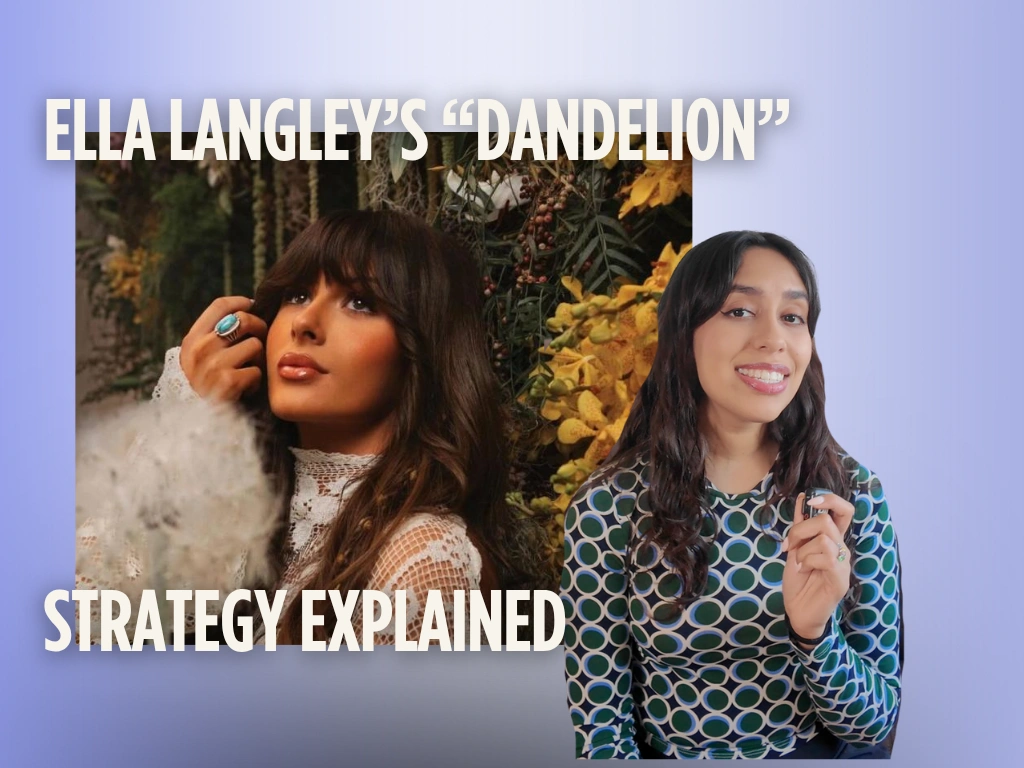
Ella Langley’s Dandelion rollout is more than a successful country album campaign. It is a complete blueprint for how independent artists and labels can turn a viral moment into a sustainable movement.
This breakdown unpacks how Ella and her team used narrative, co-signs, lifestyle branding, intimate fan moments, and real-world data to engineer longevity instead of chasing another quick spike.
The Detox Narrative: Turning Chaos Into a New Era
Ella Langley’s debut era leaned hard into chaos: late nights, whiskey, emotional volatility. That identity worked for a while. But that kind of branding burns out fast if you keep repeating it.
Instead of recycling the same image, her team used something smarter: sequel branding.
From Hangover to Detox
The creative question behind Dandelion was simple: after the hangover, what happens next?
- The answer: you detox.
- The symbol: a dandelion – a real plant, a natural detox, resilient, and able to grow anywhere.
The dandelion is not just a visual motif. It is a metaphor for Ella’s evolution:
- She does not erase the wild, chaotic past.
- She reframes it as the “before” to a more intentional “after.”
- Fans still recognize her, but they can follow her growth.
This is narrative alignment. The story, visuals, and music all move in the same direction. Artists who last do this consistently. Artists who loop stay trapped in one phase of their identity.
For your own releases, ask:
- What question does my next era answer from my last era?
- What symbol, object, or recurring visual can represent that shift?
- How can I evolve, without abandoning the core of who my fans connected with originally?
The Miranda Lambert Effect: Borrowing Authority, Not Just Streams
Ella Langley’s collaboration with Miranda Lambert was not just a feature play. It was a strategic way to borrow authority.
The Halo Effect in Action
When an established artist with deep credibility steps into your project, their reputation wraps around you. This is the halo effect:
- Fans of Miranda see Ella through a more trusted lens.
- Industry players treat Ella less like a newcomer and more like a future headliner.
- Media frames the narrative as “next in line” rather than “unproven rising act.”
Crucially, Miranda Lambert was not just there for a guest verse. She was involved in the creative direction of the project. That turns the co-sign into a story:
- The collaboration becomes proof of quality.
- The association accelerates trust for new listeners.
- The project feels endorsed at a deep level, not just a playlist play.
For independent artists, your version of this might not be a superstar feature. It could be:
- A respected local act curating your live showcase
- A producer with a strong niche reputation executive producing your project
- A known creative director shaping your visual rollout
When you think about collaborations, focus on authority building, not only short-term streams. If you want more real-world examples of authority-driven campaigns, study how Olivia Dean’s music marketing strategy was built around intentional positioning rather than hype alone.
Lifestyle Integration: From Artist to Everyday Identity
Before Dandelion even dropped, Ella Langley became the face of American Eagle’s spring campaign. This moved the project out of the music-only lane and into lifestyle territory.
Why Lifestyle Partnerships Scale Bigger Than a Single Release
Music marketing, on its own, has limits. Lifestyle branding expands your presence into everyday environments.
In Ella’s case:
- Every American Eagle store turned into a visual billboard.
- Campaign imagery mirrored the album’s world: denim, wildflowers, dandelion motifs.
- Even people who had never heard a song were already familiar with her image and vibe.
This is subconscious branding. The audience sees the world of the album everywhere, so when they finally press play, it feels familiar.
For independent artists and small labels, think smaller but similar:
- Partner with a local clothing store or boutique for a themed photoshoot and in-store posters.
- Collaborate with a coffee shop or bar to use your artwork on menus, cups, or coasters.
- Align your visuals across social content, show flyers, and merch so everything feels like one world.
If you are exploring how artists connect lifestyle and campaign strategy, the breakdown of Rosalía’s immersive album rollout offers more ideas on world-building beyond just audio.
Scalable Intimacy: Small Rooms, Massive Reach
One of the most intelligent choices in the Dandelion rollout was a small, highly curated event.
The Flower Shop Takeover
Instead of a huge listening party, Ella’s team invited around 100 fans to a private flower shop takeover:
- Dandelion tea and bouquets
- Full album listening in a themed, immersive space
- Fans encouraged to film, share, and document everything
On paper, 100 people sounds small. In practice, it is exponential:
- Those 100 fans became content engines across TikTok, Instagram, and YouTube Shorts.
- The intimacy made the experience feel rare and special.
- People who did not attend felt like they had missed a moment, which fuels FOMO.
This is scalable intimacy: designing small experiences that are built for large-scale sharing.
Independent artists can apply this easily:
- Host a micro-listening session in a unique local space (bookstore, plant shop, rooftop).
- Cap it at 20–50 people and build visuals into the space that guests will want to capture.
- Craft one or two “hero moments” you know will look amazing on camera.
These events do not rely on a massive budget. They rely on intentional design and fan-led amplification.
Data-Driven Dominance: Owning Real-World Environments
Most artists obsess over Spotify, Apple Music, and TikTok as their primary battlegrounds. Ella’s team went somewhere else first: the real world.
Ground-Up Marketing in Bars and Social Spaces
Before Dandelion dropped, they targeted real-world listening environments:
- Bars and honky-tonks
- Jukebox networks
- Social venues where country listeners gather
The strategy:
- Get songs playing repeatedly in spaces where the target audience already spends time.
- Build familiarity before the official streaming push.
- Let real-life repetition create demand so streaming feels like a response, not a cold start.
By the time the album landed on digital platforms, it did not feel like a fresh unknown release. It felt tested and already part of people’s nights out. That framing can change how fans, curators, and even algorithms react.
Independent artists can think in the same direction:
- Work with local bar owners or DJs to get your tracks into regular rotation.
- Use data from Shazam, jukebox plays, and local radio spins to see which songs stick.
- Then push those proven songs harder on streaming and social, backed by evidence of real-world traction.
For a bigger picture on how platforms are shifting and why distribution strategy matters, explore our guide on the evolving music distribution landscape.
Key Lessons for Independent Artists and Labels
Ella Langley’s Dandelion campaign is a textbook example of how to engineer longevity. Here are the core principles you can adapt to your scale.
1. Let Each Era Answer the Last
- Your next release should respond to the story your previous project started.
- This creates narrative continuity that keeps fans invested over years, not just singles.
- Think in chapters, not isolated drops.
2. Use Collaborations to Build Authority
- Choose collaborators who strengthen your positioning, not just your playlist chances.
- Seek deeper involvement where possible: creative direction, live shows, or co-branded content.
- A strong co-sign can shift how both fans and industry see you.
3. Expand Beyond Music Into Lifestyle
- Tie your visuals, fashion, and partnerships into one coherent world.
- Look for brands, venues, and communities that naturally fit your story.
- Let people “wear” or “live in” your universe, not just listen to it.
4. Design Small Moments for Big Sharing
- Exclusive, intimate events can outperform large, generic ones if they are highly shareable.
- Give fans something rare, and they will promote it for you.
- Lean into FOMO, but deliver genuine value to the people who show up.
5. Control the Environments, Not Just the Platforms
- Think about where your music lives in the real world, not only online.
- Bars, gyms, cafes, and local venues can create the repetition algorithms cannot replicate on their own.
- Use that offline data to guide your digital strategy.
For additional tactical ideas on campaigns that grew from smart strategy instead of massive budgets, you can dive into our favorite artist marketing campaigns and see how similar principles appear in different genres.
From Viral to Validated: Building Systems, Not Just Songs
Dandelion is not just an album. It is a transition:
- From viral to validated
- From artist to brand
- From isolated moments to a sustained movement
The artists and labels winning now are not only dropping songs. They are building systems that connect narrative, co-signs, lifestyle touchpoints, intimate experiences, and real-world data.
If you are serious about your career, start treating each release as part of a larger ecosystem. Ask how it lives, grows, and evolves around people’s actual lives, not just on their release radar.
LabelGrid will continue decoding rollouts like Ella Langley’s so independent artists and labels can translate high-level strategy into practical steps at any scale.