Welcome back to Labelgrid, the channel that breaks down how real music careers are built, not how songs get lucky.
If you’re an artist, manager, or work anywhere in the music industry, hit that subscribe button. We focus on strategy, structure, and long-term leverage — not fleeting virality.
The New Standard of Stardom
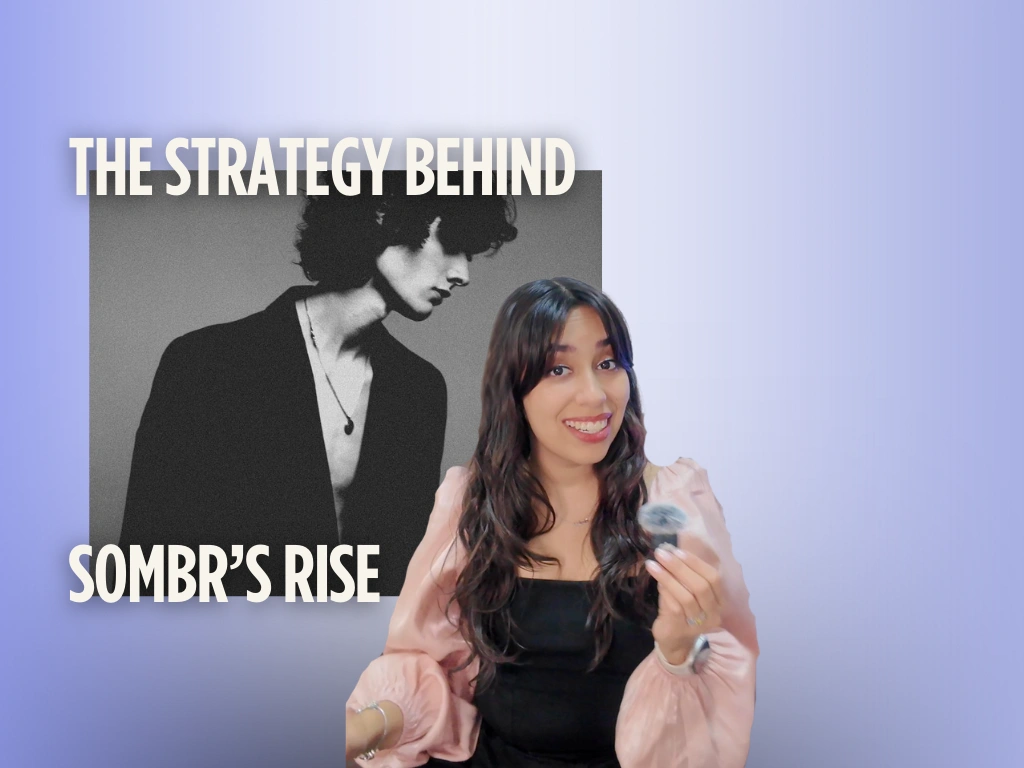
Sombr didn’t go viral. He went strategic.
In the old music industry, a hit song was a miracle. Today, it’s a calculation. And if you’ve spent time on TikTok or Spotify recently, you’ve probably come across the name Sombr again and again.
To the casual observer, Sombr looks like another lucky bedroom pop artist who caught the algorithm at just the right time.
But let’s be clear:
– Luck doesn’t get you a Grammy nomination.
– Luck doesn’t land you brand deals with cultural weight.
– Luck doesn’t build a sustainable career.
Sombr real name Shane Michael Boose, didn’t stumble into success. He engineered it.
What he’s built is one of the most sophisticated artist ecosystems in modern music: a blend of emotional storytelling, visual branding, data-driven decisions, and what we call anti-marketing marketing.
Let’s break down the blueprint step by step, how a bedroom artist turned intimacy into scale, nostalgia into utility, and attention into long-term cultural capital.
“Back to Friends” and The Illusion of Discovery
‘Back to Friends’ didn’t blow up because it was sonically perfect. It blew up because it felt discovered.
Most artists try to cram their full story into one big moment: one teaser, one launch, one flashy announcement.
Sombr flipped that approach.
Instead of pushing the song through official channels, ‘Back to Friends’ quietly spread through a network of fan-coded archive accounts:
– Low-res videos
– Grainy footage
– Late-night car rides
– Messy bedrooms
– No captions, no calls to action
This strategy created the illusion of discovery.
When fans come across a song via a random account, it doesn’t feel like marketing. It feels personal, accidental, like you’re finding something you weren’t meant to see.
By the time ‘Back to Friends’ officially dropped on Spotify, fans already felt a sense of ownership. They didn’t feel marketed to, they felt involved.
And when people feel they’ve discovered something on their own?
– They protect it
– They promote it
– They build culture around it
Utility Over Virality
Music spreads best when it’s useful, not when it’s perfect.
‘Back to Friends’ wasn’t just a song — it was a tool:
– For nostalgia edits
– For breakup videos
– For emotional timeline branding
It didn’t scream for attention. It slipped into people’s lives.
This is the real secret: the biggest hits aren’t simply catchy, they are emotionally useful.
Sombr understood a crucial truth: people don’t share music to promote artists. They share music to express themselves.
So he didn’t make the song louder — he made it softer. He didn’t make it obvious, he made it intimate.
By the time streaming numbers climbed, the track had already done the hardest job, it had embedded itself in personal stories.
This wasn’t algorithmic luck. It was emotional relevance.
Branding: Resurrecting 70s Glam for Gen Z
Looking good isn’t branding. Being recognizable is.
In 2026, branding is about visual salience. If someone can recognize you by silhouette alone, you’ve won.
Sombr saw the saturation coming in the bedroom pop scene: it was getting too clean, too similar, too disposable.
So he pivoted.
He fused indie vulnerability with 70s glam rock rebellion:
– Smudged eyeliner
– Vintage leather
– Controlled messiness
– A bit of danger
This wasn’t just a fashion choice, it was market positioning.
He stopped looking like a content creator and started looking like a rockstar.
That shift leveled him up:
– Luxury brands, like Valentino, took notice
– The fashion press treated him like a serious artist
– Promo shoots turned into editorials
– “Being seen” evolved into being meaningful
Key Insight:
Luxury brands don’t amplify artists — they validate them.
Now, Sombr’s brand feels heavy, intentional, timeless. That is branding.
Data, Waterfall Releases & Anti-Marketing
Sombr treats TikTok like a focus group, his release strategy resembles a startup product launch.
Here’s how it works:
1. He uploads 15-second snippets on TikTok.
2. If the save rate spikes, the song gets finished.
3. If not? It disappears.
No ego. No emotional attachment. Just data.
This is agile music production.
Next comes the waterfall strategy: each new single is released alongside prior hits. This juices the algorithm to associate new material with proven records.
But his boldest move? Anti-marketing marketing.
– Jokes about hating his own songs
– Irony about being forced to promote
– Raw, meta commentary
This builds an “us vs. the system” narrative.
Fans don’t feel targeted. They feel like collaborators — part of the mission to game the industry together.
That emotional positioning creates a deeper bond than any ad campaign could.
From Bedroom to Grammy
The ultimate validation? A Grammy nomination.
Sombr does it all:
– Produces his own music
– Directs his visuals
– Runs his community
He doesn’t do press tours. He makes moments meant to be recorded.
He doesn’t run campaigns. He builds feedback loops:
> Create → Let fans curate → Use data to validate → Scale
This is a closed-loop ecosystem:
– Minimal overhead
– Maximum cultural output
It’s not just smart marketing. It’s structural leverage.
Lessons for Artists & Labels
Here’s what artists, managers, and labels should adopt right away:
– Stop chasing virality → Start chasing utility
– Stop polishing for perfection → Focus on recognizable identity
– Stop guessing → Trust the data
– Stop broadcasting → Co-create with your audience
Sombr didn’t build a hit. He built a system, and systems scale.
If you want more breakdowns like this, subscribe to Labelgrid we decode how music really moves now.