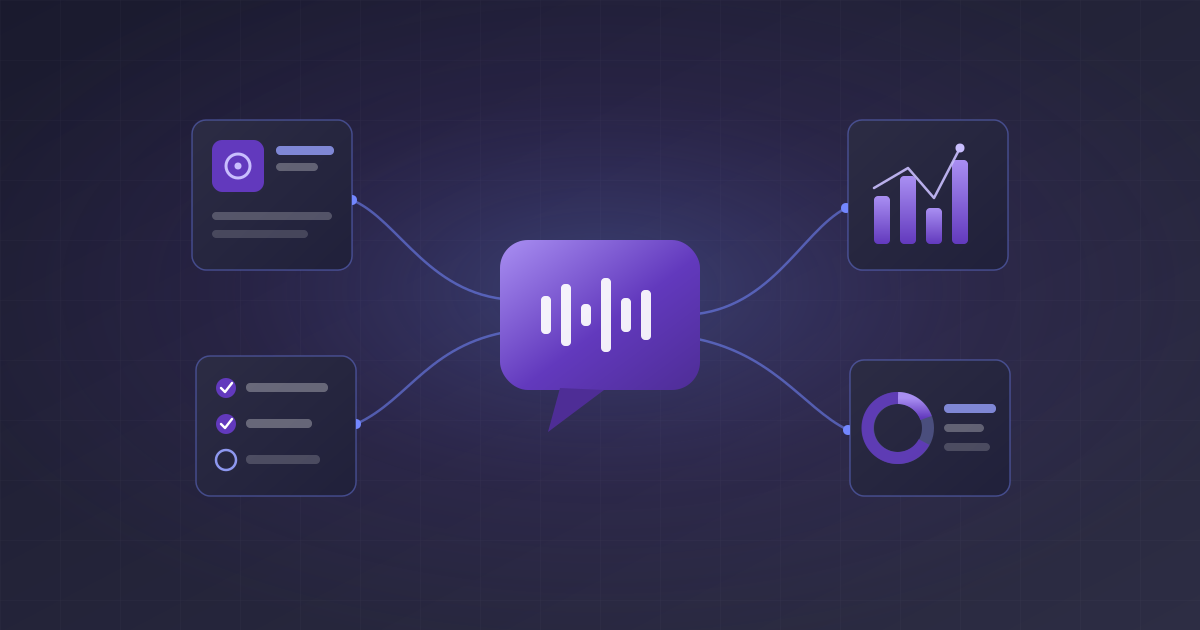
The useful way to think about an AI assistant in a music operation is as an operations manager, not a songwriter. The creative work stays yours. What the assistant is genuinely good at is the administration wrapped around every release: metadata that has to be complete, statements that have to be reconciled, checklists that have to happen in order, and the dozen small questions a label answers every week. This guide covers a workflow that works with any assistant, where the copy-paste approach hits its ceiling, and how to connect an assistant to live catalog and royalty data when you outgrow spreadsheet uploads.
What an AI assistant can actually take over
Split the release lifecycle into stages and the assistant’s role gets concrete:
- Metadata and credits. Check every track for missing ISRCs, writers, publishers, and split percentages before submission, and validate new releases against your house style.
- Release planning. Build the rollout calendar backwards from release date: metadata lock, artwork, pitch deadlines, marketing assets, announcement day.
- Review and quality. Read validation or review feedback and turn it into a plain list of what to fix.
- Distribution monitoring. Track which stores a release is live on and what is still pending.
- Royalty statements. Summarize a statement, compare periods, break earnings down by label, release, store, or territory, and flag anomalies worth a closer look.
- Splits and payouts. Answer who gets what on which track, and which collaborators still have unassigned splits.
- Analytics. Turn raw streaming numbers into answers: what grew, where, and what changed since last week.
Start with one source of truth
An assistant is only as good as the records you give it. Before any tooling, keep one authoritative record per track (title, ISRC, writers, publishers, split percentages, producer credits, featured artists, and rights ownership), linked to the release record that carries the UPC and release date. Where that record lives matters less than that it exists once, not in four slightly different versions. If your distributor already holds this data in a structured catalog, that is your source of truth; a spreadsheet or database duplicating it is a fallback, and every duplicate is a future discrepancy.
With that in place, a chat assistant already earns its keep. Paste in review feedback and ask for a fix list, or upload a royalty statement and ask which territories grew fastest and why. Ask it to draft the release checklist for the next single. None of this needs integration. For a few releases a year, it may be all you need.
The ceiling: your data goes stale the moment you export it
The copy-paste workflow has a structural problem. Every answer is based on whatever you last exported, so the assistant is always working from a snapshot. Ask about this month’s earnings and it needs this month’s upload. Ask which releases are still in review and it has no idea unless you tell it. Managing a catalog of any real size this way turns you into the integration: you spend your time ferrying exports between your distributor and your assistant.
Run distribution and royalties from one conversation
LabelGrid distributes your music and accounts for royalties in one platform, with an AI-ready MCP server on API plans. 7-day free trial on Solo, Basic, Pro and Gate.
See PlansConnecting your assistant to live data with MCP
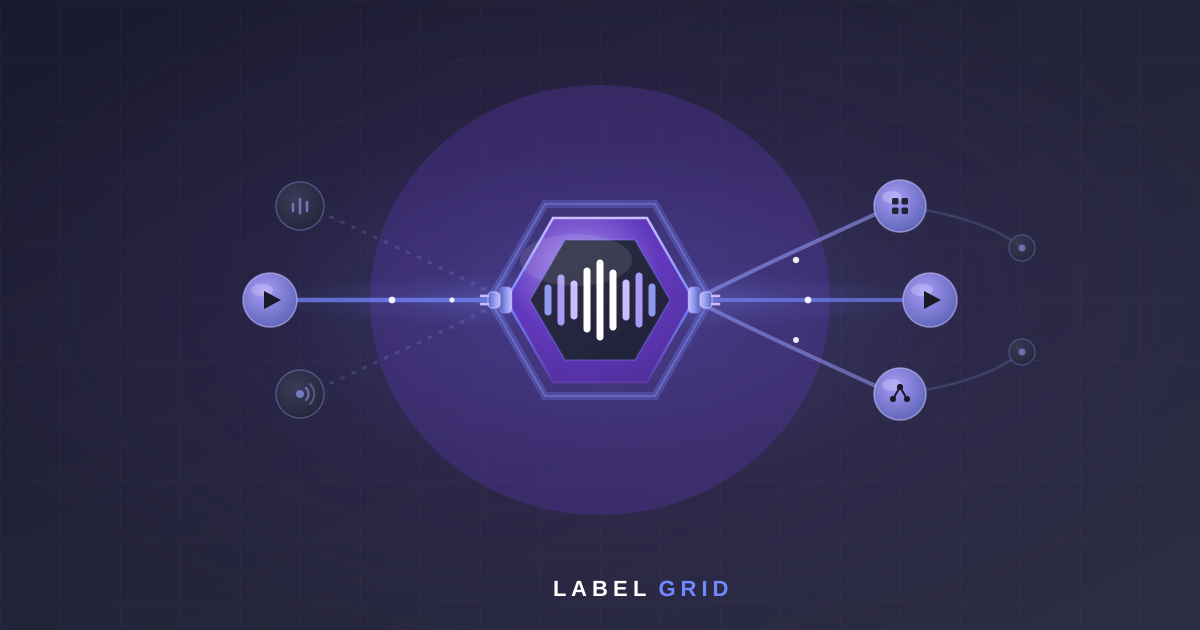
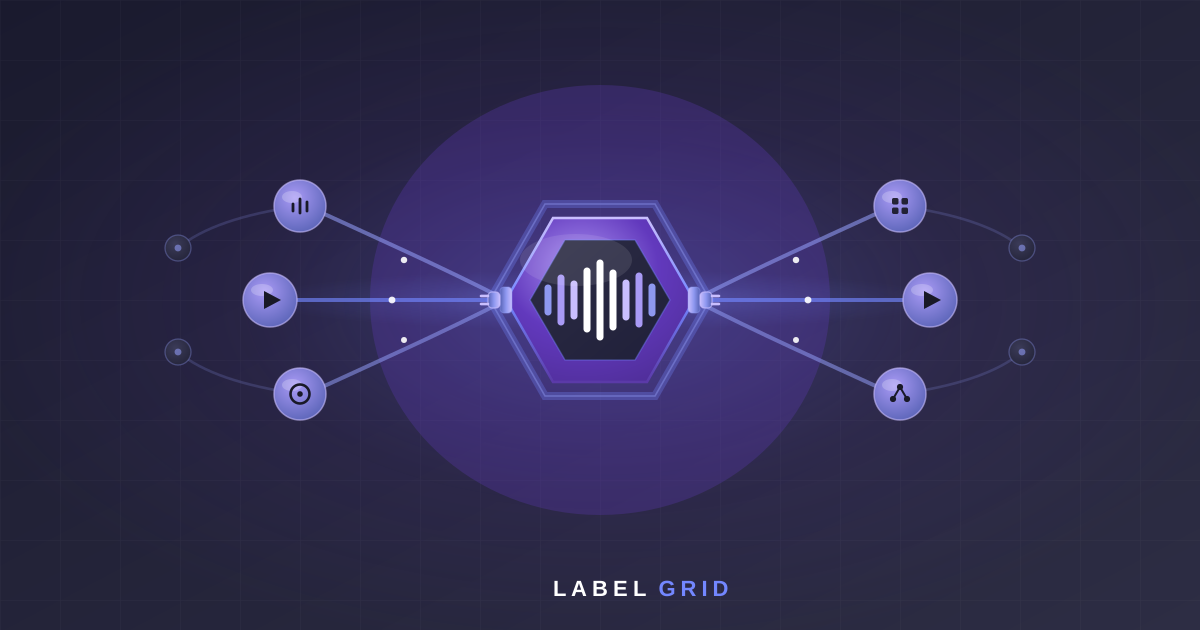
This is what the Model Context Protocol fixes. MCP is an open standard for connecting AI assistants to external tools and data: a service publishes an MCP server exposing real actions, and any compatible assistant can call them. Instead of reasoning about an uploaded file, the assistant queries the system itself. You can read the specification at modelcontextprotocol.io.
LabelGrid ships an official, open-source MCP server for exactly this. Point Claude Desktop, Claude Code, Cursor, or any MCP-compatible client at your account and the assistant works your real catalog through tools that cover releases, review status, analytics, royalty statements, delivery status, and webhooks. It runs through npx with one line of client configuration, and if you start it without a token it walks you through connecting your account. It is MIT-licensed, published as @labelgrid/mcp, and included with LabelGrid API plans. The launch announcement covers the full setup.
Prompts that do real work
Once the assistant can see live data, the prompts stop being writing exercises and start being operations:
- “Draft a twelve-track album under my main label and set the release date to next Friday.”
- “Why is my latest release stuck in review, and what exactly do I fix?”
- “Pull last quarter’s royalty statement and break it down by label.”
- “Show streams for the new single by store this week.”
- “Which stores has the EP gone live on, and is anything still pending?”
- “List the releases in my catalog that are missing writer credits.”
- “Compare this month’s earnings with the same month last year and tell me what changed.”
A good weekly routine is one standing request: every Monday, ask for new review issues, releases that went live, statement changes, and anything pending longer than expected. Ten minutes of reading replaces an afternoon of portal-checking.
Keep the assistant on rails
Access has to fail closed. That is the bar. The LabelGrid server splits permissions into three tiers: reads are always available, so the assistant can answer questions from day one, while safe writes such as drafts and metadata edits are on by default and can be switched off or forced read-only; the webhook tools stay off until you enable them. Consequential actions like submitting a release for distribution or taking one down stay disabled until you explicitly opt in and type an acknowledgment accepting responsibility for AI-driven distribution actions. Every request is validated on LabelGrid’s servers with the same rules as the dashboard, so the assistant cannot route around your account’s protections. Whatever platform you connect an assistant to, hold it to that standard: tiered permissions, server-side validation, and an off-by-default posture for anything irreversible.
Other tools connecting AI to music data
Other music-tech platforms are moving the same direction, with different scopes. Royalti.io, a royalty accounting platform, offers Ask Roy, an assistant inside its dashboard for querying royalty data and managing catalog records in plain English. Mogul, a royalty management platform, offers an MCP connection so Claude or ChatGPT can answer royalty, catalog, and publishing questions from Mogul data. If your distribution, royalty accounting, and splits already live in one platform, one MCP connection covers the whole picture; LabelGrid’s integrated accounting is built on that idea.
Where to start
Start with structure: one authoritative record per track. Add a chat assistant for checklists, statement summaries, and metadata checks. When you find yourself exporting the same data every week, connect the assistant to the source instead. If you distribute through LabelGrid, that connection is one config line away. See the MCP server page, and pricing for API plan details.
Frequently Asked Questions
Can I ask Claude or ChatGPT about my streaming stats?
Yes, through an AI app that supports MCP. LabelGrid’s official MCP server, @labelgrid/mcp, connects Claude Desktop, Claude Code, Cursor or any other MCP-compatible client to your account, so you can ask about your streaming analytics, royalty statements and breakdowns and get answers from live data. It needs a LabelGrid API plan, an API token and Node.js 20 or newer. If your ChatGPT setup cannot connect to an MCP server, you can still upload an exported statement and ask about it, but ChatGPT will not see your account.
Can an AI assistant manage my music releases?
It can run most of the administration around them. An assistant is good at building release checklists, checking metadata for gaps, summarizing royalty statements, and tracking what is still pending. Connected to your distribution platform through an MCP server, it can also do the work directly: draft releases, read review issues, pull statements, and check delivery status from your live account data. Creative and business decisions stay with you.
What is an MCP server and why does it matter for music royalties?
The Model Context Protocol (MCP) is an open standard for connecting AI assistants to external tools and data. An MCP server gives your assistant concrete actions it can call against a real system. For royalties, that means the assistant reads your actual statements and catalog instead of a spreadsheet you exported last month, so answers stay current and you skip the export-upload loop.
Is it safe to give an AI assistant access to my distribution account?
It depends on how the access is built. Look for permission tiers that fail closed. The LabelGrid MCP server keeps reads always available, leaves safe writes like drafts and metadata on by default with the option to force read-only, and keeps consequential actions such as distribution submission and takedowns off until you explicitly opt in and type an acknowledgment. Every action is validated on LabelGrid servers, so the assistant cannot bypass the rules your account already has.
Which AI assistants can I use to manage music releases?
Any client that speaks the Model Context Protocol, including Claude Desktop, Claude Code, and Cursor. An assistant without an MCP connection still helps with general workflow through copied-in text and uploaded statements, but it cannot see your account.
Do I need to be a developer to connect an AI assistant to LabelGrid?
No. The LabelGrid MCP server runs through npx with a single entry in your MCP client configuration, and if you start it without a token it enters a guided setup mode where the assistant walks you through connecting your account. Node.js 20 or newer is the only technical requirement, and the server is included with LabelGrid API plans.