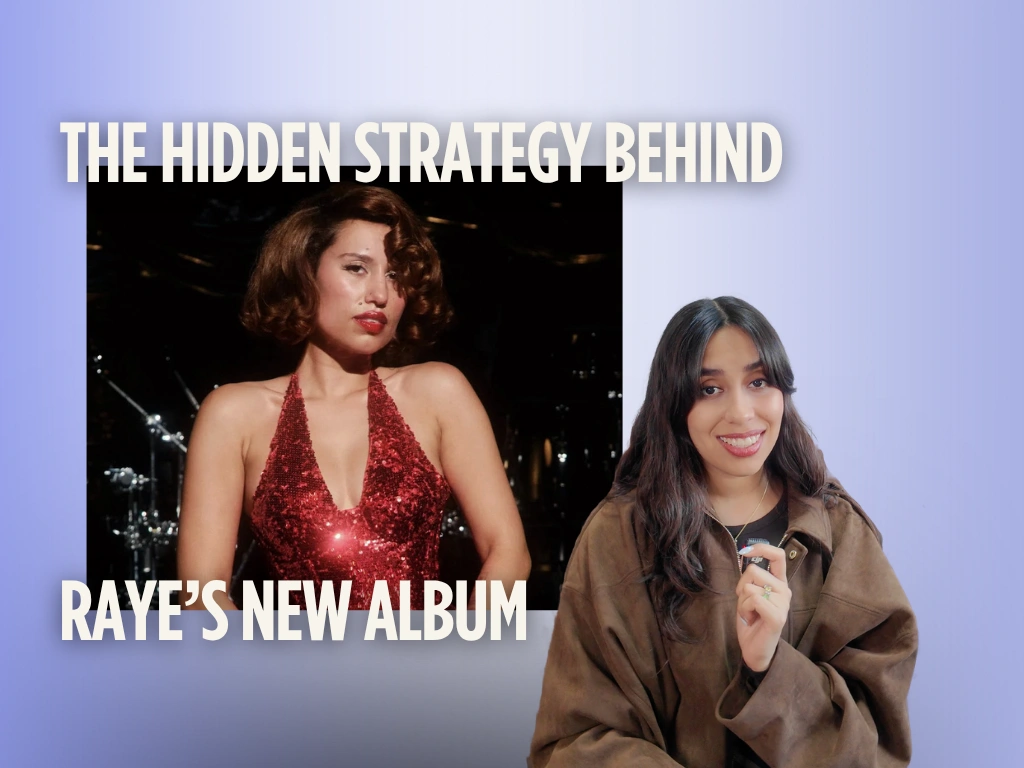
RAYE x Hans Zimmer wasn’t a collaboration. It was a repositioning of an entire career.
For independent artists, managers, and boutique labels, RAYE’s rollout for THIS MUSIC MAY CONTAIN HOPE is one of the sharpest examples of how to turn a song into a system, and a release into long-term leverage.
This breakdown walks through each phase of her strategy so you can adapt the same principles to your own campaigns.
The Breadcrumb Strategy – Narrative Before Product
Most artists start promoting when the mix is done and the artwork is ready. RAYE started months earlier.
Instead of polished teasers and generic “pre-save now” posts, she shared fragments of the journey:
- Old notebooks and scribbled ideas
- Lyric drafts and unfinished lines
- Clips that felt raw and incomplete
- Moments of doubt and reflection
This shifted the role of the audience. They weren’t passive listeners waiting to consume. They became witnesses to the creation process, then participants in the story.
By the time “Click Clack Symphony” arrived, it didn’t feel like a random drop. It felt like a resolution to a narrative fans were already invested in. That emotional buildup is what you can think of as narrative equity: people care about the story before the product exists.
How independent artists can apply this
- Document early: Share voice notes, scratch demos, and messy drafts.
- Show the tension: Be honest about doubt, rewrites, and changes.
- Turn fans into witnesses: Use stories, close friends lists, or private communities to give early access.
If you are planning your next release, consider building a story months ahead of any “out now” announcement. For more examples of release storytelling, look at how intentional rollouts work in campaigns like Olivia Dean’s growth-focused strategy.
Sonic Branding – Turning a Sound Into a Signature
The “click clack” in “Click Clack Symphony” is more than production. It functions as a mnemonic trigger.
Every time a listener hears a similar sound in daily life – a heel on pavement, a ticking clock, a tight percussive hit – the brain can connect it back to RAYE. That is identity work at a high level.
She didn’t just release a track. She carved out a sonic signature that can follow her into future projects, live shows, and visual content.
What this means for your music
- Identify a recurring sonic element you can repeat across songs.
- Connect that sound to visuals (a prop, a color, a movement) in your content.
- Use that element in intros, transitions, and live arrangements so it becomes familiar.
The Zimmer Effect – Prestige Positioning
Bringing Hans Zimmer into the rollout was not primarily about getting more streams. It was about shifting perception.
This is a prestige repositioning move:
- RAYE moves from “respected pop artist” toward composer-level credibility.
- The project becomes relevant to film audiences, critics, institutions, and award ecosystems.
- The language around the release changes expectations – it is framed as a symphonic movement, not just a single.
That language alone changes how people interpret the work. It feels bigger, more permanent, and more serious, which attracts press, new audiences, and deeper critical attention.
Cinematic presence in a short-form world
The Dave Meyers-directed video supports this repositioning. It is cinematic, deliberate, and long-form in a culture trained to swipe in seconds. That length and pacing become a pattern interrupt. People stop scrolling not because an algorithm tells them to, but because the content demands focus.
This is the difference between posting content and creating presence.
How you can elevate your perception
- Choose collaborators whose brand lifts how your work is perceived (visual artists, arrangers, directors).
- Be intentional with language: EP vs “short film,” single vs “movement” or “chapter.”
- Treat at least one asset per campaign as a statement piece, not just another clip.
For more examples of artists reframing their image and audience perception, study how Zara Larsson restructured her brand and strategy.
The Four Seasons Strategy – Album Architecture
With the full release of THIS MUSIC MAY CONTAIN HOPE, the real architecture of RAYE’s plan becomes visible. The album is divided into four chapters: Winter, Spring, Summer, Autumn.
That is not just a creative decision. It is structural marketing.
1. Forcing linear listening
In a world built on playlists and shuffle, the seasonal structure gives listeners a reason to play the record front to back. That boosts:
- Session length
- Track-to-track completion
- Algorithmic favorability on streaming platforms
Higher retention is one of the strongest signals you can send to modern streaming algorithms.
2. Controlling emotional pacing
Starting with darker, heavier “Winter” material creates depth and weight. As the album moves into “Spring” and “Summer,” lighter and more hopeful songs feel like emotional relief.
That contrast makes the journey more memorable and encourages repeat listening, because fans are not just revisiting songs – they are revisiting a feeling curve.
3. Turning one album into multiple products
Four seasons also means four physical identities:
- Distinct vinyl versions
- Season-specific artwork and color palettes
- Collectible options that appeal to superfans
Fans are not just buying an album once. They are collecting pieces of a world. That is how a single body of work becomes a multi-product ecosystem.
4. Extending the project lifecycle
Each season becomes its own narrative phase. Instead of one big release day and a fast drop-off, you get four waves of focus:
- Different singles and visuals tied to each chapter
- Press and content themes tailored to each season
- Moments for fans to re-engage multiple times over the cycle
This structure keeps the album relevant for longer without exhausting the audience.
Direct-to-Fan Dominance – Owning the Relationship
RAYE is working independently, which changes the incentives. Instead of leaning solely on external systems like radio or editorial playlists, she is building her own infrastructure.
Her rollout leans heavily into direct communication channels:
- Discord servers for community and feedback
- WhatsApp groups for core fans
- Voice notes and intimate updates that feel personal
Direct access removes friction. There is no algorithm deciding who sees the message, and no feed full of competing content. The interaction feels direct and trusted, which builds belief.
When fans feel close to the process, they do more than listen. They advocate. They share, defend, and campaign for the work. That is the type of support money cannot buy.
How to build your direct-to-fan system
- Choose one primary home for your core community (Discord, Telegram, WhatsApp, private IG broadcast channel).
- Send voice notes, demo snippets, or early artwork to that group first.
- Reward engagement with listening parties, Q&As, or exclusive drops.
If you want to understand how this direct relationship fits into the modern distribution and platform ecosystem, it is helpful to study how the music distribution landscape is evolving for independent artists.
Video as a Brand System – Building Visual Anchors
The “Click Clack Symphony” video is not just a visual for the track. It is a memory system.
Key visual choices – the red heel, the tension in the movement, the way the rhythm syncs with cuts and motion – all serve a deeper function. They create a visual anchor tied to the sound.
Once that connection is made, every time listeners hear the click-clack pattern, they see the image. Sound and image fuse into one memory. That recall is where long-term value lives.
Artists who last are rarely the ones with a single viral moment. They are the ones you recognize instantly – in one frame, or one sound.
Designing your own visual anchors
- Choose one strong, repeatable visual symbol (object, color, location, motion).
- Pair it consistently with a key sonic element.
- Repeat it across videos, cover art, live visuals, and short-form clips.
The New Independent Blueprint
RAYE’s rollout shows that independent artists can out-strategize major label campaigns when they think in systems, not singles.
Her approach combines:
- Narrative before product – storytelling months before the release
- Prestige positioning – using collaborators and language to elevate perception
- Structured album design – chapters that drive retention and multiple products
- Direct-to-fan infrastructure – owned channels that build loyalty and advocacy
- Sonic and visual branding – signatures that drive instant recognition
This is where the industry is shifting. Artists are not just creators. They are operators building ecosystems around their work.
Lessons for Artists and Labels
For independent artists
- Start your campaign earlier than feels comfortable.
- Invite people into the messy middle, not just the polished release day.
- Think about sound, visuals, and structure as pieces of one system.
- Build fan communities where you can speak directly and consistently.
For labels and teams
- Stop treating distribution as the full strategy – it is one piece.
- Invest in narrative development and identity, not only in media buys.
- Help artists design long-term systems, not short bursts of hype.
Attention is rented. Connection is owned. The campaigns that win are built on systems that turn listeners into believers and then into advocates.
If you are planning your next rollout and want more inspiration, explore some of the most inventive artist marketing campaigns recently broken down on the LabelGrid blog.
RAYE’s album cycle is not an outlier. It is a signal of where independent strategy is heading – toward deeper stories, smarter structures, and real ownership of your audience.