SOBO (“sent on behalf of”) is a delivery model where a distributor pushes your music to streaming platforms under your own direct DSP contracts, so you keep 100% of your royalties. Instead of distributing under the platform’s deals and sharing revenue, you bring your own agreements with Spotify, Apple, and others, and the distributor handles the technical delivery only. The DSP relationship, and the money, stays yours.
For labels and distributors with direct deals, this is the difference between paying a cut on every stream and keeping all of it while still using a modern delivery platform. SOBO is a DDEX directive that names the licensor of a release as you, the contract holder, not the distributor sending the feed. This guide explains how SOBO and direct deals work, when 100% retention actually applies, the trade-offs versus standard distribution, and how to set it up, including where LabelGrid fits.
What is a direct DSP deal?
A direct deal is an agreement you hold directly with a streaming platform (or through a licensing collective such as Merlin Network) to deliver and monetize your catalog. You negotiate the terms, you own the relationship, and the royalties flow to you without a distributor taking a share of the revenue.
Most artists and small labels don’t have direct deals. They distribute under a distributor’s existing platform agreements, which is simpler but means the distributor’s commercial terms apply. Direct deals are common for established labels, larger distributors, and Merlin members, who have the catalog and the standing to hold their own contracts. The catch is logistics: holding a direct deal still leaves you needing to generate compliant feeds, transcode audio, and deliver to each platform. That’s where SOBO comes in.
How does SOBO delivery work?
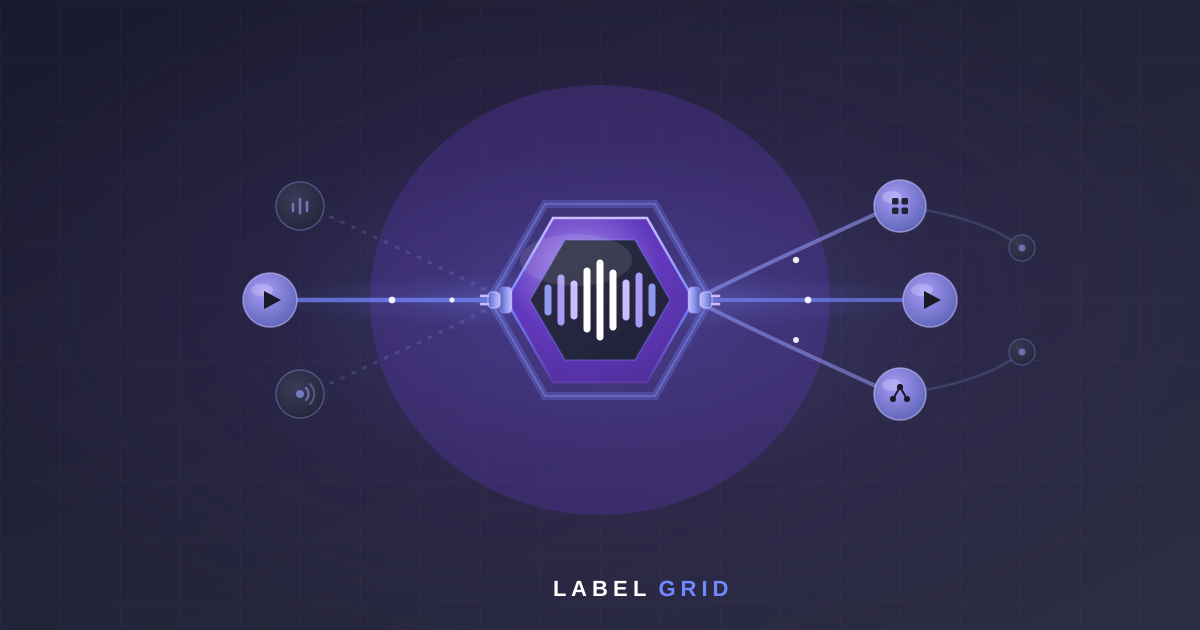
SOBO lets you keep your direct relationship while outsourcing the technical work. The delivery is sent on your behalf, with you named as the licensor in the feed, so the platform treats the release as coming from your own contract.
- You hold the direct deals. Your contracts with the DSPs (or your Merlin membership) define the commercial terms.
- The platform configures SOBO. Your account is set up so deliveries carry the SOBO directive naming you as licensor.
- You manage your catalog. Releases, metadata, splits, and scheduling run through the distribution platform like any other catalog.
- Feeds are generated and delivered. The platform produces DDEX ERN feeds and pushes them to each DSP under your feed contract.
- Royalties flow to you in full. Because the deal is yours, the DSP pays out against your contract, with no distribution revenue share deducted.
- You handle DSP-side matters. Takedowns, content claims, and disputes are managed directly with the platforms, since you own the relationship.
The technical role and the licensing role are separated. The platform provides infrastructure (catalog management, feed generation, transcoding, royalty aggregation, and splits); you remain the licensor and the rights holder of record. LabelGrid supports direct-deal delivery via SOBO, handling the delivery pipeline while your direct DSP contracts and full royalty retention stay intact.
How does 100% royalty retention work?
Royalty retention depends entirely on whose deal a release is delivered under. There are two layers, and SOBO changes which one applies.
| Aspect | Standard distribution | Direct deals via SOBO |
|---|---|---|
| Whose DSP contract | The distributor’s | Yours |
| Licensor in the feed | The distributor | You (SOBO directive) |
| Royalty retention | Plan-dependent share | 100% of DSP royalties |
| DSP relationship | Managed by the distributor | Owned by you |
| Claims and takedowns | Distributor handles | You handle directly |
| Best fit | Artists and labels without direct deals | Labels, distributors, Merlin members with direct deals |
The “100%” is real, but it comes from your direct contracts, not from a distributor waiving its rates. When LabelGrid delivers your catalog via SOBO, it keeps 100% of DSP royalties because the deal is yours; the platform provides technical delivery, not the licensing. You can also run a hybrid setup: direct deals on the platforms where you hold contracts, and standard distribution everywhere else, with retention tracked per platform.
Deliver your direct deals and keep 100%
SOBO delivery, Merlin membership, and royalty processing on one platform, so your contracts and your retention stay yours. 7-day free trial.
See PlansWho should use direct deals and SOBO?
SOBO is not for everyone. It assumes you already hold direct agreements and can take on the responsibilities that come with owning the DSP relationship.
- Independent labels with enough catalog and standing to negotiate or already hold direct DSP deals.
- Distributors who want to run their own commercial relationships while using a platform for delivery and accounting.
- Merlin Network members, who deliver under Merlin’s negotiated licensing and keep 100% retention on those deals.
- Rights holders with internal teams able to manage their own QC, claims, and takedowns directly with platforms.
The streaming stakes explain the pull toward retention. Streaming made up 69.6% of global recorded music revenue in 2025, and total recorded music revenue reached $31.7 billion, up 6.4% year over year (IFPI Global Music Report 2026). With roughly 99,000 new tracks delivered to streaming services every day in 2024 (Luminate 2024 Year-End Report), running a large catalog by hand isn’t viable either. At meaningful scale, the revenue share a standard deal takes is real money, and a direct-deal model is how larger operators keep it while still using a platform for delivery. As a Merlin Network member, LabelGrid lets qualifying members deliver under their own Merlin licenses.
How to set up direct-deal distribution with SOBO
- Confirm you hold direct deals. Either direct contracts with the DSPs or membership in a collective like Merlin. Without them, standard distribution is the right model.
- Choose a platform that supports SOBO. Not every distributor offers it. You need one that can deliver under your licensor identity and aggregate royalties across deals.
- Configure your account. The platform sets up SOBO delivery so feeds carry your contract as the licensor.
- Decide standard, direct, or hybrid. Map which platforms run under your direct deals and which (if any) use standard distribution, so retention is tracked correctly per DSP.
- Bring your catalog in. Load releases, set splits, and verify metadata. Delivery and royalty aggregation run from one place.
- Own the DSP-side work. Handle claims, takedowns, and disputes directly with the platforms, since the relationship is yours.
LabelGrid fits this path by separating delivery from licensing: it generates and delivers DDEX feeds, aggregates royalties, and manages splits, while your direct deals and 100% retention stay with you. Hybrid setups are supported, and the same pipeline is available through LabelGrid’s REST API for distributors automating delivery at scale. See plans and pricing for the tiers that include direct-deal and Merlin delivery.
SOBO and direct DSP deals: the bottom line
SOBO delivery lets you keep your own direct DSP contracts and 100% of the royalties they generate, while a distribution platform handles feed generation, delivery, and accounting. The retention comes from your deals, not from a distributor cutting its rate, and it suits labels, distributors, and Merlin members who can own the DSP relationship and the QC and claims that come with it. For everyone else, standard distribution is simpler. A hybrid model lets you mix the two per platform. LabelGrid supports direct-deal delivery via SOBO, with Merlin membership, API access, and royalty processing built in.
Frequently Asked Questions
What does SOBO mean in music distribution?
SOBO stands for “sent on behalf of.” It is a DDEX directive that names the licensor of a release as the customer who holds the direct DSP contract, not the distributor sending the delivery. It lets a label or distributor with direct deals use a delivery platform while keeping its own DSP relationship and royalty terms.
How do I keep 100% of my royalties?
You keep 100% by delivering under your own direct DSP contracts (or a Merlin membership) rather than under a distributor’s deals. With SOBO, the distributor handles technical delivery while you remain the licensor, so the DSP pays your contract in full with no distribution revenue share deducted. It requires holding those direct deals first.
What is the difference between a direct deal and standard distribution?
With standard distribution, your music goes out under the distributor’s DSP agreements and the distributor’s commercial terms apply. With a direct deal delivered via SOBO, the contract with the DSP is yours, you keep 100% of royalties, and you own the relationship, including claims and takedowns. Direct deals suit established labels and distributors; standard distribution suits everyone else.
Do Merlin Network members get 100% retention?
Yes. Merlin members deliver under Merlin’s negotiated licensing agreements and keep 100% of royalties on those deals. LabelGrid is a Merlin Network member and supports SOBO delivery for qualifying members, so they can deliver under their own Merlin licenses while using the platform for delivery and royalty processing.
Can I use direct deals and standard distribution at the same time?
Yes. A hybrid model lets you deliver via SOBO on the platforms where you hold direct deals and use standard distribution elsewhere. Royalty retention is tracked per platform, so you keep 100% on your direct-deal DSPs while the distributor’s terms apply on the rest. LabelGrid supports hybrid setups.
Who handles takedowns and content claims with SOBO?
You do. Because a SOBO delivery is made under your own DSP contract, you own the platform relationship and manage claims, takedowns, and disputes directly with the DSPs. The distribution platform provides the technical delivery and royalty aggregation, not the claim management, which is one reason SOBO suits rights holders with their own QC and compliance teams.